It recently got a big update, and now happily runs without X11. So it's better than it's ever been. If you've used Gimp on other platforms, I'd recommend it, but if you're just starting out I'd recommend something else.
Better (though paid) alternatives for OS X are Acorn and Pixelmator. Pixelmator is a more traditional Photoshop-like UI, while Acorn (in my opinion) is nicer, with a one-panel design that gets out of your way, while still having a host of powerful tools and scripting support (with a choice of languages: AppleScript, Python or JavaScript/JSTalk).
I can't stand pixelmator. And the last few releases have done nothing to improve it. Thanks for reminding me about the big Gimp release - I can't wait to switch it in!
I recently moved from Windows to Mac and this was one of my top 5 problems - not having a decent image editor. I used Paint.NET while on Windows for the occasional "magic wand" work but on Mac every app was either too limited to use or . I've tried GIMP (pre-2.8) but its "multiple windows" and crooked X11 was a huge turn-off. With all that being said, the new GIMP (which is in a single window) was a huge surprise. Since I installed it, I haven't looked back at my old Windows desktop machine.
But you can't actually simulate a TM on any machine with a fixed amount of memory. And any "special purpose" computing hardware would have at least a little memory. So I don't think that distinction works. Unless it only applies to machines with expandable memory? Technically, if it were hot swappable, the memory would be unbounded. But nowadays, the SD slot on phones is often under the battery, if it exists at all.
I mean, you can't simulate the weather exactly, but that doesn't stop us from writing "good" approximate simulations. It's not hard to simulate a TM, even if we can't build a real TM (unbound memory).
Could you explain what you mean by "to a lesser extent Android"? Android lets apps add widgets to the home screen, replace the home screen, replace the browser, run arbitrary background tasks, and so forth. You can even sideload apps and create your own app store. None of this is possible on iOS.
iOS presents a programming model of MVC where the view can be anything. This is basically the same programming model as on OS X and similar to the programming model for windows if you use MFC. I found iOS libraries to be more traditional OS like and more mature. In contrast, Android forces you into activities, layouts, and intents. Layouts basically don't let you layout out things on a pixel basis unless you use the deprecated absolute layout. So Android is forcing you to try to write apps that work on a wide variety of devices and that interoperable with each other and they do this by forcing a different programming model on the programmer. How one transitions from one screen to another in iOS is how you would expect it to bd done in OS X or Windows. Android forces it via intents instead. Basically on iOS, I feel more in control except when the documentation is intentionally obscure but on Android I feel like I am programming in service of multi-device support, interoperability, and have to seriously limit the APIs I can use because over half of the devices out there are 2 major versions behind: no hardware acceleration and an animation system that has been replaced.
> Layouts basically don't let you layout out things on a pixel basis
It's a natural approach when you have devices with different screen resolutions and sizes. Pixel-based layout works well when all devices have the same screen size, but break horribly when they don't. BTW, I'm curious on how the iPhone 5 runs iOS 4 apps.
I'm a little disappointed that Wirth doesn't mention one of the key reasons that financial institutions use decimal floating point: that binary floating point can't produce exact representations of powers of 10, such as 0.1, and you may want to produce exact results for these situations, because fractions of a cent can really add up over time (see e.g. http://en.wikipedia.org/wiki/Salami_slicing).
This is one of the best critiques so far of the decision.
There are two sides to this trial. On the one side is the emotional appeal: Samsung copied Apple, and documents detail the extent to which Samsung imitated the iPhone. On the other side are the various technical ways in which Apple claimed that Samsung copied them. But just as Apple engineers slaved for years over the technical details of the iPhone, it is incredibly important for the future of mobile innovation that all of the technical parts of the trial are correctly decided. If the jury finds no infringement but finds that infringement was induced, this indicates that technical mistakes were made. But in particular, I wonder if the jury was so swayed by the emotional appeal that sufficient attention was paid to the substantial prior art demonstrated regarding capacitive touch screen phones and multitouch displays.
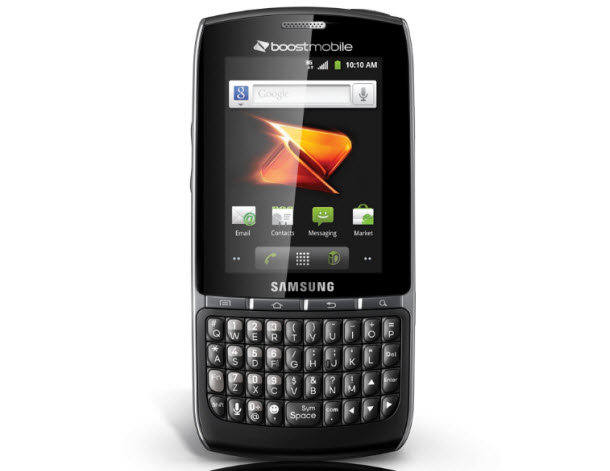
If this is true, then it's hard to give this decision much weight at all. These two phones are vastly different and one literally says SAMSUNG on the front.
Close the keyboard, then look at it. The jury, apparently, decided what their criteria were for infringement and then applied those criteria to all of the phones. The extra fact that this model had a keyboard wasn't one of the criteria.
Let's not assume that we have the whole story behind the way the jury decided anything, one way or the other.
From what I've read so far, the very existence of a full display and a bezel surrounding the front of the phone may have been sufficient in this case for damages.
That's obviously crazy, but that appears to have been criteria used.
I'm reminded of an old joke: "In Soviet Russia reasonable and appropriate considerations are made before awarding 1B in damages based on vaguely similar designs".
Thanks. While I'd like to see Apple gets it teeth kicked in as much as the next guy, the amateur analyses on HN about why the jury is obviously wrong are pretty frustrating to deal with.
I purchased that exact phone, exactly because it wasn't an iPhone, had a keyboard (very important for mobile ssh), and ran Android. I knew exactly what I was buying, no confusion whatsoever. The presence of a keyboard is a significant differentiator between that phone and Apple's products.
Also, I thought the design of the home screen (a grid of icons with labels) also had something to do with it? Both of the linked phones have a grid very much like the iPhone.
icon grids predate the iphone, of course (windows mobile, palm pilot, newton?). I think Apple's claims were more specific, dealing with particular icons, colors, and the favorite apps at the bottom.
Did 16x16 (and then 32x32, and etc etc) icons get patents? Because someone, somewhere, lost a lot of money - and I got consistently sized icons for many years.
EDIT: This isn't as ridiculous as it sounds. See this 2002 article. BT registered a patent in 1976 for "double clicking hyperlinks" (or somesuch), and then in 2000 they realised that they owned this patent, and a bunch of people were clicking hyperlinks on the WWW, and they started suing people. They lost.
It's a design patent granted in 2005 for an electronic device shaped like a rounded rectangle. But it cites several other patents for other devices shaped like rectangles. So is it the precise aspect ratio and thickness of their rectangle that makes it unique? But the Galaxy Tab is substantially thinner than the rectangle shown in this patent.


Also, I'd recommend taking a look at Magma: http://en.wikipedia.org/wiki/Magma_computer_algebra_system