> So if you'd claim it's terrible, there's some explaining to do
Here's the explaining:
  - Unemployment has increased.
  - Long-Term unemployment has increased.
  - Number of gig workers is at an all time high.
  - Layoffs have continued.
  - Personal household dept is at an all time high.
  - Polls show most people have financial anxiety and feel squeezed.
  - Inflation is not under control.
  - Buy now pay later usage is up as much as consumer spending is.
  - Income and wealth inequality are near records high.
  - GDP and consumer spending were also seen peaking before the last 5 recessions as well...
We're all talking predictions, I don't think either of us should pretend to know the future, but there are counterpoints and so the data does not all look rosy.
I'd say these are symptoms (and I'm not denying them) rather than causes. My point is that it's hard to find hard data that would say the economy is doing poorly. Even unemployment, which is your top line, seems... fine?
I just don't understand where the squeeze is coming from. Either companies figured out how to do more with less people, or they started the cycle with too many people, or they don't know what they are doing. Undoubtedly they are laying people off, especially in tech. But I he symptoms you list don't explain it to me.
I don't think they're a symptom or a cause. Just indicators the economy may not be doing well.
> Even unemployment, which is your top line, seems... fine
My lines were in no particular order. The issue with unemployment data is it counts gig workers as "employed." What doesn't add up is that there are fewer job openings, mass layoffs, and rising long-term unemployment (people who can't find work past 6 months).
> I just don't understand where the squeeze is coming from.
Nobody really knows. It's hard to model the economy and identify cause and effect. But likely candidates are low competition, businesses with coercive leverage on pricing/pay since buyers and workers have no alternatives. Essentials like housing, health, and food have skyrocketed, and we haven't scaled them as demand grew. Companies have abandoned stakeholders, they only care about shareholders. They're squeezing record profits, sustained because buyers are supplementing with gig work, have all adults working, are taking on more debt (and there are more ways to get credit than before), or are abandoning their savings (YOLO).
> Undoubtedly they are laying people off, especially in tech. But the symptoms you list don't explain it to me.
My list wasn't about layoffs, just signals the economy may be doing poorly. One reason for layoffs is companies believe the economy is at risk. They're avoiding hyper-growth and cutting fat. In tech specifically, I think a lot of it is undoing the mess of Covid, such as ventures that didn't profit, hiring before knowing what to use people for, workers distributed across too many places. Even if one part is growing, redistributing is hard. Easier to lay off and rehire where needed. There's probably some offshoring too. But in general, cost-cutting happens when companies feel they need to be conservative.
Cause wise, we probably shouldn't ignore the delayed hangover from covid. But also the longer term trends towards an economy that is extractive rather than productive, and increasingly unequal, neither of which are sustainable.
> Even unemployment, which is your top line, seems... fine?
The unemployment one is interesting because if you look at that graph, the universal pre-2022 pattern is basically a spike of unemployment during recessions followed by a gradual drop.
The recent pattern is a gradual increase.
I'm not a big fan of "numerical only / shape of graphs" analyses, but this does seem strange. Of course, the 2020 Covid spike is also unusual, so...
I've paid for tools in the past, but I think there's a difference, the value of a lot of our tools isn't that great, but more importantly, there is a huge cost to adoption. Going in blind on a paid tool, putting in the time to learn and train yourself to use it, that's a high cost for something that you need to pay for entry and recurring after, that maybe 50 hours into it you start to realize you don't like it.
When I've paid for tools, it tends to be a tool that was free for me to start using, that is now part of my workflow and I love, and I am worried it won't continue to be maintained or updated so I pay for it.
I understand, but retired people rank highest on the happiness index, same as children, and the thing they have in common is nothing to do but play, relax, and have fun. Social housing probably doesn't allow for any form of play, and it's just scrapping by level of "surviving". I don't think it's a good example, and letting those people instead work 12h days, 7 day a week, at some repetitive, low pay, job, isn't gonna be all that better, and might be even more horrible.
Ignoring the actual poor quality of this write-up, I think we don't know how well GenAI is going to be honest. I feel we've not been able to properly measure or assess it's actual impact yet.
Even as I use it, and I use it everyday, I can't really assess its true impact. Am I more productive or less overall? I'm not too sure. Do I do higher quality work or lower quality work overall? I'm not too sure.
All I know, it's pretty cool, and using it is super easy. I probably use it too much, in a way, that it actually slows things down sometimes, when I use it for trivial things for example.
At least when it comes to productivity/quality I feel we don't really know yet.
But there are definite cool use-cases for it, I mean, I can edit photos/videos in ways I simply could not before, or generate a logo for a birthday party, I couldn't do that before. I can make a tune that I like, even if it's not the best song in the world, but it can have the lyrics I want. I can have it extract whatever from a PDF. I can have it tell me what to watch out for in a gigantic lease agreement I would not have bothered reading otherwise.
I can have it fix my tests, or write my tests, not sure if it saves me time, but I hate doing that, so it definitely makes it more fun and I can kind of just watch videos at the same time, what I couldn't before. Coding quality of life improvements are there too, I want to generate a sample JSON out of a JSONSchema, and so on. If I want, I can write the a method using English prompts instead of the code itself, might not truly be faster or not, not sure, but sometimes it's less mentally taxing, depending on my mood, it can be more fun or less fun, etc.
All those are pretty awesome wins and a sign that for sure those things will remain and I will happily pay for them. So maybe it depends on what you expected.
I think there is a hype around it becoming revolutionary and so on, but I also think investors would get an decent ROI even if it just ends up that 50+ million of users pay 20$ a month, on top of some enterprise contracts and API fees and so on. Or the inevitable Ad-supported access.
In my opinion, it's already useful enough, given the use-cases I described, to reach that level.
Reading through this piece and all I can think of is how he's just the other side of the same coin. Simply a different color of the same elitism that our world is moving into as money concentrates and starts to meddle more and more with our political spheres while accountability slowly errodes to zero.
I found the piece rambling and incoherent, but I don't really see how this follows. This is an individual Jordanian founder who made a political statement. That's not really the same thing as the deep integration between the Israeli state, Zionist organizations, and big tech.
As the article mentions, Saudi Arabia is aiming to build its own deep integration with big tech, which Masad is enthusiastically participating in despite the Saudi government's own human rights issues. (He argues, quite conveniently if true, that the Replit tools he sells to the Saudi government won't be used for any of the bad stuff.)
This clarifies things, thank you. I've gotten the impression that Masad doesn't have a very coherent worldview so I doubt he has given this contradiction much thought.
Both sides of...what? I'm confused. Is the idea "all these people have a lot more money than I think they'll ever need and it makes me mad"? Me too. Just don't see how it's relevant.
The idea is that as money gets so concentrated, so does real political power. And with that concentration of political power comes extreme disregard for the opinions of the masses. I think it's a fair argument that the world has always catered to the will of rich people, but the difference now is that rich people are so unfathomably rich, and so much wealth is concentrated in so few.
More plainly on my part, though I'm worried sounds like berating when the comments are viewed consecutively: what does that have to do with the article we are discussing?
> “There was an aspect of, like, ‘Fuck the system,’” Masad said. “‘We need to remake civilization.’”
No matter what the political views, running into "real" money radicalizes most people and gives them the impression that they reached a superior evolutionary stage that uniquely entitles them... no, demands from them that they bend society and human civilization to their will, reshape it in their image, make it better because they are better. A sort of messianic complex.
This is the famous horseshoe paradox that says extremes are closer to each other than to the center. They might look completely different in their views but in reality they're back to back in the same place. 2 sides of the same coin. Different imprint, same value.
> but the difference now is that rich people are so unfathomably rich...
Compared to when? How many times in history has wealth been less concentrated?
As far as I'm aware, for almost all of history post-agriculture, wealth was highly concentrated while the average person lived in abject poverty (think: kings vs peasants). The mid-20th century was an era of mass prosperity in the US and parts of Europe, but it was an anomalous few decades, not the norm.
> How many times in history has wealth been less concentrated?
Mostly all of them! There have been periods where inequality dropped, but mostly it's been rising since at least the 1300s. I'm on mobile and can't link research, but there are a few papers that investigate this.
> As far as I'm aware, for almost all of history post-agriculture, wealth was highly concentrated while the average person lived in abject poverty (think: kings vs peasants).
And yet it was less unequal than now, an era where we've managed to use technology to concentrate wealth at an unprecedented scale. No longer is the richest person you know the king who collects your taxes next door, now it's a SV trillionaire on the other side of the world.
What does "Zionist" mean to you? I honestly don't understand what it means when Israel has existed as a Jewish state for 76 years and seems likely to continue doing so for the foreseeable future.
The podcast The Empire Never Ended has recently finished a rather good series on Meir Kahane, one of the most important influences on contemporary zionism:
It's like defining Germany as "a state that genocided various groups", or defining Irish nationalism as "a movement characterized by terrorist attacks against British civilians". Whether or not those claims are accurate, they're not defining features of the things we're trying to define.
And sure, most Zionists are not Jews because the Jewish population is too tiny to be a majority in almost any political category. Similarly most people who support Somaliland independence are not Somalilanders, but probably Indians or Chinese or something.
The zionist movement has never been peaceful, it has always aimed for violent expulsion of native populations from Palestine. One might argue that socialist or liberal zionism is not overtly jewish supremacist, but in practice they always were so I'd contest that. Unlike the irish they also did not have a reason to exterminate the palestinians specifically, whereas the irish have good reason to resist british influence.
So you agree that zionism is a movement mainly consisting of christians, you're just not aware that both christian and jewish zionists prefer to paint the movement as a jewish underdog and distract from things like the nukes and nuke carrying backers and the genocide and so on.
They have been reluctant to give up their homeland, you mean. Yes, resistance to occupation and genocide is usually to some extent violent, because the occupier is extremely violent to begin with.
They never actually had sovereign control over the land. It was controlled by Romans and then by the Turks and then by the British and when the British left it was basically up for grabs.
Sharing the land with european colonists that used terrorism and ethnic cleansing to remove and to a lesser extent subjugate the native population? Why would they?
If you're suggesting that a peoples' right to live in their homeland is forfeited as a result of immigration, terrorism or ethnic cleansing, that would be bad news for Palestinians. Gaza and WB Area A are Jew-free zones, and there were around 30k rocket attacks from Gaza alone.
Quite the opposite, I'm suggesting the palestinians still have a right to their homelands even though europeans have settled, terrorised and displaced them.
Yeah, what about "rocket attacks"? Are they somehow more devastating than the US-israeli armory? If someone spits in front of my feet, then I can have them watch while I beat their family to death?
It is really despicable the way people like you completely dismiss Hamas atrocities like what they did on Oct 7 2023 when 1,219 people were killed by the attacks: at least 810 civilians (including 38 children and 71 foreign nationals) and at least 379 members of the security forces. 364 civilians were killed while they were attending the Nova music festival and many more wounded. Israel exists and the Palestinians will never be able to defeat it and they are very stupid for trying and failing for 76 years.
Hamas's official position, expressed in its original 1988 charter and repeatedly affirmed by many of its leaders' statements and actions (including the October 7, 2023 attack), is to
destroy the state of Israel and establish an Islamic state in its place "from the river to the sea". The 1988 charter explicitly called for the killing of Jews as a religious duty.
We've banned this account for using HN primarily for political/national/etc. battle. That's not allowed here, regardless of which side of which battle you are or aren't on.
Please don't create accounts to break HN's rules with.
We've banned this account for using HN primarily for political/national/etc. battle. That's not allowed here, regardless of which side of which battle you are or aren't on.
No. This question shows that you have no idea of what the word "apartheid" even means (or maybe you just hope that other readers don't), and that nonetheless you are ready to use it as a retort hoping to score some kind of cheap point. Not that I haven't seen precisely this behaviour a million times on this topic, but still: pathetic.
- An official policy of racial segregation formerly practiced in the Republic of South Africa, involving political, legal, and economic discrimination against nonwhites.
- A policy or practice of separating or segregating groups.
- The condition of being separated from others; segregation
Explain to me how this does not fit bullet point 2 and 3.
From The American Heritage® Dictionary of the English Language, 5th Edition[1].
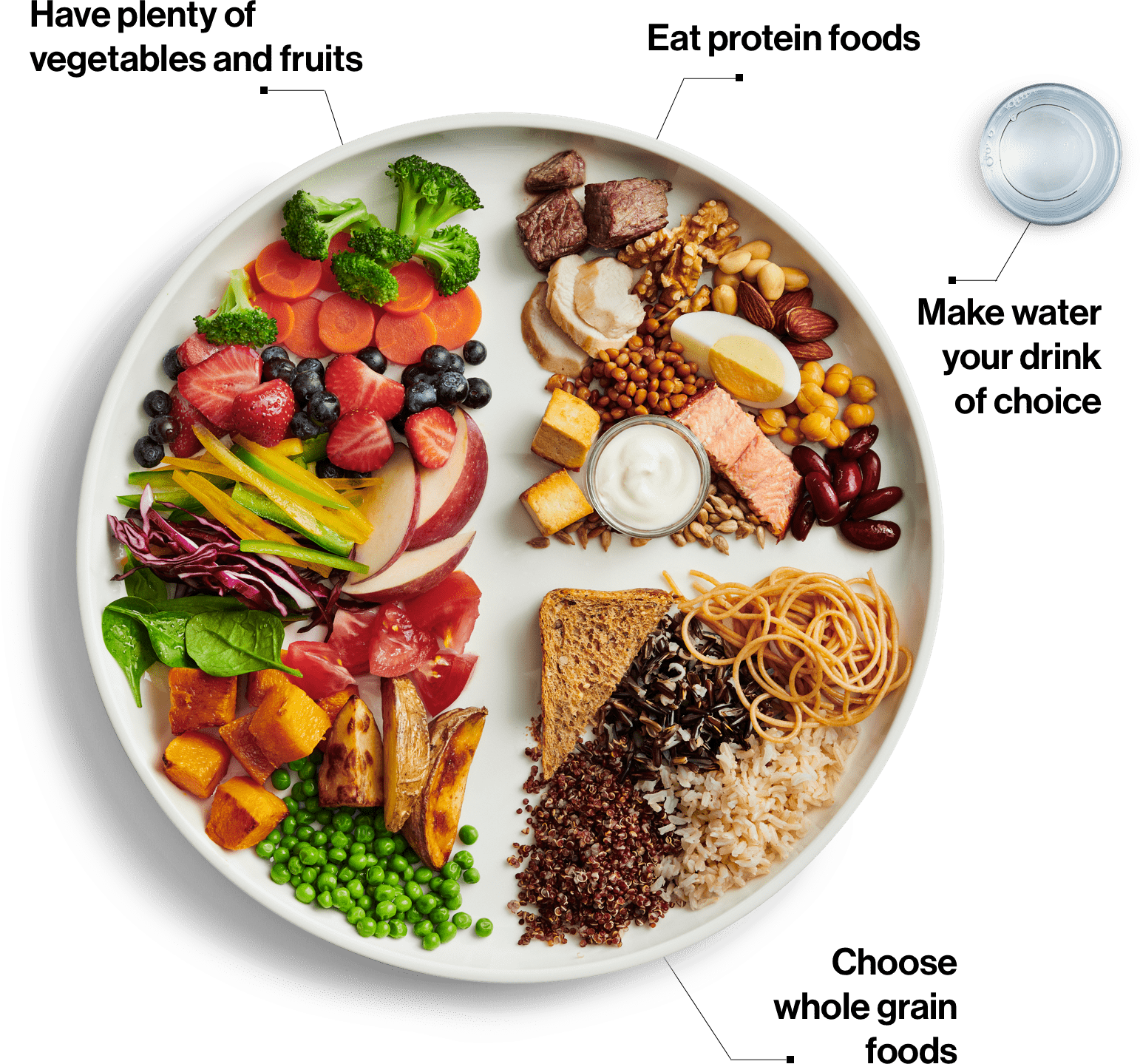
Is it? The change in recommendation is to have less veggies in favor of more meat. From all the recent research and meta studies I've seen it doesn't track.
It's still decent a guidance, but the previous one was as well.
The first food group listed is literally meat and dairy. The ordering here is purposeful, too, as they admit. One promo graphic includes a block of butter and a carton explicitly labelled "whole milk." This is a very definite downgrade.
The relationship between dairy/meat and inflammation is more nuanced than that. While some studies show associations with inflammatory markers, others find neutral or even anti-inflammatory effects depending on the type (e.g., grass-fed vs grain-fed, fermented vs non-fermented dairy) and individual metabolic context.
You're right that ratios matter enormously, but optimal ratios vary significantly by individual - genetics, activity level, metabolic health, and existing conditions all play roles. The overconsumption concern is valid for processed meats and in the context of sedentary lifestyles with excess calories, but the picture is less clear for whole-food animal proteins in balanced diets.
The real issue might be less about meat/dairy per se and more about displacement of other beneficial foods (fiber, polyphenols, etc) and overall dietary patterns. Many Americans do overconsume calories generally, but some subpopulations (elderly, athletes, those on restricted diets) may actually benefit from more protein.
why is meat inflammatory? is it they way it's farmed/raised?
because we have teeth specifically designed to get meat off bones and animals that don't eat meat and weren't "designed to" don't have teeth designed to clean meat off bones. and that's just one i came up with, off the cuff.
if it's current farming practices that make the meat/dairy bad for us, then fix that. But i don't currently believe there's a greater health benefit to taking a ton of supplements to replace the missing nutrients that meat and dairy give us that you absolutely cannot get from vegan diets without it becoming a monotonous pain in the neck.
> why is meat inflammatory? is it they way it's farmed/raised?
Not all meats are inflammatory. Processed and high temp cooked meats especially red are.
And I don't think we have the answer fully to why, but we know the lesser processed it is the better, and I believe I've seen some things about grass fed and all these more organically/traditional made meats seem to not be as inflammatory.
Also, we evolved during a period where we hunted, so even the idea of farmed meet maybe isn't really part of our evolution. But also, during our hunting evolution, we likely didn't have meat at every meals. Plus if you ever had game meat, it tastes really different and often isn't as good as what we farmed. So we kind of came to farm what tasted the best and was easy to farm, so it might be those meats aren't as good for us.
Also, you can't always assume that the environment we evolved in and the "natural" state is good for us. It wasn't bad enough for us to dwindle in numbers, but our population count was kept much lower than now and our life expectancies were shorter. As long as we made it to a healthy reproduction state evolution doesn't care. So all these inflammatory issues appear starting in your 30s and really become a problem much later in life. It's possible this didn't matter in evolutionary terms.
Lastly, you also have to take into context what else we'd do/eat. If our diets were more balanced than other things we would eat could neutralize some of that inflammation and meat has other vitamins and nutrients that are benefitial, but if someone cuts those other things out of their diet now the inflammation could become a problem.
Good stuff here. To add to your point: atherosclerosis actually begins development as early as childhood, but you only suffer 40 or 50 years down the line once you're hit with a stroke or a heart attack. Evolution didn't act on this!
Some herbivores too have huge canines[0] for territorial fights. I used to use mine to fight my brother but now I'm settled they only help tearing appart coconut, cowliflower and seitan.
You can get all the nutrients you need, easily, from a vegan diet, with the exception of B12 (a cheap supplement will cover that).
Also, human ‘canines’ are pretty pathetic. They’ll do the job in getting meat off bones, sure, but are nothing compared with my dog’s teeth – he has proper canines. (He also doesn’t have to prepare and cook meat before tucking in. Humans are actually pretty lame meat eaters even in comparison to other omnivores like dogs, let alone carnivores like lions.)
vitamin D? unless you live within 10 degrees of the equator "the sun" is not a valid answer.
The most available form of vitamin D comes from extracting the oil from sheep's wool/skin using chemicals (soap is a chemical, for the record.) Yes, it is possible to get a much weaker form of D from mushrooms, but not as they arrive, regardless of packaging. they have to be left outside in the sun for at least 8 hours, but ideally "two full days in the sun", cap-side up (facing the sun), and then a standard mushroom will have enough D2 for the average adult, maybe. I don't know the specific conversion from D2 to calciferol or whatever.
And before anyone decides to cite 30ng/ml or whatever as "recommended", i disagree, 90-105ng/ml is more "ideal" and 500IU of vitamin D supplements aren't going to cut it. it's 1 IU per 10 grams of body mass (roughly).
i can do this all day, it's a waste of both of our time. As lovely as vegetarian/veganism is in the abstract, the entire planet cannot be vegan any more than the entire planet can subsist off insects.
My vegan diet involves a lot of beans, rice, ..., which all require considerably less input than meat does. A bag of beans costs so very little, lasts so long, and is healthy. Meat and dairy are luxuries that come at the cost of pretty horrific treatment for a great number of animals.
Can you name which EXACT nutrients you "absolutely cannot get from vegan diets without it becoming a monotonous pain in the neck"? A daily multivitamin isn't hard.
I think generally people are optimizing for health outcome and longevity, not peak athletic performance at your prime age.
But also, I've seen people often assume vegetarian or vegan diets are "healthy". But many people in India for example will still eat a lot of refined carbs, added sugars, fat heavy deep fried foods, large volumes of ghee or seed oils, etc. And total avoidance of animal products can also mean you have some deficiencies in nutrients that can be hard to obtain otherwise.
A plant-forward diet is more specific, like the Mediterranean diet, which itself isn't at all how your average Mediterranean person eats haha. But it involves no processed foods, no added sugar or excessive sugar, diverse set of nutrients by eating a balance of veggies, legumes, nuts, seeds, meats, dairy, fish, and so on all in appropriate proportions, as well as keeping overall caloric intake relatively low.
It's quite hard to eat that way to be honest haha.
Meat and dairy contain the bulk of the saturated fat in the average diet. It's pretty absurd to imagine a diet in which the largest food group is just meat and dairy, but due to the ordering, that almost seems to be implied.
The saturated fat → LDL-C → heart disease relationship has a lot of evidence and history behind it. A very interesting research project if you needed one. I call this advisory a "downgrade" because heart attack and stroke (among other conditions) are both: 1) downstream of saturated fat consumption, and 2) the most prevalent causes of death among people in the developed world.
It also very prominently shows red meat, which is the worst you can do.
fish > poultry > red meat. (Fish and poultry can be swapped, mercury is a real problem).
But really if you are looking for the healthiest proteins then you really can't do much better than nuts and beans.
Red meat beyond having a lot of links to heart disease is also linked to cancer. It should be seen as a treat, not the main thing you should be consuming.
Yup, there's a hole in our data that they appear to be exploiting. Early studies of saturated fat showed it was unhealthy, but then larger, longer studies found nothing. Were the first studies wrong? Or is the problem that we no longer have a control group--people responded to the news by cutting back on saturated fat?
One thing I think we should better emphasize is that it's best to avoid foods that are bad for you, than to eat foods that are good for you. If you can't do both, you should focus on cutting out bad foods over eating healthier foods.
Meat (non-processed, no sugary sauce or gravy), and dairy (plain, fermented, no added sugar). Those are kind of "neutral" foods. If that's all you eat, meaning you don't eat any crap, you're much better off health wise than if you eat crap and try to also eat a bunch of veggies, fish, fruits, legumes, etc.
That's unhealthy and honestly gross. Maybe you have the genes -- there are smokers who make it to 100! -- but you should adjust your diet for your own sake. I wouldn't bet on being an outlier.
I don’t believe there is any solid scientific reason to change my diet. Indeed I’d say there is mild evidence otherwise. I think the main issue is being turning this into a moralizing issue.
The first thing shown on the website is - broccoli.
The top of the pyramid includes both protein (meat, cheese) as well as fruits & vegetables.
The reason that meat is shown first is probably that it's the bigger change (it's been demonized in previous versions), whereas vegetables were always prominent.
The first thing on the website is indeed broccoli. But the first thing in the new inverted pyramid, both on the website and in other graphics of it, is meat. In fact, on the website, when you first get to "The New Pyramid", you'll first see only the left half, the one that has meat and other proteins; you'll have to scroll more to see the right half with vegetables and fruit.
I don't think it is meant to read left to right but top to bottom. Chicken and broccoli are top center, and that is the standard weight lifter meal plan. That said, human dietary needs vary individually by far more than any lobbied leaders will ever communicate.
The website is animated, so there's no question of which direction to read in, the left side literally pops up first lol. I can't lie, I miss websites that stood still, this could've just been a PDF.
BTW, you say "lobbied leaders" -- if you're talking about the scientists who have their names on this report, you'd be very correct. The "conflicting interests" section has loads of references to the cattle and dairy industries.
The only difference from the previous guidance is that it's suggesting eating more meat and dairy, which would come at the expense of veggies, legumes, nuts and seeds.
To be honest, I don't totally disagree from a practical angle. I think we have to acknowledge that most Americans failed to eat large portions of non-processed veggies, legumes, nuts and seeds. The next best thing might be to tell them, ok, at least if you're going to eat meat and dairy in large portions, make sure it's non-processed.
I've found for myself, it's hard to eat perfectly, but it's easier to replace processed foods and added sugar with simpler whole meats, fish and healthy fats like avocado, eggs, etc. And since those have higher satiety it helps with calorie control and so you avoid eating more snacks and treats which are heavily processed and sugary.
That said, in a purely evidence based health sense, it's not as good as the prior ratios from what I've seen of the research.
the rectangular pizzas were never "reheated". i have copies of the recipe cards to make enough trays of pizza to feed a school using the industrial kitchen appliances they have in schools.
and whatever your issue is with chocolate milk, can you link a recent survey that shows the percentage of say, americans, that have had 1 or more glasses of water in the last month? a glass being at least 8floz (1/4 liter or so)
i'm leaning toward "most people don't drink enough, if any, water; furthermore most people are probably varying levels of dehydrated", at least in the US. The fad of carrying water with you everywhere was lambasted into obscurity, at least in the american south. Anecdotally, many people have told me they drink 64 ounces a day, because diet coke counts and so does beer.
that a kid is getting a fortified delicious drink they enjoy is fine by me.
    Adults should have no more than 30g of free sugars a day,
    (roughly equivalent to 7 sugar cubes).

    Children aged 7 to 10 should have no more than 24g
    of free sugars a day (6 sugar cubes).
So one small carton they have at school has 30% of an adult's daily intake of added sugar.
And here in largely vegetarian India, everyone is now pushing for more protein and meats because a vegetable-heavy diet has been awful for our public health
Even if Indians ate 2x the meat that they do now, they wouldn’t consume anywhere as much as Americans do. Increasing meat consumption in America is not necessary.
India would do well to consume more protein, and the US would do well to consume less
If you want to actually get full and satiated with a largely vegetarian diet, you will eventually resort to carbs
And this is for a culture that really knows how to make smashingly good vegetarian dishes
I love my vegetables, but a vegetable-heavy diet is clearly not something that everyone can or should do. The people I know who retain their health with vegetarian/vegan diets are usually really well-versed in nutrition
If you look at a lot of the indian vegetarian dishes you'll find things like potatoes fried in butter being a staple.
Chickpeas and yogurt do make a showing, but a lot of indian dishes are devoid of vegetarian protein sources. You need a lot more beans/nuts if you want to eat healthy as a vegetarian.
> a lot of indian dishes are devoid of vegetarian protein sources
What about legumes -- daal (pulses) and chickpeas? They have plenty of protein for vegetable sources. Also: Paneer. What I find in practice: You get a tiny amount of legumes/paneer, and a huge amount of carbs.
Daal is great, but just not nutritionally dense. You will have to drink it by the bowlfuls to get enough protein from daal alone.
Chickpeas have the problem of digestion + prep. You have to soak them overnight, boil them, and only then cook them. There's a reason they're usually reserved as a high-effort Sunday dish in most household and not a daily meal
has your government published any science on this? being completely serious, i'd like to read it. Is India mostly vegetarian because of lack of access to farms/meats, religious reasons, financial, or what? I didn't know it was largely vegetarian. I don't know i had an idea of the ratio or that it would be different than any other country.
Apparently the Mediterranean also is largely vegetarian. at least the eponymous diet is.
Most branches of hinduism condemn meat eating, so this has created a significant pressure against meat production (same as you'll find little production of pork in the Middle East and North Africa). This is not universal, of course, because historically many regions of India had large meat-eating muslim populations as well.
Note that this is typically lacto-ovo-vegetarianism, not veganism.
The only change from the previous dietary recommendations that I can see is that they recommend a bit of a smaller portion of veggies and a bit of a bigger portion of protein. Everything else seems exactly the same.
Am I missing something?
It also seems like the bigger protein portion over veggies is strangely what I would expect from someone on TRT...
The only change from the previous dietary recommendations that I can see is that they recommend a bit of a smaller portion of veggies and a bit of a bigger portion of protein. Everything else seems exactly the same.
I think it's mostly just that there's loud talking points now and they're marketing it heavily to make it feel like it's their idea when it's already been the official guidelines for a while.
This is one of those where you need to be able to discern nuances in your brain as multiple things are happening.
First, identifying cause and effect of CVD is super hard, and there are lots of studies with various level of indications and in reality we're still far from understanding most of it. Even just the effects of fat and sugar on it isn't clear, and our understanding of fat itself, and all its types, and of sugars and all its types, even that's incomplete. And this makes it a perfect battle ground for grift and financial interests, because you can paint various narratives and cleverly build a case for it, since in reality so many possibilities are still on the table.
I think the conclusions that are on the stronger side are those that relate to medication and surgery. Blood pressure pills, statins, antiplatelet, coronary artery bypass, aortic valve replacement, etc.
When it comes to nutrition and other lifestyle changes, things are muddy. So instead you have "school of thoughts" and belief systems forms that often tie up with personal identity.
Second, you have financial interests meddling with research and messaging. A financial interest might want to mingle even if the research supports them, just not to take any chances. And if we found two cases of it, that's just those that were caught and proven, it's likely there's many more mingling then just that. Even if it doesn't end up proving things their way, you can assume all this mingling slows things down and makes figuring out the truth much harder and slower, which maintains the state of uncertainty for longer and that state is good for financial interests.
Lastly, it's not that we know nothing at all, and everything is just beliefs. There are a few things that have strong evidence repeatedly. We know that smoking, high blood pressure, plaque buildup, high lifetime LDL, clots, and diabetes/insulin resistance are all bad and lead to increase risks of CVD. And avoiding or lowering those, no matter how, helps reduce that risk. But it's not enough for most people that want to feel in control and believe they're living in a way that CVD won't happen to them. Which makes them vulnerable to grifters and various influencers.


Here's the explaining:
We're all talking predictions, I don't think either of us should pretend to know the future, but there are counterpoints and so the data does not all look rosy.