Just transitioning from coal to gas for electricity production has a big impact.
The graph is adjusted to compensate for the efficiency of the power plants, but it's an average and one they need to update every so often as plants get more efficient.
But we're phasing out the oldest and least efficient coal plants and replacing them with gas plants that are twice as efficient (33% vs 64%).
The graph under discussion assumes 40% as discussed here:
> Something like 50% of marine fuel usage is shipping fossil fuels around the world
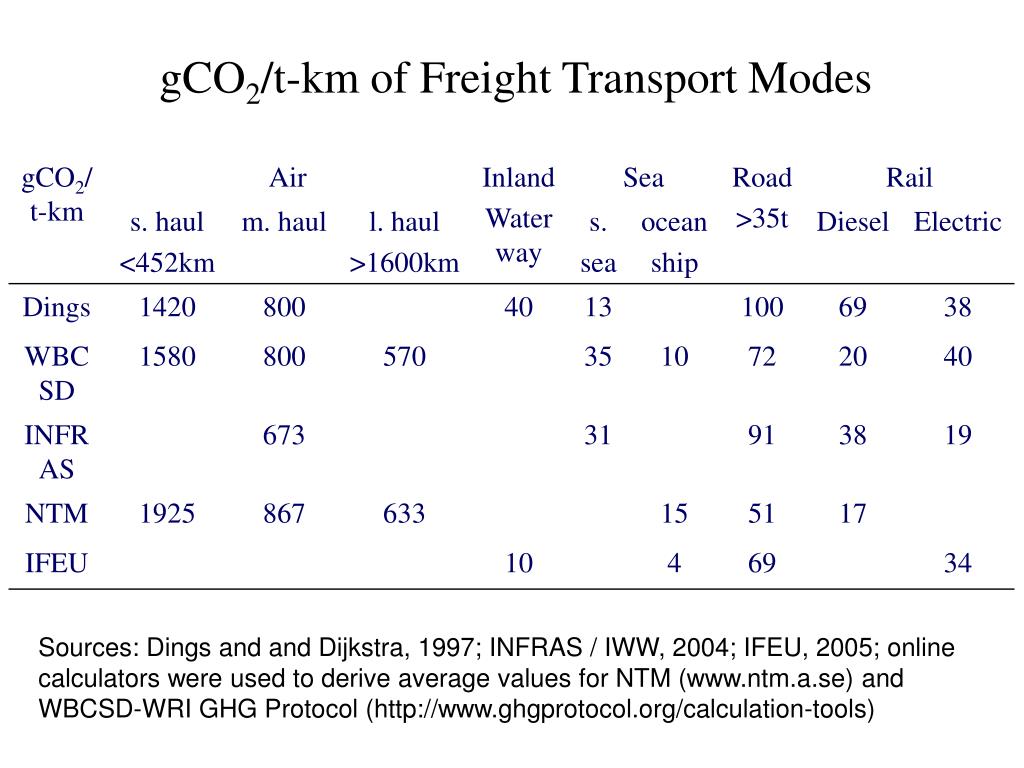
Note that marine shipping is extraordinarily fuel efficient (from a gCO2/(t*km) basis), so I doubt that it adds a lot on a per ton of fuel basis. We just ship a lot of fossil fuels.
This [1] graph looks to be in the right ballpark from what i remember in school 15 years ago, i didn't verify it in depth but +- an order of magnitude better than the next best method is roughly right
Even though petroleum product shipping accounts for almost 40% of shipping, the surprising efficiency of ocean transport still means that it's not that big an energy cost; a single-digit percentage of the energy content of the shipped oil/gasoline.
But even that is still worth saving - it's a few percent more benefit for electrification.
Marine transport is stupidly efficient and probably won’t influence those numbers much. For the same reasons it’s absolutely okay to eat avocados from overseas. I believe the processing of oil to gas is quite energy intense tho.
> A great reason to prioritize growth and wealth creation. Poor countries don't make those tradeoffs, they're worried about survival not what percentage of their energy usage is renewable.
Tell that to places like Pakistan where solar is allowing people to have cheaper electricity without connecting to the grid
That's exactly my point. They're making decisions based on their economic reality not sacrificing for environmental principles like the above commenter.
Solar is great. It can stand on its own without subsidies.
Keep in mind the standard of living. If you’re in a country that experiences routine long power outages, having a solar panel that you can use to charge your phone during the day is pretty great. Having to get ahold of and burn diesel fuel is not so great. Doesn’t produce at night? Doesn’t matter much, it’s better than nothing.
There is line that connects gov't subsidies in wealthy countries for the last 50 years funding private R&D to poorer countries being able to afford it. Arguably the poorer countries don't get to make the "decisions based on economic reality" in favor of solar without the subsidies in wealthy countries happening first. There is also an argument to be made that the R&D isn't finished and it still makes sense to subsidize it to drive the cost down further.
> There is also an argument to be made that the R&D isn't finished and it still makes sense to subsidize it to drive the cost down further.
Maybe there is an argument to be made, but it sounds like a very poor one if poor countries are now putting up solar panels because it's the cheapest form of energy production. Sounds like subsidizing the same panels going up on houses is a bit silly now that the costs have shifted so much.
The argument can probably be made for direct subsidies of R&D for bleeding edge solar tech, and perhaps even battery installations to get volume up. Or maybe even subsidizing local production vs. buying everything from China.
The arguments for wealthy countries to subsidize their wealthiest citizens to install solar for personal gain seems rather weak at this point in the game. It certainly made sense 20 years ago, but in most areas where it makes economic sense to begin with solar penetration has hit a tipping point.
> But at a national level the data is compelling. I'm convinced by the Environmental Kuznets Curve.
Which data do you find compelling?
For people who don't know the Environmental Kuznets Curve is basically the hypothesis that as economies grow past a certain they naturally start to cause less environmental damage.
As far as I can tell the main empirical evidence in favour of this is the fact that some western countries have managed to maintain economic growth whilst making reductions to their carbon emissions. This has, of course, partially been driven by offshoring especially polluting industries, but also as a result of technological developments like renewable energy, and BEVs.
On the other hand, taking a global sample it's still rather clear that there's a strong correlation between wealth and carbon emissions, both at the individual scale and at the level of countries.
It's also clear that a lot of the gains that have been made in, say, Europe have been low-hanging fruit that won't be easy to repeat. For example migrating off coal power has a huge impact, but going from there to a fully clean grid is a larger challenge.
We also know that there are a bunch of behaviours that come with wealth which have a disproportionately negative effect on the environment. For example, rich people (globally) consume more meat, and take more flights. Those are both problems without clear solutions.
(FWIW I agree that solar power is somewhat regressive, but just for the normal "Vimes Boots Theory" reasons that anyone who is able to install solar will save money in the medium term. That requires the capital for the equipment — which is rapidly getting cheaper — but also the ability to own land or a house to install the equipment on. The latter favours the already well off. There are similar problems with electric cars having higher upfront costs but lower running costs. The correct solution is not to discourage people from using things, but to take the cost of being poor into account in other areas of public policy).


reply