Hacker News threads about tipping are always rough. US tipping is not complicated. You are being asked to share with a service worker's employer some of the burden of compensating them. The notion that you're rewarding exceptional service is a polite fiction. Depending on where you are, the tip is either expected or it isn't. Unfortunately for the mindset of a typical software developer, there won't be much clarity on this point; you'll have to rely on context clues to determine whether and how much of a tip is expected. You can reasonably withhold a tip from someone who is actively hostile or incompetent, but really all you're doing is making yourself feel better. If payment and the tip is expected up-front, you can either buy into the cost-sharing dynamic of tipping, or you can not.
Very few people in the US are going to admire a principled stance you take against tipping. The moral of the opening breakfast scene in Reservoir Dogs was not that Steve Buscemi was a smart and principled dude. Harvey Keitel was the one you were expected to admire in that scene.
A very easy, relatively pleasant way to get through life in the US if you're well-off enough that you routinely buy coffee in expensive coffee shops: just always tip. Anywhere there's a tip line. You never have to figure anything out, and sometimes people really appreciate it.
> You are being asked to share with a service worker's employer some of the burden of compensating them.
The entire burden of compensating them is on me either way, isn't it? The employer doesn't pay the employee out of his own money. He pays it out of the money that comes from customers.
The question is simply the route. Either I pay $4 for a muffin, and all of it goes to the employer before any reaches the employee, or I pay $3 for the muffin to the employer, some of which gets passed on to the employee, and $1 directly to the employee.
Tipping complicates things. That's why I don't like it. Not only does it reintroduce math, but it also introduces complexity in my relationships with every server of every kind. Did I tip enough? Did I tip enough in his opinion? Did I need to tip that guy that did that little thing? Do they hate me now? Will they do something to my food? Will they slack off next time, out of resentment? These are not things I need to be thinking about after every transaction.
Down with all tipping! And daylight savings time! I don't know why, but in my heart they are connected. And maybe I'm finally ready to adopt the metric system.
If tipping were truly a gift, which is what it should be then I'd be fine with it. But it's become an obligation using the excuse, "But the employer doesn't pay that much." Or "Those people get treated pretty rough."
And then people that should be tipped, aren't. I'm thinking about a helpful secretary at work that moves calendar entries around to get you a meeting with a high level manager, or a nurse working a double shift in the emergency room easing the pain of your kid's broken arm.
The public accepts prices more readily if they're broken up into smaller bits.
Sell a $4 muffin without tips, and you might lose business for being seen as "too expensive". Even if everyone always spent $4 anyway when you consider tips.
My favorite brand of fish fillets no longer come with packets of tartar sauce, because $8 for a box of breaded fish was seen as too expensive and they didn't sell well. So now the box is $6.25 and they have a display of little tartar sauce bottles for $1.75 next to the freezer. Sales more than tripled, or so claims my grocer.
I agree with you overall, and I don't think the psychological trick of dividing up the cost is a good reason to keep tipping going. Just mentioning it as a reason that seems to exist.
You're right about "rewarding exceptional service" being a lie, but I don't think it's correct to frame tipping as "burden sharing". If the muffin just cost 20% more and the untipped barista got paid a higer wage the burdens would still be split the same. In practice, it seems like tipping serves two main functions, neither of which are great for society at large.
First, it allows businesses to advertise lower prices than consumers will need to bear. It's similar to the American habit of adding sales tax at the point of sale instead of including it in the posted price that way. And because, as a species, we're prone to anchoring effects that causes us to systematically underestimate what the final total will be. That's pretty good for proprietors of service sector businesses, but probably slightly bad for the economy as a whole.
Second, it allows those proprietors to price discriminate a little bit (because price sensitive customers will sometimes buy the service but not tip) while pushing the downside risk off onto their employees.
And that's not even touching the way tips allow customers to de facto discriminate against staff (conventionally attractive people get more tips), or staff against customers ("black people don't tip"), in ways that would be anywhere from suspicious to downright scandalous if they were implemented more formally.
This doesn't mean you shouldn't tip well. You absolutely should, as service workers depend on tips to be fairly compensated for their labor. But tips are a bad idea and there's plenty of reasons beyond social awkwardness to wish they would go away.
> If the muffin just cost 20% more and the untipped barista got paid a higer wage the burdens would still be split the same.
That sounds true in principle, but your ignoring the commision aspect of the service. In the tipping model, a very efficient server could, say, serve 100 miffins/hr and be tipped 20% each accordingly. A fast, but rude server could serve 100 muffins, but perhaps get 0-10% tip each sale. A slow, but polite server may only serve 50 muffins, but garner 20% tip each.
If you simply jack the muffin price up and distribute equally among all servers, as you suggest, then there is no incentive to perform above average - no lesson learned for lackluster performance.
Personally, I tip anywhere between 15 - 30%, understanding that this is part of the servers anticipated income. If service is bad enough for me to want to tip 0%, then I either leave before I place an order, or I tip 15% then don't go back then write a negative Yelp review to warn others.
I am ignoring the commission aspect of the service, because in practice there often isn't any. Tips are frequently pooled, meaning all three servers in your hypothetical would end up with the same cut of the day's take regardless of their personal performance. Besides, if muffin vendors want to incentivize their staff with a commission scheme, why not just incentivize their staff with a commission scheme? Why force the general public to do it (badly) for them?
And the idea that eliminating tips would be "jacking up" prices is exactly the line of faulty reasoning that tips are designed to exploit. The muffin already costs 20% more than the number on the little plaque in front of it claims. Without tips the same amount of money would leave the customer's pocket and the employer and employee would still ultimately split the proceeds from that sale the same way. No prices actually change, but the numbers become a lot more honest and simpler for all parties to reason about.
The truth is vendors don't want prices to be simple to reason about because when they're difficult to reason about the other actors in the system will, on average, tend to make mistakes of reasoning in the vendor's favor.
> In the tipping model, a very efficient server could, say, serve 100 miffins/hr and be tipped 20% each accordingly. A fast, but rude server could serve 100 muffins, but perhaps get 0-10% tip each sale. A slow, but polite server may only serve 50 muffins, but garner 20% tip each.
Well, sure, in some world where tipping actually reflects service and politeness alone, rather than being significantly determined by gender, race, and attractiveness.
> If you simply jack the muffin price up and distribute equally among all servers, as you suggest, then there is no incentive to perform above average - no lesson learned for lackluster performance.
Sure there is, employers can monitor performance and use pay incentives (and punitive disincentives, including termination.)
Employers of workers in customer service jobs in industries that aren't typically tipped do this (and even in tipped industries, they do some monitoring and at least the negative incentives.)
All I'm saying is that, while it may not be a perfect system, I like having the the power to judge the quality of service provided to me on a case by case basis.
> a very efficient server could, say, serve 100 miffins/hr and be tipped 20% each accordingly. A fast, but rude server could serve 100 muffins, but perhaps get 0-10% tip each sale. A slow, but polite server may only serve 50 muffins, but garner 20% tip each.
This seems like a weird argument. Do the customers get no say in whether or not they want muffins?
You seem to be implying that a person behind a counter selling muffins is able to alter dramatically the demand for muffins by being efficient.
Most cafes or stores that I see are basically waiting for customers or have only a couple of customers, nowhere near reaching the limits of how fast a worker can throw muffins at them.
I realize you're only using muffins as an example but it's the same with most food places I see.
As someone who has worked in the service industry, and now frequently dine out, I vehemently dissagree that the prospect of a larger tip does not motivate service industry staff.
No matter - do away with tips. I will continue to tip voluntarily and I garuntee I will recieve superior service from appreciative staff.
They don't know how much you're tipping in the beginning so you're almost never going to get "superior" service on the first go. Also highly dependent on context. Moving some food around doesn't have a big spectrum of quality.
Tipping voluntarily as you say is just building up a relationship with money. Neither unique nor special, but it's not exactly what's being discussed here.
>A very easy, relatively pleasant way to get through life in the US if you're well-off enough that you routinely buy coffee in expensive coffee shops: just always tip. Anywhere there's a tip line. You never have to figure anything out, and sometimes people really appreciate it.
This echoes the sentiment that 'if you can't afford to pay a X% tip, you can't afford to buy the product'. Problem is that it seems to keep going up. It use to be 10, then 15, now it is closing in on 20 and in some areas 22 seems to be the expected. How far does this logic extend? If you can't afford to tip 50% then you can't afford it?
My preferred reaction has been to begin avoiding places where tipping is an option.
As far as I can tell most servers like tips because it lets them earn much more money than minimum wage.
Also, nowadays it's quite easy to get a message out to a huge audience. I'd certainly boycott any place that were so horribly mistreating its employees.
Seriously, go over to reddit and read /r/legaladvice for a while.
The almost daily litany of posts of "my employer is doing (list of highly illegal things involving wages), what should I do" will be a pretty big wakeup call for you. And if you think "well they can just sue" is an easy answer, remember employees who are identifiable as the source of wage complaints are at risk of being fired. That's illegal, too, but do you really think an employer who's already breaking labor laws will be scrupulous about not retaliating?
Also, these folks will really open your eyes (click through to the full report linked at the bottom):
Their data (2012) showed that the amount recovered from wage claims against US employers was three times the dollar value of all robberies in the US combined. Just the amount recovered; the amount actually owed but not paid is likely to be larger.
> Also, nowadays it's quite easy to get a message out to a huge audience. I'd certainly boycott any place that were so horribly mistreating its employees.
Then get ready to boycott 80% of restaurants in North America. It's a hugely abusive industry
I find that no one really bothers with the math anymore. If the bill is $11 most people will just put $1.50 or $2.00 rather than work out a fixed percent.
This NEVER happens from a economic incentive standpoint.
Restaurant owners NEVER say "Oh look, expectation for tipping in the general public is up 5% this year, let's cut down our menu prices to balance this out."
I don't know what logic is behind your statement - could you please elaborate?
> Restaurant owners NEVER say "Oh look, expectation for tipping in the general public is up 5% this year, let's cut down our menu prices to balance this out."
What they do is take advantage of their ability to cut server pay instead of increasing menu prices, when that is possible. And higher tips make more of that possible.
Are you saying that restaurant owners are charging the same amount that they would if tips were 10% lower? Because I'm pretty sure margins are low enough to make that impossible.
Waiters take home ~$20/hr. If tipping culture changed such that waiters made $25/hr the restaurant can't reduce prices to compensate because the are already being paid the minimum wage of 2.15. They can't legally cut server pay.
Likewise if tipping culture changes such that waiters made 15/hr they wouldn't get a $5/hr raise, because servers are already overpaid relative to equivalent untipped jobs.
There are some people who are well paid but they’re generally in expensive areas and there aren’t very many of them. It’s like looking at Waymo engineers and making a general statement about software developer income country-wide.
The other problem is that where you say “can’t” is often “shouldn’t but do anyway”. It’s not hard to find people complaining about owners illegally taking some portion tip income, shifting expenses to workers, or otherwise lowering the effective income for what is already not an easy job.
I've known plenty of waiters, and none of them made $10/hr. The cities were Austin, Dallas, Houston, and Galveston. They all reported making 15-20/hr.
I usually trust the BLS numbers, but in this instance I think they might be off. They collects numbers from corporations, who can usually just report salary. But with heavily tipped positions they don't know how much the waiters earn except how much they declare for tax purposes as the end of their shift. And all my waiter friends who were making 15-20/hr were reporting $10/hr.(Almost all credit card tips).
This is similar to being a delivery driver, everyone was making $20/hr but the ledgers all said we were making 10.
Restaurant owners definitely track how much their customers are paying for meals and correlate it to how much business they're doing, both in terms of number of customers and in terms of revenue per customer.
They know that their customers judge the night based on total cost, which includes tips and taxes. That's why restaurant owners tend to be so militant about local meals taxes.
Restaurant owners do not ignore tips when setting prices, or when setting wages. It's kind of nuts to think that they would.
They don't lower the prices; they just fail to raise them. I.e., the costs of paying their employees would have gone up, and thereby forced them to raise (visible) prices; but since what went up instead is the societally-expected tip, their employees have already had their compensation adjusted to match inflation, and so the employees are not costing the employer any more than previously, and so the employer doesn't need to raise the base price of the good.
And if an owner has to raise the prices because of an increase of the rent, or because of a spike in the cost of coffee, why are the waiters going to get a cut out of that?
I'd actually say it wasn't complicated, until technology like this made the experience awful. Before this tech existed, I don't ever recall being verbally asked for a tip, and if I had I would have thought it to be the height of rudeness. I certainly don't ever recall being asked for a tip while the machine then broadcasts your tipped amount to everyone else in line behind you.
I get your overall point that tipping is a way to make extremely low-wage jobs slightly more bearable, but I'm fine with people pointing out how this technology is ridiculous and not a good thing.
Don't even get me started on the fact that the purpose of tipping is to reward service after you have received it.
> Before this tech existed, I don't ever recall being verbally asked for a tip
What about haircuts, yard work, and any other often-tipped service profession? "How much would you like me to charge your card?" is, and always was in my experience, super common in those areas--and that's the same thing as asking for a tip.
Hell, if you pay cash at a restaurant, "do you want change for that?" is similar.
I think it has always been more or less that way, and that's fine. A button on a screen or a coded question aren't much different if you're paying attention, and not having to do the annoying indirect-etiquette game probably makes life easier/less awkward for people receiving tips.
> Hell, if you pay cash at a restaurant, "do you want change for that?" is similar.
I've paid cash at plenty of sit down restaurants and never had that question. Almost invariably, when the cash presented exceeds the bill when the server picks it up (instead of leaving a tip separately after paying the bill), the server will say something like “I’ll be right back with your change” in exactly the same way they’ll say “I'll be right back with your drinks” when you've ordered them. Now, this certainly provides an opportunity to decline (or to make specific requests for how the change should be provided, as may be necessary to leave the exact tip you want), but it's not asking that.
I've been struggling with this for a while and you put it really well.
However it frustrates me to no end, that customers are expected to do compensation sharing with the employer. The nefarious thing about this is that the employer has put the negotiating for fair wages between the customer and employees instead of between the employees and the employer.
End of the day its manageable as you say, just price in the tip - however I prefer places that have it priced in (same goes for tax).
Another way to look at it is that tipping lubricates the market pricing interface between customers and vendors. If they didn't allow tipping, restaurants would charge more to make up the difference (margins in service work are almost always very low). In a tipping system, when things are going well, everyone tips; if things aren't going so well, not so much. There's some wiggle room between the list price and the actual price, which might offset price stickiness.
Either way, tipping is not an elaborate conspiracy. It might have been long ago, but today, it's just the way service work in the US is organized. If you want to crusade against the injustice of it, that's fine! But make sure your crusade is orthogonal to whether or not you actually tip. :)
> If they didn't allow tipping, restaurants would charge more to make up the difference (margins in service work are almost always very low).
Neither good nor bad.
> In a tipping system, when things are going well, everyone tips; if things aren't going so well, not so much. There's some wiggle room between the list price and the actual price, which might offset price stickiness.
That's terrible! Instead of the burden being spread around, the restaurant still makes money and the employee doesn't!
The restaurant doesn't still make money—the under-tipped employees quit to seek better employment, and at the going wage the employer is offering, there is no further demand for that job to replace the employees who have quit. So fewer employees have to take on the slack of "doing more", and thus each one ends up making roughly as much in tips as before (at equilibrium, if they manage to take up that slack); or they don't manage to take up the slack, demand isn't matched to supply, and the business's total revenue decreases.
>The restaurant doesn't still make money—the under-tipped employees quit to seek better employment, and at the going wage the employer is offering, there is no further demand for that job to replace the employees who have quit.
Is this not true with every company in every industry? Pay is a major reason why people leave a job for another. If an employer is struggling to find labor at a low ball price, they will raise their offer.
>>However it frustrates me to no end, that customers are expected to do compensation sharing with the employer
A debate, perhaps worth having. Meanwhile your server makes less than minimum wage because tips are expected to fill in the gap. A while back it was $2.13 an hour. Not giving him a tip is only going to ruin his day, not start a revolution. As of right now, the chicken dish cost $16 plus an unofficial but expected 15-20% tip. Do you have the roughly $20? if not, grab a few slices of pizza.
Edit: I don't tip 20% when I grab a coffee at Dunkin. Oh no. Maybe leave them the loose change.
Employers pay the difference between tipped and untipped employee wages if the tips + wage don't beat minimum wage.
However in regards to Dunkin Donuts, I'm not sure the employees can even accept or keep any tips themselves. Maybe a Dunkin Donuts regular can comment whether they can accept tips; many franchise restaurants have a no tipping policy.
FYI, While their base is below minimum wage, if their hourly pay with tip does not meet minimum wage, then the employer has to fill in the gap by law. This is also why a lot of restaurants in Seattle force a 20% gratuity now that minimum wage is $15 an hour to reduce the chance that customers skimp on the tip and thus the employer would have to pay out the remaining $15 an hour.
Washington is one of the few states that doesn’t allow employers to pay below minimum wage even to tipped employees. Maybe Seattle is different since its city minimum wage is above the state minimum, but those Seattle waiters aren’t making $3 or whatever pre-tip.
In the US "tip" is a misnomer. Minimum wages for jobs where you can be tipped drop from $8 or so otherwise to something like $2.
It's not a "tip". It's an expected (and the expectation is in law, as evidenced by the lower minimum wage) part of the employee's salary.
This is a really bad system, (as David MItchell would say, it's a tax on conscience), but it's the system the US has. It's very different from almost all of the rest of the world where a tip really is a tip intended to reward good service.
The parent commenter meant that the tips are being "stolen" by the employer by an equal subtraction from their wage up to a given amount (the point where the wage + tips surpasses minimum wage.) Sort of like how an advance works in publishing: your revenue is "stolen" by an equal subtraction from your royalties up to the total amount of the advance.
A tip, in the classical sense, is expected to be something that the person you're tipping gets to keep in addition to their wage.
A minimum wage isn't supposed to guarantee a minimum level of welfare (that's what direct-transfer welfare programs are for); it's supposed to guarantee a minimum proportion between labor-in and compensation-out.
In fact, think of the alternative case: it would piss most people off to realize that giving $20 to a person on welfare, means that—if the recipient is honest—the government will subtract that same amount from their welfare check for that month.
That's the way that system is supposed to work, and people still find it unjust. So why don't they find it unjust when it's a system (minimum wage) that's not supposed to keep people "at level", but rather to increase their compensation as they provide more labor?
I agree. Tips should be unknown to the employer. This can readily be done even with card transactions; staff usually swipe a card or enter a PIN anyway to use the POS system.
One of my biggest hesitations with tipping in places where it is unexpected, like a muffin shop in the OP, is whether the tip goes straight to the employee whose performance I tipped for, split among all staff indiscriminately, or more sinister straight to the employer.
>(and the expectation is in law, as evidenced by the lower minimum wage)
By that logic, tipping is not an expectation since the law says that if the tips do not equal enough to bring the worker's earning up to the minimum wage limit, then the employer has to pay them the actual minimum wage and not the tipping minimum wage.
Many employers will not follow the law, but the solution to that is to punish the employers and empower and incentive the employees to seek out enforcement of the law.
> You can reasonably withhold a tip from someone who is actively hostile or incompetent, but really all you're doing is making yourself feel better.
Well, one could argue that this is effectively NOT making you feel better, quite the opposite. Empathy is what makes people feel better. So to counter-argue your point, tipping someone despite the fact you may have negative feelings about their service or judge incompetent, is empathy.
As a native French/European person, I've always thought of tipping as counter-intuitive, i.e. "why is the tip not included?". But after a few years in the U.S., I realized that this is actually a small gesture of appreciation that -- even if insignificant because so normalized -- will make the person serving you feel a little better about their job and themselves.
For that reason, I am now on the "always tip" camp.
And why don't people tip bus drivers, airline check in clerks, the counter staff at Hertz, etc.? Some check out operators in supermarkets are more efficient than others, should they be tipped?
What is it that makes restaurant and bar staff special?
If it's not optional for rewarding exceptional service, then it should be part of the price. If everyone pays the same expected tip, there's no real benefit to having a separate line item on the bill.
But practically, certain customers end up paying a larger share of the service worker's take home pay. Dynamic pricing based on customer's willingness/ability to pay is an interesting pricing model, but in this case the risk is entirely on the service worker who hopes enough people pay sufficient tips.
It's not optional for rewarding exceptional service, and it's not part of the price. Those are both straightforward accurate positive (not normative) claims.
> A very easy, relatively pleasant way to get through life in the US if you're well-off enough that you routinely buy coffee in expensive coffee shops: just always tip. Anywhere there's a tip line. You never have to figure anything out, and sometimes people really appreciate it.
Well, unless you are the next person in line who hadn't planned on leaving a tip and now feels guilty/obligated because the person in front of them put down a large tip right in front of the cashier.
I blindly tip 20% at restaurants irrespective if I sit down, buy take out, or have something delivered with one exception: if I buy take out, but I am just buying drinks that I took out from the fridge, then I don't tip at all.
My hope is that there will be sufficient political and societal will to expect employers to pay their employees a comfortable wage, and for everyone irrespective of whether or not they are an employer, employee, or self-employed to pay 100% of the taxes they owe without resorting to de jure or de facto loopholes or having an unreasonably high tax burden.
350 comments and heated discussions, embarrassing anecdotes about tipping (or not tipping) in the US, claims of tips creep from 10% to 20% and from full seated meals to coffee on the go, complaints of moral blackmail and peer pressure. Aren't all these already strong enough indications that the tipping system is bad and doesn't work? Isn't the fact that it doesn't exist almost anywhere else a proof that it's completely unnecessary?
> US tipping is not complicated. [...] just always tip. Anywhere there's a tip line.
Well, it's been too complicated for me because the comments in this thread show I've been doing it wrong.
For example, I sometimes picked up "to go" orders from Chili's restaurant[1]. In my mind, if I sat down to eat, I tipped the server. On the other hand, if I phoned in an order and picked it up, I didn't tip. Yes, I noticed that for pickup orders, the credit-card slip had an extra line to write in a "tip" but I just ignored it because my programming brain just assumed that tipping line is printed by the point-of-sale software regardless of sit down or take out service. (The POS programmer didn't bother to code the conditional IF(ORDER_TYPE==DINE_IN) PRINT "tip: ___")
A few decades ago when I worked in a restaurant and manned the cash register for take out orders, I did not expect tips when handing a customer a bag of food. That is the experience and decision tree I used when I myself became a customer for pick up orders. Therefore, the logical tip amount for takeout orders was $0.00.
However, this thread says I've been "stiffing" workers. I think times have changed!
EDIT ADD: The replies that further refined this specific restaurant example and I appreciate that but that's not really what I was trying to discuss. Let me try state my conundrum another way: I was exploring the generalized philosophical point about where the genesis of a particular tipping expectation comes from. The question is... do _new_ valid tipping scenarios legitimately come from software programmers modifying point-of-sale software to add a line that says "TIP:____"?
To make up an example, today when we go to get eyeglasses, the optician (or salesperson) will help pick out different frames, adjust and bend the frame for fit, clean it with a cloth, etc. Basically a bunch of "service" type of actions for the customer. Today, we do not tip this worker. However, if the POS software at Pearle Vision or Eyemasters starts printing out "TIP:___" on the credit-card receipts, does this, in itself, begin a new social more that compels us tip opticians? Would we then be debating in 5 years that we're "stiffing" opticians if we don't tip them even if some of us grew up without ever tipping opticians? Those are genuine questions and I don't know the answer.
I didn't tip the takeout cashier because I thought life experience with proper tipping etiquette was the proper guide and therefore, it's not dictated by the "TIP:___" text on a credit-card receipt. Many in this thread say that's wrong so I to re-evaluate this.
You want to feel real great? Here's a question: do you always tip your hotel housekeeping? It's gotten harder over the last 10 years since we're carrying so much less cash, and there's no tip line on the hotel bill. But you are hella expected to tip housekeeping: that is a rough job, and a very poorly treated workforce.
I'm terrible at tipping and this is the one thing I do know. But –
It's next to impossible to get enough small bills to cover all the tipping you need to do on a vacation, between hotels and taxis, and other incidentals. ATMs typically spit out the local equivalent of USD$20s if you're lucky; US$100s if you're not. Who's going to make change for that?
At home this is less of a problem because (a) I don't have as many things to tip for, and (b) I have had time to save up small bills for tipping. But when first thrust into a foreign country you need to be PREPARED.
For your benefit, tipping is not as big a thing in other countries as it is in the US. For example, in Brazil it is regulated by consumer protection laws and you can either tip 10% or nothing, and this tip can only be added in places with table service (so not on fast-food restaurants, coffee shops, etc).
My employer's expense policy allows tipping 'in line with local customs', but I imagine the accounting department would roll over laughing before they'd consider reimbursing a cash tip with no receipt.
I don't understand how "_hella_ expected to tip" translates to "you ought to tip". Further, I don't understand why I should take seriously the ethical claim that "one should tip service workers". Why? Why shouldn't we expect the business owner to properly price goods and services such that what I pay reflects the true cost of the labor performed? From where does my ethical commitment to an individual based solely on their occupational sector arise? Why service workers over customer support staff at a call center in India? These ethical claims seem to arise from arbitrary cultural norms.
Because you know before you partake of the service what the expectations and the normed obligations are, and if you defect by availing yourself of the service and not tipping, you're just harming the worker.
This brings up a somewhat related question in my mind... how is my %20 iPad tip at the coffee shop treated differently than the amount I paid? Conventionally a tip was something you could physically separate from the amount you paid for the product/service... but now you're trusting the establishment to make sure it gets to the employee? This obviously sucks for the employee bc taxes, but I have a hard time imagining that Dunkin' (!Donuts) employees are getting the full post tax amount of my tip. I could be wrong.
Pretty much any modern point of sale system (e.g., anything on a tablet) is going to be separating out the tips correctly for accounting purposes. If anything, you should be _more_ sure that the employees are getting their full tip amounts when there's a stronger paper trail for it. It's the cash tips at some mom and pop joint with handwritten receipts that have some chance of getting intercepted.
Being a USian, I didn't even know this was a concept. And I remember googling how much to tip when I started travelling as an adult. I'm pretty sure all the advice was to consider leaving a tip for housekeeping if you make an unusual mess or get great service. Not that it was hella expected or the norm.
Since when is tipping the housekeeping staff expected. I have never heard of that before. They are employees of the hotel (or third party contractor) to do work in a hotel. They are paid money for that.
While I don't mind tipping a waiter for great service I don't see delivery drivers and car wash employees are included. A tip is just that, "great job, here is a little something extra for yourself" it should not be expected. I give a gratuity to my door man at Christmas because he goes the extra mile and is awesome. I don't necessarily give the same to the others. Tips/gratuities are for going above and beyond, not just providing the service they are paid to do.
Tips for housekeeping are often most of my physical-cash outlay when I travel, because I pay for practically everything else by card. The percentage is even greater considering how often I make a small purchase using cash precisely so I can use the bills I get back for tips. If hotels provided a way to use my card for tips I might use it, though that would deny me the enjoyment I get from the exchange of notes that often occurs over the course of a week's stay.
I dunno, I never tip on take-out. If I’m not sitting down and taking up a turn at a table, but still paying the price on the menu for the food, the tip is already there just in another form.
That is making a lot of mistaken assumptions about how restaurant service works. I can only speak for myself and former colleagues, but very often increases in takeout orders correlated with fewer in-house patrons. Whether that was because Foodler was running a promotion, people who came in to sit down got discouraged by the sight of all the takeout business or what, I don't know.
Even if that correlation is invalid, it's not like restaurant workers are able to go and get tips from a thronging mass of people when you pick up takeout--we might be sitting on our hands earning nothing while we wait for tables to turn up. We're definitely not making the money "back" in some other way when you order takeout.
Even if take out orders are canibalizing dine-in orders, how does that have any bearing on my tipping strategy?
The front of the house should be staffed appropriately based on the dine-in load, and the back of house should be staffed appropriately for the full cooking load. I don’t tip the front of house to hand me a bag. The hostess probably isn’t sharing the tips at most places anyway!
If your manager is running a take-out only promo that bombs the dine-in business, they should be running dine-in only promos to balance it out. I think your gripe is with the manager not the customers!
I was not commenting on or proposing changes to anyone’s strategy. I was pointing out the inaccuracy of the idea that tips are compensated in other ways when people order takeout. No restaurant is run well enough that there is not occasional idle or overworked time for staff.
I also used to not tip on takeout orders for the same reason until someone who used to work at a restaurant told me I should.
The explanation made sense to me though: The same waiter that waits tables has to package your food for you. Obviously it doesn't take as much of their time as people who sit down to eat so you tip less, but you're still using their time that would otherwise have been spent on people sitting at the restaurant.
Of course I wish we could just get rid of tipping by increasing the costs of the goods and paying them higher.
Let's complicate things more. Sometimes the tips are split between the front and back of the house, so not tipping on takeout is still impacting service worker's income.
Ehmm, yeah it is. Other than the very well established rules for dinning in a restaurant, where one is expected to leave a tip of around 20%, all other situations are fuzzy.
Look at the replies in this thread. Everybody has their own rules about when, where and how much to tip.
I get your point, and agree, that it not really about rewarding exceptional service, but this doesn't make it less complicated.
> Other than the very well established rules for dinning in a restaurant, where one is expected to leave a tip of around 20%,
And not many years ago that was 15%, and very recently it had settled around 18%, but, yeah, people are starting to throw around 20% as the baseline now. So, to call the rules even there “well-established” is...less than accurate.
Yeah, completely agree. When I was a kid I remember 15% being so standard that there was even a little mnemonic on how to calculate it (10% is easy to calculate, then add half that).
Now it seems like 15% is what you give for truly bad service.
I agree waiters and waitresses have set expectations because you're indeed sharing the cost of employing them. However it's not clear to me if the manager at <random coffee shop> is paying the guy running a cash register $2-$3/hr and expecting tips to make up the balance or not. Running a register and handing people their order from behind a counter are not traditionally roles that expect or receive tips.
Right. But how much? I'm not from the US, but I know that the expectation is to tip. And I do. However, every time I leave some place I have this vague feeling of unease and guilt - technically I could have afforded to tip more. Was it enough? Did I offend them by accidentally calculating 15% instead of 20% ? Is the norm actually 30% in that place?
It'd just be so much easier if it was already included in the price.
> Very few people in the US are going to admire a principled stance you take against tipping.
It depends what your principles are. Only in very rare cases do I tip less than 20% in traditional tip settings (restaurants and bars). But this iPad tipping is young enough that 1) you're not a jerk for not doing it and 2) we as a society have a very reasonable chance of winning this war.
To elaborate on this, there are currently only seven US states that require employers to pay tipped employees full state minimum wage before tips: Alaska, California, Nevada, Oregon, Minnesota, Montana, and Washington. For seventeen states, the state minimum cash wage payment is the same as that required under the federal Fair Labor Standards Act ($2.13/hour).
This is not to justify abstaining from tipping in the seven "full-minimum-wage" states. This is merely to provide some quantitative clarification of "being asked to share with a service worker's employer some of the burden of compensating them".
I agree with the "Always tip" mentality. But maybe the problem is deeper than tipping. I'm interested in Nathan Robinson's thoughts grappling with the service industry as a whole, e.g. in his essay "Service With A Smile."[0] He writes: "There is something about the nature of the relationship between server and served that just doesn’t sit well with me." Why can't we just make our own food and brew our own coffee? Isn't it orders of magnitude less expensive?
Just like internet discourse would improve if people refrained from typing what they wouldn't say to someone's face, these tipping issues would be practically nonexistent if the owners tried to force workers to verbally request a tip after handing over a muffin.
To me, these tip requests deserve as much respect as the old inner city window washer routines[1]. They are insulting and show a complete lack of respect for the customer who chose your shop to spend their time and money.
If a poor person asked me for money, why wouldn't I give them a dollar if I could afford it? If I couldn't afford it, why wouldn't I just tell them the truth like "I have student loans" or something?
I'm not sure that's a relevant point to make in the context of this article, because there's widespread disagreement (leaning toward "no") on whether tipping for that muffin is required in the sense that a tip for dining-with-table-service is. A guaranteed 20% for a coffee shop muffin at the counter is definitely not expected.
Or were you just intending a pre-emptive general critique of the three people who might use this story to advocate tipping 0% for table service? I think that might merit waiting for the one thread it happens in.
You can be the person who doesn't tip the counter-service worker if you like. The iPad didn't create that tipping expectation; before there were iPads, there were glass jars full of cash. People probably won't judge you for not tipping at a coffee shop. Like I said, I find it's easier to go through life just tipping wherever it's asked, and not worrying whether I'm being an asshole to service workers. I'm not saying you would be; I'm saying, that's one conundrum I like never having on my mind.
The glass jar was clearly optional, from an etiquette perspective; nobody will judge you for walking away without dropping anything in it (except perhaps loose change). iPads are different in two ways.
First, they make the experience more closely resemble tipping at a restaurant. Since etiquette fundamentally relies on on implications and expectations, that’s a lot more significant than it would be in other contexts. It creates a real suggestion that you should consider 15-20% mandatory, just as in restaurants.
Second, they force you to make an explicit choice: if you don’t want to tip, you have to actively press a “No Tip” button. This makes it feel more like an active disservice to the worker, rather than just doing the normal thing – to you, and to anyone watching you. Consider if, hypothetically, the worker themselves asked you if you wanted to tip: it’d be very hard to say no to their face! Having a screen prompt you (while the worker may or may not look away) is much less extreme, but it’s still a shift in that direction, compared to an inert tip jar.
Personally, it just feels awkward to me. I don’t mind tipping in restaurants because there’s a clear protocol. I just have to imagine the prices are 20% higher than what’s printed on the menu. But asking for a tip in situations where no tip was previously expected seems almost… passive-aggressive, I guess? If you want to bump prices by 20%, go ahead, I won’t mind, probably won’t even notice. But don’t do what amounts to an optional 20% price increase, creating unnecessary decision and emotional fatigue for me when I’m just trying to make a simple purchase. That is: If I choose not to tip, I’ll feel guilty. If I choose to tip, I’ll feel worried that I overpaid. Both feelings will fade quickly, because the amount is small enough that it’s not really a big deal; but they still damage what should be a simple pleasant experience.
I guess I see the point. But why not just tip? The coffee shop tip is like, a buck. The regulars at the coffee shop were already tipping, like, a buck every time they got coffee.
The countervailing force the iPad is addressing is the fact that customers aren't carrying cash anymore. Without the prompt, counter workers aren't going to get tipped at all.
>I guess I see the point. But why not just tip? The coffee shop tip is like, a buck.
For the reason I already gave: you can't seriously expect everyone to accede to every demand for paying 20% more. That's not an actual, practical decision theory.
If this is trying to be clever, it could use some work, and if there's a substantive point, I'm not seeing it.
The point is that your purported, self-glorifying norm asks one to pay the default PoS tip of everyone who demands or might demand it in the future, to say "yes" to all of them. Counter purchases, grocery stores, fast food, whatever.
Could you maybe consider that there might be better and more practical heuristics?
> not worrying whether I'm being an asshole to service workers
I feel like tipping is perpetuating the asshole behavior of owners underpaying employees. I actually feel like I'm making the world a slightly worse place when I tip out of guilt or fear of judgment from those around me. But I clearly know I'm in the small minority with this view.
(Purely in the circumstances discussed here. For traditional full service settings, I'd call myself a generous tipper.)
> I actually feel like I'm making the world a slightly worse place when I tip out of guilt or fear of judgment from those around me.
I would argue you're making the world a slightly better place! Your decision to tip (or not) is vaaaaaastly more impactful to the employee on the receiving end than to tipping laws and culture in general.
Yes, the tipped minimum wage enables massive wage theft, etc, but your aggregate decisions about whether or not to tip have approximately zero effect on that.
It does at least alter the expectations. A jar encourages you to toss your change in, and every little bit can be appreciated. Seeing 15%, 18% and 20% as the available options on an already overpriced coffee can make you even feel like more of a scrooge if you hold up the line manually entering 23 cents.
80 cents on a muffin? Which works out to - what - $40/hour at a busy coffee shop checkout line? 1 ring per minute is probably an extremely low estimate in any case, although some of those orders have baristas working on them too. But we’re talking about tipping on prepackaged food here, right?
My sister in law works at Starbucks. She’s a manager so she gets zero share of the tips, but for a busy Starbucks in an affluent area, tips work out to about $100 per week for someone working 35 hours.
Holidays are much higher. Some people will tip for the whole year effectively, putting $20 in the jar.
A lot of rough guesses in the math but $100/week looks like it would work out to 5% at most. Their store is definitely above average for daily revenue.
Most people are definitely not tipping 15% on that muffin.
Exactly! So it seems like the perfect counterpoint to Square’s tip begging UI.
Starbucks did add tipping to app orders, but it’s a bit more subtle. It’s not right there on the checkout screen before you even receive your items, for example.
If you're ever wondering what a good use for the term "virtue signaling" is, this comment would be it: advocacy of something impractical for the typical person but which makes you look good.
"Just give money in every transaction that labels it a tip at PoS. What's the problem? Why do you have to think about whether the demand is merited? I can afford it, and I find it worthwhile to know I didn't break any rules."
And that was a rude way to strawman my point that your "rule" is not about 80 cents, but about conceding to every such demand, and is therefore impractical as actionable advice for everyday life. (Making you look generous, and me unable to afford the tip on one coffee shop muffin, on the other hand...)
Edit: I would say it is indeed unreasonable to expect people to increase payment on any good by 20% merely on the chance that they might be expected to -- few people can afford 20% slack on every purchase. Also, I only brought up VS because I'd seen you question the utility of the concept and this seemed illustrative.
But what if the cost of the muffin itself went up 20%? Would people stop buying it? The shops around here don't even list prices for muffins. It could be $3 or it could be $5. Customers seem to think they can afford it either way.
I was referring to the case where all expenses go up 20% and claiming that most people's budgets couldn't handle it (cf. stories about not handling a $500 unexpected bill). This is the relevant case to compare to if you take tptacek's advice seriously and operate your life on it -- you can't just say "Hey, it's 80 cents, obviously people don't turn away from that". You have to ask, "what if I responded to all requests for a tip at electronic PoS this way?"
Goods do fluctuate in price day-to-day, but in an uncorrelated fashion; that kind of fluctuation doesn't have the same effect since some are up and others down.
Very few people are going to give a shit if you tip. Principled or not. Nobody is looking over your shoulder on the iPad screen. Nobody except the business cares.
What you describe applies to restaurants with full service waiters and possibly people parking your car. Nowhere else. Certainly it doesn't apply to places where there is no extra services that have recently installed these devices. I can't really think of any other situations where tipping is common in the US.
Edit: Also delivery although that is questionable with businesses that charge delivery fees whether or not they go to the driver.
I'd add that if you make 6x or more than the average barista that you need to stop complaining about tips. I'll listen to anyone making barista-level wages complain about tipping other people, but I don't want to hear about it from other software developers with 6 figure incomes.
I agree with the tenor of your post but there has been tipping creep. A line must be drawn! It wasn't too long ago that coffee shops did not have tips. I'm old enough that it's been ingrained into me that I don't need to tip if I'm placing the order and waiting for it to be fulfilled. I don't tip in fast food places and I certainly never tip in coffee shops.
I believe the tip jar at the coffee shop started when coffee shops, like Starbucks, started making more and fancier drinks. When I get a simple cup of plain black coffee I don't tip but when my wife and I are together, I get my black coffee and she usually gets a latte or whatever they call some of their more complicated drinks. I'll tip then because they actually put some effort into making it and I want them to remember us and make nice drinks for my wife the next time we're there.
You might be older than I am (I'm in my early 40s) but there has never been a time when I went to coffee shops where tipping was unusual. Is it possible you just didn't notice? The cue was "a glass jar full of cash" by the checkout". There might be tip creep (I doubt it), but coffee shops aren't, I don't think, part of it.
I’m not a US resident but that’s been an interesting read.
About the expectations, the good thing is they change fast. France had the same path, where tipping was strongly expected in cafes. In particular, as it was smallish amounts, people usually paid cash (or the cafe would just refuse credit cards below some fair amount) and it was easier to leave something on the table.
In a few years contactless became widely available, laws on obligation to take payments also became pervasive, and people paying a 2E coffee by card is not unusual anymore.
Numbers of tips have crashed [0] and the cafe owners are coming to terms with it. Anecdotaly amost places I saw baked the tip into final ticket as a “service fee”.
I think the same kind of mechanics will come at play most places. Why ask the customer for some random amount on a screen when everyone will be less awkward to just have it as a fixed line item in the receipt ?
I dislike the tip-at-purchase-time paradigm. I haven't even seen my order yet, how am I supposed to evaluate how much of a tip it warranted? But that gets to the heart of it really: tipping is more about subsidizing payroll than rewarding good service.
DoorDash does this as well, and I don't understand why. Why should I commit to a tip before my order is delivered? At one occasion the delivery guy completely forgot about my delivery until I called 1 hour later saying I still see the food waiting at the restaurant. I still had to pay the tip.
This is the heart of it for me. If I tip cash, even if the tip jar is next to the register I always make a point of going back to tip at the end of my drink / food if the experience was good. A digital version should be some kind of contactless payment point at the door where you can easily set a tip amount and tap your phone / card.
Since we're talking about coffee shops: the Starbucks app allows to add a tip for a certain period of time after a a mobile order (something like an hour)
Do you use Square every day? The last time I went somewhere with specifically a Square reader was probably two weeks ago. Even if I went back tomorrow, am I going to remember my last experience enough to judge a tip?
Even if I go to the same coffee shop and use the same Square every morning, unless I'm holding a grudge it's de facto back to front end tipping rather than upon services rendered.
The tip at purchase time paradigm is in many cases an artifact of integrating credit card workflows with cash businesses with established pay up front and tip after workflows (fast casual dining, etc.) If you are against it and not against tipping, just bring cash for tipping and tip on the back end.
Tipping on a digital device (iPad register) also doesn't make sense because the tip money is going straight to the bank account the owner connected to the point of sale software.
Not the parent but:
I would imply exactly such a thing. Just like how, in some/most states you are supposed to pay a tipped employee minimum wage if they don't make the equivalent in tips.
As far as I can tell from having worked in food service: that payout never happens.
I owned two Domino's pizzas for 15 years. I paid every cent in credit card tips to the employee, and never passed along the transaction fees. There were routinely thousands in tips weekly and I never even thought of keeping any of it. I started at the store answering the phones and did years of delivering. I understand tip money is the difference between eating and going hungry.
What you've described is a state crime, a federal crime, and a violation of several different state and federal labor laws. Easily a dime worth of prison time, plus criminal fines, plus civil penalties, plus having to pay out the stolen tips to your employees with treble damages for the intentional tort you've comitted.
Not really worth it. I'm not saying it doesn't happen, but the calculus is so bad that it's extremely rare to happen at scale. Especially if there's a digital trail run by a third party...
I can understand why you might think it never happens if you are completely ignorant of the facts on the ground but nevertheless familiar with the criminal and civil sanctions involved. It's about lack of enforcement.
I see a short article about a few dinner parties this author attended wherein the owners were keeping the tip. Am I missing the real data here? Is the real story somewhere else? That's a far cry from "this happens _all_ the time."
It has been years since I read her series of articles on the topic of tipping, although I remember it being influential at the time. It's possible I linked to the wrong thing, but in my defense I didn't realize that my post would be required to rise to the level of mathematical proof. Ahem.
Obviously, none of these are scientific studies but I don't know if there are any done in the industry.
What I'm trying to point out is: Wage theft of all types happens all the time and I've known people too poor to risk losing their job who suffered under this issue.
I'm sure it doesn't happen often -at scale-, in chain restaurants with big corporate backing but in an industry where most close after their first year and the workers are frequently undocumented or transient. It happens.
When the employers multiply these consequences by the (extremely low) probability of a legal claim, they may just decide that it's worth it to pocket the tips...
This is my personal experience from having worked in a restaurant when I was 17: the owner would "pool" the total tips for the night and then distribute them to the workers before we went home. The owner said pooling would keep the tips distribution "fair" because some workers wouldn't get a chance to wait tables if they had to handle takeouts behind the register for most of a shift.
However, pretty quickly us workers discovered the math wasn't adding up. We would pool $300 of tips for the night and only have $200 equally distributed to us. When we asked the owner, he would say something like "you must have added wrong" or "the receipts only show $200", which was bullshit. After that happened, us workers made it a point to always make up an excuse to the customers why we couldn't handle electronic tips, and then immediately pocket the cash tips and split them ourselves.
Fortunately, most of us left before the owner caught on to the point of becoming confrontational (it was a short job before university). Moral of the story is some guy in his mid-40s, who made enough money to drive a BMW, felt that he could deceive some young kids because he had the chance. In hindsight, now I know more about things like labor laws and enforcement hotlines, but at the time most of us were also being paid under the table (which we didn't even understand because this was our first real job) and were scared of having to face the IRS and lose the money we made.
I was a waiter for years. I personally never made under min, but I knew people who did. They got paid. I also got paid every cent of every cc tip. What are you basing this on?
Sure, and murder is still a thing even though we have laws against it. All laws are broken by some people, but the matter at hand isn't "does this ever happen?", it's "does this happen so often as to constitute a massive and consistent pattern of wage theft?"
That was the first thing I asked the barista once I became a regular and tipped Them: do you actually get these tips? She reassured me they did.
What bothers me is the ACH networks still get their cut of the tip (assuming they get a percentage of sale and not a flat rate). No visa, you don't need 5% of the waitress hard work.
You could choose to ditch the credit cards and just go cash only. Of course, you'd have to deal with your customers spending significantly less money. Plus you'd have to deal with the extra security costs of collecting, storing, and moving that money to the bank.
The reason that vendors accept credit cards is because it's usually worth the additional costs. If you don't think your credit card processor is worth the cost, try dropping them and seeing how it affects your sales. In some instances, vendors have dropped processors entirely (like Amex and Discover) without noticeably impacting their bottom line.
I love it. No awkwardness of a zero tip after being served. Anyway there are very few places I've seen with that where there isn't also a tip jar. If you indeed felt the service was tip-worthy you can drop a tip in the jar on the way out.
I don't understand why people (buyers) are so thin-skinned about this. Leave a tip or don't. Whatever.
Even if the tip were scheduled differently, how often do you find yourself adjusting tip in an attempt to adjust service?
If you get good service, will good tip ensure a good experience the next time around? If someone gave you bad service, do you make it known? I think most would prefer not to say anything.
Yeah, admittedly, I almost never adjust my tip amount based on perceived service quality. I don't think tipping generally affect service quality. The only way I really react to bad service is by not going to the establishment.
I don't feel guilt when they swivel that ipad around, more like annoyance. When I'm asked to tip for someone handing me a cup of coffee, I say no tip. We should really be pushing to get away from this relic of slavery, and don't tip unless it's absolutely clear we need to; i.e. at a sit down restaurant.
Ouch, having worked in cafes and restaurants as an undergrad I pretty much always tip 20%. Is it absurd? Of course, but given how badly most waitstaff are paid, the idea that you will somehow eliminate the practice by stiffing a few barristas seems both sadistic and highly unlikely to change the world. Until robots hand me muffins, I accept it as a tax on eating out.
I'm old enough to remember a time that giving extra money to someone for handing you a cup of coffee would be thought absurd. Sit down eatery? No problem, there's prior art before I was born, disagree though I might. But this recent bullshit of "tip, because my employer doesn't pay me enough", whether its Starbucks, McDonalds, or your fave local coffee shop: yeah, fuck that. McDonalds doesn't need my subsidy.
No, but the person to makes and hands over your coffee does.
> I'm old enough to remember a time that giving extra money to someone for handing you a cup of coffee would be thought absurd.
Then you're probably also old enough to remember when wage increases tracked with productivity increases, or when minimum wage kept up with inflation and the cost of living.
I'm old enough to remember not needing to tip at starbucks or Panera, but not old enough to remember minimum wage keeping up with inflation.
The place where I first noticed the "tip your cashier" thing happening was the Panera at my university. Why in the hell would I tip someone who's job is literally to take my order, and maybe hand me a pastry? These people aren't making minimum wage either, I had some friends there and the job paid significantly more.
I'm not disagreeing with you, but what is the line of which workers to tip? Gas station employees do a similar job, and I have never seen anyone tip them. I have very rarely seen anyone tip a Subway sandwich worker even though they typically do more customization and work than a Starbucks employee.
I worked my way through college as a waiter and bartender. My first job was as a golf caddie. I've dried cars at car washes and operated a rickshaw. In all of those cases, there is an understanding that a tip is part of the purchase. More importantly, there is some actual work being done or service rendered for the tip (less so for bartenders, which do get paid above minimum wage).
Buying a muffin at a coffee shop and not paying a premium on top of the asking price is not sadistic. It's a normal commercial transaction. Based on your logic, why don't we tip fast-food workers, grocery store clerks, gas station attendants, etc...
> More importantly, there is some actual work being done or service rendered for the tip.
No, that isn’t for the tip, that is literally the job they are paid to do by their employer. Choosing to tip should only be if they have gone above and beyond what you would expect. I’m from the UK and find the US tipping culture bizzare and stressful - I had truly terrible service in a restaurant in New York once and they literally chased me to the door when they realised I hadn’t tipped and threatened to call the police if I didn’t tip him at least 10%.
I'm saddened that this is part of what you remember when you think about visiting the US. You absolutely should not tip if the potential recipient of the tip treated you poorly.
They were bullying you by threatening to call the police. The cops would have been annoyed to show up for that, and nothing about what you did is illegal.
Forgetting to tip is a fairly common tourist memory, though fortunately I've never had any threat. Not knowing when or how much to tip is also a problem.
- I was 12 the first time we visited the US. My dad was at first confused, since the hotel porter was hanging around, then he was embarrassed, as he didn't have any small cash.
- In New Orleans on a business trip, I kept forgetting to tip the barmaid. Other people at the bar were throwing her dollar bills on my behalf.
- Most recently, chip cards were fairly new — although I've had one for 14 years. I don't want to tip by card, it complicates my expenses, but navigating the dark-pattern UI on the payment machines was often confusing. Several waiters assumed I was stuck with the "new" chip card.
It's only "stiffing" if we start with the assumption they are supposed to be tipped.
I'm not well-versed in the history of coffee shops, but it seems to me that it is not a well-established norm -- as compared to bars and restaurants, for example. But I'm happy to be corrected if I'm mistaken about this.
>If wages and tips do not equal the federal minimum wage of $7.25 per hour during any week, the employer is required to increase cash wages to compensate
Yes. Any front-of-house restaurant staff that gets a share of tips are subject to those laws, and it's ridiculous. Worse, some restaurants even force the tips to be split between dishwashers, who actually are making minimum wage in many cases, so waitstaff get crushed even harder.
It's illegal to force waiters to split tips with non-tipped workers unless the restaurant gives up the "tip credit" (referring to the portion of the minimum wage that they get to treat as paid out of tips) for the split tips.
Coffee shops are a unique one, though traditionally you tip the barista in particular, not the cashier. It's been somewhat on its way out culturally over the past few decades in the US however.
The countries that have been consuming espresso for decades before it became common in the US don't treat making an espresso-based beverage as a skilled trade. I recall ordering a perfectly serviceable latte at a gas station in Israel.
That's fine, but my problem with that line of thinking is that the norms we live with now have evolved to reward the workers who are serving the most affluent guests, not necessarily those working the hardest or who are paid the least.
For example, do you make a point of tipping the cashier at McDonalds? I'd bet that if you tried to and a manager saw you they would refuse it because the company doesn't want others to feel compelled to tip because they want to retain their image of a low-cost restaurant. Coffee shops selling $5 cups of coffee don't have that concern because people who frequent those places probably are a lot less price sensitive than those who eat at fast food restaurants.
15% used to be the norm across the board and adjusted from there based on the level of service. Now 20% is expected regardless of the level of service. In restaurants where a 20% gratuity is included in the bill I've noticed a significant drop-off in the level of service, even to the point where I would tip less than 20% if given the option, and I say that as someone who worked as a waiter at one point.
I'm highlighting this part because it's one of the main contributing factors to dining out less and less, for me, and that includes coffee shops. I always tip well when going out; ergo, I don't go out as often.
Going off of the "I'm not very unique" rule of thumb, businesses are losing some amount of money because of tipping culture.
>businesses are losing some amount of money because of tipping culture
Only in the most trivial sense that people know that, between sales tax and tipping, they're going to be paying a price that's 25-30% more than what's printed on the menu. And most people have some degree of price elasticity.
But I honestly can't imagine it matters much whether those adders are folded into the price up-front or you just know that you're going to be paying more than the printed price when you get the bill.
In the first place, I tip well partly because of information asymmetry: I don't know how well the staff are paid from one place to the next. This means that one place may pay their staff pretty well, and I'm still adding 20% to the cost of my ticket, and another place may pay their staff pretty poorly. This is placing the two businesses on an uneven competitive footing, and encouraging more businesses to pay their staff as poorly as they can get away with. This may be business-as-usual in the current American business culture, but the end result is that I'm subsidizing bad business practices.
I'm also subsidizing poor tippers. I know there are people out there who, for whatever reason they justify to themselves, don't tip, and I know that there are some businesses that don't pay a living wage (probably most, today), so I try to cover an extra portion of that cost.
It's also removing much of the incentive for food service businesses to seek out untapped efficiencies. I'm pretty sure labor costs are the largest expense category for any food service business, yet they continue to pile on more staff because people like me are helping them get away with it. I can order a Starbucks from an app on my phone, right? So why is there someone at a cash register who punches my order in to a machine when they've already got the software that would let me do it myself?
If tipping were banished and these businesses had to pay all of their staff a fair wage, it's likely that my total bill would go down.
Path dependence. The problem is that, if just one restaurant does it, a lot of people see the higher prices and don't realize a service charge and sales tax is included at that one particular restaurant. It's not unheard of to do but it's very uncommon and mostly doesn't work out well. (Plus both waiters and customers are mostly just used to the current system.)
This is starting to happen, albeit slowly. It's tied in to a push to equalize income between the back and front of the house. In the currently-prevailing model, back of the house is totally screwed money-wise relative to the front.
In my neck of the woods, servers make $12/hour. Before tips, because LA no longer lets restaurants rely on tips for wages. (And that's increasing to $15/hour by 2020). So unless service is really good, I default to 10%.
And quite frankly, it's disgusting that the person who spends may 30 seconds providing service gets X% of the bill when 99% of the work is done in the kitchen by guys who don't get paid anything extra.
ACH and CC networks shoulder the burden of maintaining the system, fraud checks, chargebacks, etc. They provide a convenience function that lets me avoid having to carry cash around everyone, and lets the vendor minimize their cash-related costs. It's all worth the 2-5% they charge (and if you're paying more than that you've got bad negotiating skills). Cash isn't cheap--after security-related expenses, it costs just as much if not more than accepting credit cards, but the expenses aren't as easily traced back to individual transactions.
A guy bringing me a plate someone else cooked has not earned 20% of the bill.
The merchant doesn't need "the system or fraud checks" to sell lattes. Furthermore they get hit with chargebacks, which are a feature offered by the CC, not the coffee shop. You're justying why business A shoulders business B's expense. That's like saying Visa should wipe down the espresso machine.
As somebody from a state with a high minimum cash wage I am astounded that servers still expect 15-20% tip because of the cultural influence from states that have a cash wage set at federal minimum. I am curious how you feel about tipping 20% to a server you know is making $9-15/hr.
I didn't even know tipping at cafes was a thing. Don't they earn above minimum wage? I know waitresses get 2$/h, but baristas, they must get above 8$/h.
I don't eat at McD's, but you general see that cafes have a tip jar at the register (not Starbucks, but your local coffee shop, that is), while chains of all sorts don't. Oddly this isn't because they pay their staff a fortune... (though as was pointed out earlier, perversely many states have laws which allow for paying below minimum wage for jobs with tips, so ultimately no one in food service can really win).
How is tipping at a sit down restaurant not a relic of slavery? The idea that restaurant personnel earn so little that they need to live on tips is barbarous.
Part of it is the waitstaff avoiding tax on tips, the other part is that it allows the business to avoid payroll tax on the majority of waitstaff's earnings. In order to get a waiter to an effective $10/hr after-tax income you'd have to pay $15-16/hr versus $2+$8 in tips.
That doesn't make any sense. Who's paying 37% taxes as a waiter/waitress? Even before Trump's tax cut, wait staff would still likely be in the 10-15% bracket, and you'd add on 12.5% FICA taxes. And this is after deductions, so effective tax rate will be much lower. Unless your state has 20+% income tax, there's no way a waitress is paying 35%.
Corporate taxes don't factor in either because they are only on profit over and above all expenses. Increasing wages of an employee and shifting payment from tips to w2 income merely ensures the employee pays the taxes they should've be paying in the first place and will not increase corporate taxes.
If wait staff shifted to higher wages, the employer would increase prices and could note on the menu that tipping is not necessary, but appreciated. If that was the case, I would still tip, but only for above average service.
It's not really a sexist construct since an attractive man easily makes more in tips than an unattractive woman... It's more the societal construct that attractive = good, which is pernicious but quite deeply ingrained in human society.
There's a bit of survivorship bias; those who don't do well on tips don't last in tipped industries, both because tips are a big part of income and because tips are used as performance metrics.
Thank you for showing that. Most people don't understand these things.
My son was a waiter and did very well for himself while in school. Far better than working in my fast food restaurant when he was younger and I paid more than minimum wage.
Given the choice, I had several staff quit on me because they got a waitressing job and getting tips to make more money was the reason. I had several waitresses tell me that was the reason they would not work for me.
My son always tips 20% or more, no matter the service, because he was a waiter once. I tell him he's foolish as I tip 15% for good service and adjust up/down accordingly.
If you're getting audited when you're working at or near the poverty line, the world's fucking broken. There are billionaires out there running around paying next to no taxes because they just don't feel like it and the IRS hardly ever shows up at their doors. They only like to stick it to the millionaires - especially celebrities and other "rags to riches" stories - since that "sends a message" to us work-a-day salaried folk not to get too shifty with the IRS.
If the IRS went on a crusade against underreported tips, there would be an absolute bloodbath in the poorer parts of this country, as tips easily represent more of their income than wages. Fortunately untaxed tips have dropped dramatically now that fewer and fewer people are using cash for transactions, so the IRS has had to take no such corrective actions.
While my experience in Europe has been just fine, in Italy, Germany, and the UK. Though in the UK I was confused about the lack of service, until I realized that I needed to order at the bar.
There is a stereotype that blacks are worse tippers than whites. As https://www.ebony.com/news-views/are-black-people-really-bad... comments, it might be because blacks have "Insufficient education about tipping", or "a loop of circular behavior where Blacks have been traditionally discriminated against, Blacks expect to be treated poorly and treat servers with disdain, servers treat Black patrons with less care because they “know” Blacks tip poorly, and Blacks continue to tip poorly because they continue to get substandard service." (there are a couple of other proposed reasons).
See for example http://www.tippingresearch.com/uploads/JFSBR_race_revision_a... which includes the quote “I will not take Black tables unless I have no other option; call me racist, but I also walk out with more money than the people who end up with them.”
Yes, if you are a black American, you might get rudeness and lack of service in service in your own country - because wait staff think you won't tip well.
Then go to Japan on your next trip, and you will realize that no, tips are not necessary at allow for excellent service. Not only that, but you will also realize that service in the United States is nothing to boast about.
In most of the EU you tip for good service. IE; only if your food came in a timely fashion, was not mis-prepared or incorrect and if the wait-staff are generally being polite, kind, courteous.
The idea is that you’re rewarding good service, not that your bound by social convention to give a percentage extra on top of what was agreed upon when you read the menu.
While we’re on the subject, the idea of excluding tax on good until you reach checkout is absolutely insane to me.
I'm a manager in a US restaurant. I've run the numbers and, given the maximum price increases our market could bear, the upper 3/4ths of our wait staff would make ~$1-2 less an hour than they do now.
I was also a waiter in the restaurant. I hated the stress, but could find no jobs with comparable schedule flexibility/required qualifications that paid as well.
But when pushing, it's worth it to be mindful of where you exert your force. The causal flow (from not tipping to wages being raised to the point where tipping is not necessary) is indirect enough that it is uncertain to effect the desired change. Might there be other paths to achieving this goal?
Tipping was something that the patricians/bourgie upper class did to help uplift the waiters/service staff in Europe. It caught on in the USA in the late 1800s and fell out of favor from that upper class in Europe by then.
Largely, USA coopted a "noble gesture" from wealthy Europeans and it has persisted ever since for like a century.
I think the parent is referring to this [1] and other articles like it that have surfaced in recent years. I only recently read about it although I can't remember where at the moment. The linked article below is very similar though. It talks about a lot more than tipping in the US having roots tied to slavery but it's mentioned. This is just a snip out of the article, it's a long read but an interesting take on tipping in the US.
That's another wrinkle that many people don’t know about, right? Tipping in the United States actually dates back to slavery.
The origin of tipping is really the feudal system, it’s this idea of noblesse oblige. But when tipping came to the United States, it had a real racial tinge to it, because, originally, the workers who earned tips were almost exclusively black workers—they were newly freed slaves.
There was this massive anti-tipping movement to protest the practice, a resounding populist movement that actually got anti-tipping bills passed in six states across the country, including Washington state and many southern states. What’s interesting is that that movement, the anti-tipping populist one, ending up spreading to Europe and succeeding, because the labor movement picked it up and said ‘we are professionals, and we shouldn’t have to live on tips, because we should be paid by our employers.’ That’s why you see so little tipping in Europe. What we started here spread there and actually killed it at the origin in Europe.
We, on the other hand, went in the opposite direction in the states. The restaurant industry, which was hiring newly freed slaves as tipped workers, really wanted the right to hire these workers but pay them next to nothing. So they put forth this idea that they were valueless and really shouldn’t have to be paid by their employers. They essentially made the argument that newly freed slaves should get a zero dollar wage.
The 'politics' of tipping aside, one thing that really grinds my gears is that they calculate the tip after taxes are applied. I feel that the tips should be calculated based on the exchange I had with the establishment/person and that the taxes should considered separate from our interaction. Like, here's the 20% tip on the 100$ I spent. Not, here's the 20% tip on the $100 + 5% tax, $105 total. I know why they do this, it's more money to them, but, to me, it's disingenuous (or they don't realize it being done this way, which may be worse).
I feel that the tips should be calculated based on the exchange I had with the establishment/person
You're free to calculate the tip however you like. Just because some junior programmer took the easy way out to make the math easier doesn't mean you have to along with it. I don't recall a digitized tip screen that didn't let me enter a custom amount.
True, but it is dishonest at best and negligent at worst. The 'error' is in their favor, not the customers. It sends a bad signal that they are willing to 'cheat' you over less than a dollar. What else could they be 'cheating' the customer on?
This is configurable in the point of sale system. In my experience at local places it seems relatively evenly split between pretax and posttax. Not clear if there's a consistent default across all the various POS systems.
Tipping shouldn't be based on a percentage of the bill either, it should be based on the service. If you give me good service, it doesn't matter if I spent $10 or $100, you should be rewarded the same.
I have kids, and I know they can be a pain for servers. If they handle my kids well (e.g. sitting us in a booth near a wall is better than a table in the middle of the room) and/or my kids make a mess, I'll leave a bigger tip. If they ignore is for more affluent looking customers, I'll leave a smaller tip. When I bring my kids, I'm not paying a sitter, so that money is up for grabs.
My wife and I will often order and give some to the kids instead of them having their own meal (they only pick at it anyway), so basing the tip on the bill isn't a very good way to do it. I also don't like to buy drinks (I don't drink alcohol and I prefer to avoid sugar), so my bill will always be way less than someone who goes all out.
The convention in the US is to compute the tip on the pre-tax amount. If the pre-tax price is $10, a 20% tip is $2 and 8% tax is $0.80, for a total of $12.80.
Now, some of this software has come along and tried to sneak in a change to the formula where the tip is computed on the post-tax amount. They take $10, add 8% tax to get $10.80, and then compute 20% of that for the tip, for a total of $12.96.
They have deceptively changed the tip rate from 20% to 21.6%.
Whether prices are listed tax inclusive or tax exclusive isn't the issue. Even with tax-inclusive pricing like Europe has, it still would have been possible to sneak in a change to the formula for computing the tip.
> They have deceptively changed the tip rate from 20% to 21.6%.
It's simply a bug. I got a suggested tip amount on a bar bill, the other day and it was clearly derived from the total of all the food and beverage, before taxes. It was all there in writing, and the figures were easy for me to check in my head.
Oh, with drinks it's even harder to calculate in the US. The 'typical' tip, regardless of (a reasonable) price is $1 flat. For a $3 domestic, that's a ~33% tip. For a $7 microbrew that's ~14% tip. Even with $10 martinis, $1 is 'typical'. Trying to factor that all in to the tip on the bill makes for a heck of a problem, especially after a few drinks!
I just meant that to simplify literally everything you could just work only in post-tax numbers like the rest of the world does.
Obviously this would indeed increase tip amount, but it would definitely decrease confusion and probably fix itself over the long run if the new tip amount was too big.
Also, at least here in Norway, the service workers have to pay taxes on the tips. How does this work in other countries? It it just a way to dodge taxes for the owners?
Minimum wage laws also applies to the pre-tip salary so it's not really expected most places unless you get exceptional service. I've never seen "pre-calculated" tips either here or elsewhere in Europe.
It's not really obscured. Actual costs and taxes are stated separately on every receipt or invoice. It's just that the advertised price has to include taxes.
It also has two VAT rates (MwSt A and B), and each item is marked according to the rate. The yoghurt and müsli has a lower rate than the soft drinks and electronics.
Yeah, and for a really capitalistic reason: you can compare a night at the restaurant with a night at the movie to allocate your budget, wheras in the US you have to know the tax on movie tickets, the tax on food (good luck, theses are defined by town), and the tip you will leave.
Capitalism only work if both side of the transaction have the same information, that's how Stiglitz got his Nobel prize. (another US trope: collecting the Nobel prizes and never reading the papers)
If anyone here has been to Japan, tipping is handled much more elegantly and with a lot more business integrity.
Instead of guilt-tripping customers into tipping, businesses in Japan up their prices if they need more money.
I remember once when I was in Osaka I was at a really good sushi place that I had visited several times prior. There was no tip option on the receipt (didn't see it anywhere in Japan) and there was no tip jar. I asked the server if I could tip.
She told me they couldn't accept my tip because they believed the food was priced correctly.
It was a totally different experience than in America where not tipping gets you poor service and unhappy waiters.
In Japan, a tip can often even been seen as offensive. "What, you work at a curry shop? Here's a few hundred yen you poor thing." sort of message that is implied by tipping.
> Tipping actually originated in the aristocratic homes of feudal Europe.... When tips came to the United States in the late 1850s, 1860s, there was a massive anti-tipping movement. It was actually considered to be undemocratic, un-American.... Well that movement, which came right around the time of the emancipation of the slaves, was squashed by the restaurant industry, which argued that they should have the right to hire newly freed slaves and not pay them anything as valueless people and essentially let them live on customer tips. And so many of the first tipped workers in the United States were former slaves.
> After the Civil War, wealthy Americans began traveling to Europe in significant numbers, and they brought the tip home with them to demonstrate their worldliness. But the United States, unlike Europe, had no aristocratic tradition, and as tipping spread — like “evil insects and weeds,” The New York Times claimed in 1897 — many thought it was antithetical to American democratic ideals. “Tipping, and the aristocratic idea it exemplifies, is what we left Europe to escape,”
What some of us left Europe to escape. The irony of a monolithic ‘we’ at the New York Times lamenting a return to aristocracy. I understand it was 150 years ago, still comical.
It is quite opposite way from the Korean's point of view - Korean tourists learn about the tipping culture when being asked for the tip by an American waiter for the first time in their life.
I remember someone on reddit said there was a coffee shop in Iceland that tried to be American-themed, and it had a fake tip jar with fake bills and coins in it, just to look like it would in America.
I have heard a subtly different explanation: it is considered rude to judge and tipping is in fact judging. Also, it implies that a business could deliver a substandard service, which is also judgemental.
My parents didn't know when they went to Japan; they tipped at a restaurant and walked out the door. They were promptly chased down the street and their money handed back to them.
I had the opposite experience in Raleigh, North Carolina. My family and I ate at the ten ten Chinese buffet and when we paid I, as a good European, didn't add a tip, it just never occurred to me and anyway the only service we had received was a waiter slopping pink lemonade into glasses from a jug as he wandered around the tables.
We were chased by an irate waiter asking why I hadn't tipped. So I tipped him a single dollar bill to make it clear how little the service was worth.
No tipping policies in the US will never work as long as tips are untaxed. Otherwise, it is a lose-lose. Diners pay more than with tipping, servers' take-home pay is reduced. That is why most restaurants that have tried no-tipping have gone back to it.
They're just hugely underreported because the kinds of people that work off tips are people making $2.15/hr instead of actual minimum wage (which is still criminally low). That's what needs to change in this equation - paying workers what they are due.
Only cash tips are untaxed, and only if the worker evades taxes by not reporting them. Given how common card tipping is (and the article is entirely about this) I don't imagine it makes a particularly big difference.
Spoilers: Tips are taxed. It's just that loose cash without a paper trail is extremely hard to track for the IRS and most waiters aren't committing enough fraud to warrant the manpower.
Tipping won't go away until restaurant owners stop being dorks about the whole matter. They also benefit because the unaccounted for tips don't count as income to them, and thus they benefit as well.
The bottom line is, patrons get sticker shock when they see the real price of a meal. This happens when restaurants change prices after a few years because the cost of product goes up, or if they switch to paying a living wage to their employees. If the culture as a whole doesn't switch, then people are just going to keep supporting poor labor practices by the industry because they typically have their own issues to focus on.
>>That is why most restaurants that have tried no-tipping have gone back to it.
Citation absolutely needed. Many restaurants have never tried it, and many of the restaurants that have tried it kept it.
You could probably get away with shortchanging the IRS where tips were all cash but with cash declining on a value + volume perspective I think those days will be behind us soon enough.
I think a big factor in restaurants trying, and failing to implement no-tipping is that society expects to do it. A good portion of people just won't accept not doing it.
It's true, but I reckon[1] I can ask for the bill in 6 European languages :-)
I've had Danish waiters press the "No tip" button on their machine. One of them even said it was only used for "foreigners", which I took to mean Americans.
Every place has their customs. The Japanese may not tip, but they have different customs and you have to follow them. Nobody is going to take kindly to you if you say "hey, I'm a sovereign citizen, I won't use the appropriate honorifics and I'll keep my shoes on thank you very much!"
These laws should also force any business using them to visibly post the wage they're paying the employees in question. If the argument is we need to pay charity to these employees then people should see it as such. Guilting customers should cause some shame for the business.
Employers have to make up the difference if tips don't get them there though. No one should be making less than min. The issue is that min wage isn't really enough.
"Employers make up to min wage if you don't get tipped enough" is the biggest joke, because if you don't get enough tips by the end of the night a few times, employers will often slowly push you out by only offering you unfavorable shifts, or outright fire you in states with poor labor protections.
This is a weird just world view though, because tips are a lagging indicator of job performance more than anything. If you accept the notion that you get tipped less because you are a poor job performer, what is the point of laws that force employers to make up your wages to minimum wage?
I view the policy which "forces" employers to makeup the differences in pay as the same one that permits them to underpay workers. Perhaps the point in net is the exploitation of the working class in restaurants.
One must question why a subset of the food service industry should be treated so differently than any other. Is the McDonalds restaurant worker (who gets no tip) just doing so well that they don't deserve the same consideration from the public as someone working in a ramen shop? Or does that employee face a different commute and living situation? The delineation is strange.
So, to be clear, I don't actually accept your premise to begin with. I was a waiter for years and never saw this sort of thing. I did see poor waiters get crappy shifts, but... well of course they did. Lacking any actual evidence I don't see where this can go.
>If you accept the notion that you get tipped less because you are a poor job performer, what is the point of laws that force employers to make up your wages to minimum wage?
The point would be to... establish a _minimum_ wage, regardless of performance. What about that is confusing?
When I waited in college this sort of thing happened all the time, but that's kinda beside the point. I guess to me it's weird that tips convey a sense of whether someone "deserves" their wage, whereas there's nothing really dictating why a waiter "deserves" their money more than the cashier at a grocery store. Minimum wage jobs are minimum wage jobs, so is there a particular reason for the custom of tipping (beyond the usual "tipping helps a subset of people make more than minimum wage").
I've worked in food service for many years. I worked in kitchens for many years and I have to say I hate tips! Now-a-days I'm more fortunate and don't work in kitchens anymore. My biggest problems with tips is when I'm making (for example) $10/hour and I see the waitstaff counting out the hundreds of dollars in tips they got that night when I get $400/wk minus taxes.
It is disparaging that one's performance while working in a kitchen is not only not rewarded, but the reward for good kitchen performance is actually given to the waitstaff.
Just to be clear, I do tip. I usually just go with $5, $10, $15 or $20. If the order is really large I might do the math just to make sure I'm in the ballpark. If the food is particularly good, I will send a $20 back "to the chef".
The introduction of iPad-tip-for-everything ridiculousness has made me reevaluate tipping in general. I've found myself tipping less even for the more normal things, all because the iPads forced me to start thinking about it.
Sometimes I pay cash to avoid the awkwardness of the whole tipping thing with the iPad. This allows me to choose to tip what I want rather than default to 20%.
I think a lot of the frustration isn't from tipping... it's from tip creep.
To many people, tipping feels like an unfair relic of the past that can be associated with negatives like racism (servers of color receiving less), pay disparity (why do underpaid servers get to benefit from tips but not underpaid line cooks), etc.
At least here in NYC there's been a growing movement of "tip included" restaurants and coffee shops, which feels like social progress.
But when my bakery added a prominent tip jar (not even a cafe!), when Uber added a reminder about tipping after each ride -- it can feel like society moving backwards.
Sorryt that's what I meant, yes. The tip is in the price already. E.g. my coffee shop has $4 coffees when surrounding ones are $3. But no tip jar or tip buttons on the terminal.
I tip not because of guilt, or because I feel like I need to pay for the service.
I tip because I frequent local restaurants, bars, coffee bars, etc - and the 20% is a little good will towards the establishment. How can I walk around complaining about Amazon and big corp dominance when I won't even cough up 20% for a small local place?
*note how I'm only mentioning local establishments. To hell with everyone else
I can afford to tip, so I tip. I pay 20% more a year for the privilege of consuming expensive capuccinos and muffins served by people who are being priced out of the city in which I live by my profession.
Whether or not the system is just, the businesses are compensating their employees fairly or not, or my tips are going to one person or the whole group, I feel better about not needing to worry about such things, eliciting a good reaction from the employees I interact with on a regular basis, and putting more of my money into the local economy in which I live and interact with on a daily basis.
I can't solve any of the macro problems, but for a minimal cost to me as a highly paid tech worker, I feel good about my contribution to the micro problems. YMMV.
What I would love is to use tech to be able to split the tips. In a restaurant I'd love to tip the guys in the kitchen who went to culinary school, the guy who worked in the fields to grow and collect the vegetables, the people who cleaned the restaurant. As for the person that wrote down your order and asked if "everything is OK", they can go jump.
Not tipping in America rarely if ever gets you poor service. You have to return to the same business and happen to get served by the same server enough times for them to remember you. It does deprive the server of a living wage.
Then maybe the server should tell the customer how much they need to be tipped?
"Welcome to AppleBees. My name is Trevor and I need an additional $24.89 in tips today so that my employer isn't obligated to pay me the minimum wage for this state."
Also, should I be under-tipping waitstaff that I think are rich enough?
Employers have to make up the difference if tipped employees don't make enough tips to meet the minimum wage. However, minimum wage is often not a living wage.
Employers use tips as a performance metric, and particularly use needing to top-up an employee's tips as a firing cue, so in practice in places where cash tips are possible employees will often, at a minimum, report sufficient cash tips to avoid top-up even if they don't recieve them.
> Employers have to make up the difference if tipped employees don't make enough tips to meet the minimum wage
This is not true in all states. Kentucky has no provision for this, e.g. (I worked in restaurants through college, so I have hands on experience here.)
A British friend of mine was chased down the street and harangued by a waitress when he tipped 10% (pretty standard in the UK for decent-if-not-amazing service). I get the feeling they'd remember someone who left a tip which was that underwhelming, let alone no tip, wouldn't they?
When dealing with 8 or so tables, I generally wouldn't be able to remember who sat where unless they were particularly notable, ex. extra messy, or annoying. I'd generally get decent tips too. few dollars - five dollars on a buffet lunch meal ranging from $8 a person.
That said, its just the right thing to do for servers are trying their best. Finding a few dollars per table makes their day a little brighter.
The UK may be one of the most potentially confusing places. Some places where a waiter takes your order include "optional" service charges and others don't. And, of the ones that don't, some prompt you to add a tip on the PoS terminal and others don't.
It's not really confusing. Basically, don't tip anywhere except restaurants with table service where you pay at the table after the food. Then it is 10% (unless they did particularly good or bad service).
Yes, but you're only given the opportunity to add a tip to your credit card some of the time even when a service charge isn't added. I guess you're expected to leave some cash in that case.
Was this a small family-owned cafe? I know a lot of people in the service industry who would love to chase down certain customers down the street if they were allowed to.
Yeah I've started doing no tip on the iPad, but I feel guilty every time, which is ridiculous really even though I wouldn't have thought twice about it 3 years ago when I wasn't prompted to leave a tip.
Also tipping a bartender for popping a cap off my beer or pulling a lever on a tap...
Also tipping in a full service restaurant is equally fucking weird. Like why am I paying you a percentage of the food I order, why don't I just pay you (how good a job you did) * (how long I sat at your table).
After losing my keister in the housing bubble I made a deal with myself to never use credit again and to always tip at least 20% to make the world a better place. Pretty much all non-salary jobs are underpaid now by a factor of 2-4 so tips can add up to more than a paycheck. I also like to think that it makes up for the people who undertip or don't tip at all.
Edit: I now have one $2000 expense card that I pay off each month and typically stays under a 50% balance to build my credit.
I think this is most likely a fallacy. A positive action by me to increase wages shouldn't be blamed for the negative actions of others (mostly business owners) to suppress wages.
I could see taking responsibility though for not choosing to eat at more expensive restaurants that generally pay their staff better.
Probably what it comes down to is that restaurants are entertainment so aren't needed by society the way that grocery stores are. Then again, so is just about everything else in our economy. 10% of our labor could supply all our basic needs, the rest is just wasted keeping up with the Joneses. What I'm saying is that there may be no free market solution to the service industry being underpaid, which is why I support a $15 minimum wage and universal basic income, among other things.
I've noticed this with food trucks (like the article mentions) and some mall food court places. It definitely feels awkward. It's resulted in me avoiding these types of places or using cash. It's kind of a relief to know that it bothers other people.
I just strongly avoid using any business that deals with tipping. This way I don't worry about tipping calculus.
In the case that I do engage with such a business, I only tip when there is objectively individual work being done: Eating out at a table? Tip the waiter 15%. Waiter was extremely rude? Tip the waiter 0%. Picking up food at a counter after ordering online? Tip 0%. Bringing bags into a hotel? Refuse help so I don't have to tip.
I really wish tipped workers would just get paid an honest wage to begin with, meaning the true cost of labor would be baked into product prices!
Never tipped when buying a coffee, never had any problem with service. I don't think they really expect you to tip either, it's just the program they use has the tipping option built in.
There are also restaurants in the US where the tip is optional or mandatory depending on the party size. If you and 2 other friends go to a restaurant, tipping is optional and you can decide the percentage. If you and 5 other friends go to a restaurant, tipping is mandatory and fixed at ~20%. And people wonder why I am asocial.
I noticed a great tipping system in the oberoi grand of Kolkata city in India. When I was about to tip the bell boy for bringing my luggage to the room, he graciously declined. He continued to explain that there is no personal tipping in the entire hotel. If I enjoy the stay and like the service, At the check out time you can leave the tip in an envelope near the front desk. This was great because for the next 3 days I enjoyed the great service without thinking about whom to tip how much during every interaction.
“But my A/B tests proved that a 20% rather than a 15% default led to an increase in total tipping, and vindicating my claim of a downside-free benefit to ‘nudging’ customers to tip more!”
I mean, I just hit the 20% button and go on with my day. I'm already buying drinks at an expensive coffee shop; I'm not going to get hung up on sixty cents on a purchase that's (comparatively speaking) stupidly extravagant. I usually end up throwing that much in the tip jar anyway when I pay in cash. I don't really feel like this bears deeper analysis above and beyond the standard discourse about the ugly issues regarding wages for service jobs in the US.
I live in the U.S. Here tipping is almost always expected or at least asked for. It can be uncomfortable. Plenty of comments here about this.
However, I grew up being told that I should work hard, everyday and earn my paycheck. I was taught that expecting a tip was wrong because I should give my very best, always, regardless of how much money I was earning. If I was unhappy with the money, find a job that paid better. But always give 110% at every job.
When I was younger I worked at a Starbucks. I was in charge of counting the tips each week and distributing them. The formula was based upon how many hours you worked that week. It usually worked out to be around $20-something, sometimes more, around holidays maybe $40-$50 something. I never cared how much. However other co-workers would cry if it was low because they felt like they were "stiffed". Not because they did a bad job, but because they just expected good tips.
Recently in China, I stayed at the same hotel for a few months. When it was time for me to leave I asked my co-workers how much should I leave the maid for a tip. After all she cleaned my room for months. They told me don't leave her anything. It would be considered an insult because it implied that she didn't do her very best and maybe more money would have made her do better work. I was a bit taken back because I expected to tip her. I asked a few more co-workers and they all said the same thing. Don't tip her. Instead what I could do if I really wanted to was to leave her something that wasn't money. Like a gift of some sort. I left her a new Vivo X20 Android phone.
I tend to tip more than average, though I usually consider small counter transactions (like a $3 coffee) to be worth a 15% tip max. I don't like when the kiosks are configured to either not have 15% as an option, or make it look like the bare minimum. I do feel that social pressure from the people behind me or the cashier to tip at least 20% which is the middle option on some of these, or on some even 25%. Those I feel are often quite high for the level of service.
Back in college when I drove pizza delivery, I used to like being assigned to the upper class neighborhoods.. Nice and safe. That is until, in my experience, I saw how little they tipped, and how much they expected for it. Yet when I delivered in the neighborhoods full of gangs, working class folks, and migrant farmworkers, I'd receive generous tips for my delivery. It was quite striking. The poor know what a tip means to another poor person.
The part that really gets me is that they expect you to tip before you receive any sort of service. You want a tip on how well you took my order so far?
I go out of my way to add to tip jars after I've actually been served (my latte has a nice heart on top? awesome). But this whole idea of tip-before is ridiculous.
I never tip up front if the machine asks for it, and I feel no guilt whatsoever.
As the father of a current bartender/waitress and the husband of a former I'd like to say: please don't use the servers as a lever to change this thing, because if they couldn't rely on tips they couldn't do the job. And then I thought about it a bit. The question I don't have an answer to: if people stopped tipping tomorrow, and the average tip was distributed somehow into the price of the food, would establishments be able to pay a living wage? If they can't, then that only heaps additional condemnation on the system imo.
If everyone stopped tipping for a month the industry would be forced to change as the labor pool would dry up until wages are increased.
Tipping is part of business strategy to bait and switch people with lower prices. It's becoming common to hide the real price of things as we see with tips, resort fees, service charges, booking/ticket printing fees etc. Just give us the real price upfront.
> As the father of a current bartender/waitress and the husband of a former I'd like to say: please don't use the servers as a lever to change this thing, because if they couldn't rely on tips they couldn't do the job.
In purely effectiveness terms, that's why they are the perfect lever—in the current pay regime, they can't afford to do the job without tips, so a sufficiently broad practice of withholding tips that renders them unreliable for even the workers that would previously thrive under tipping will force labor pressure on businesses to end the current tip-expected pay regime and collapse the tipping system.
Now, the interim state might be near-apocalyptic for servers, but it there is probably no more effective way to bring the tipping system down.
I don't know a single service worker or single former service worker that doesn't tip 15 or 20% as a minimum. Everywhere. The pay disparity between tech workers and service workers is so severe, it really pains and confuses me to see so much hand wringing about it.
And if you're protesting the tipping process by not tipping workers who make less than minimum wage, please don't go around acting like you're noble or better than those who tip (as has happened multiple times in this thread) That attitude serves nothing but to soothe your conscience.
Where exactly are these unwritten tipping laws written? I've been living in US for the last one year and I feel that the entire tipping culture is a social custom that you are expected to adhere by. I was told that I should always tip at least a $1 per drink at a bar or cafe and I've been doing that but I notice that people go for "No Tip" on these iPads.
So if most people are choosing "No Tip", where did this unwritten rules of tipping go. If I should be concerned of living wage, why is there no consumer pressure on business owners to make these changes? If people keep on complying with this unwritten culture of tipping, most people will always be in a dilemma when they are expected to tip.
Not tipping underpaid staff is a dick move, that's why you have to tip. if you want to change it, lobby your government or write to the business owners. Don't penalize $4/hr staff just to make a stupid point.
The unwritten rule is, tip your less than minimum wage staff that is working for you.
Those are amusing examples, as taxi drivers are traditionally tipped, though not as much anymore. For taxi drivers and hair stylists, it's a bit of a different scale.
Taxis/Ubers, I usually just add a couple bucks to the fare, or just pay with a slightly larger bill on purpose, and have them keep the change (if a $17 fare, give a $20). Similarly, bellhops at hotels are a similar role of giving a couple dollars instead of a percentage once they've brought your bag to your room (as there is no exchange of money during the entire process). Valet drivers are another example.
Hairstylists should be tipped because their payment structure is different. They aren't usually employed by the place you get your hair cut at, rather they lease a chair from the location. They are forced to use the prices displayed, and they get a small cut of that. You then tip them additionally depending on how well of a cut they did. I personally usually do (with a $15 haircut as an example) a $5-6 tip for a good cut, and $3-4 if it's just OK.
It's really just a matter of whether it's customary, which is only loosely related to whether it actually makes any sense.
Your taxi driver gets most if not all of your fare, but it's still expected to tip them. A grocery store cashier gets none of your payment directly, but you don't tip them. Don't try to make sense of it, just do what others do.
Then there are a fair number of cases where reasonable people disagree. Maid at hotel, others at hotels/parking attendants/etc., Uber/Lyft, the subject of this article, limo driver, bartender (in a bar or at an event), and so forth. You can tip in all those situations but I'd argue it's not the strong expectation that tipping at a sit-down restaurant is.
Oh no I don't think we should be tipping anybody, but these are the industries that abuse their employees.
Hair stylists, taxis, sit-down restaurants, they all usually need tips. You don't tip the stylist though if it's the owner as of course they would just set their price.
Some advice from a less recent immigrant: tip everywhere. It's much simpler than figuring out the rules, esp (as the existence of the article points out) the rules change.
The old 15% became 20%. The places you used to tip (solely personal service situations like a waiter or hairdresser) became everywhere.
If it was done right, everyone would be paid well, there would be no tips, and your stuff would just cost 20% more. I find it simpler to just tip 20% on everything.
No, the old 15% is not 20% (it’s a percentage so it’s automatically inflation adjusted with the price of food), and you definitely don't need to tip everyone. I don't even mind not tipping waiters, it's not the customer's job to fix stupid minimum wage laws.
I personally think it's because employers choose to lower wages and prices, and externalize it to their customers. Also, the government chooses to set low minimum wage boundaries. If people did not need tips, I doubt we would see tip jars everywhere.
Some of the anti-tipping points might be good in an abstract kind of way, but people who make hundreds of thousands of dollars moralizing to people who make much less and have no control of the situation over a couple of bucks ... it's not a good look.
I tip because the people I tip seem to appreciate it. It brings a little more happiness into the world. I could adopt an attitude that makes neither of us happy, but why?
> I tip because the people I tip seem to appreciate it. It brings a little more happiness into the world. I could adopt an attitude that makes neither of us happy, but why?
Each individual tipping decision in isolation is a positive, but the aggregate together preserves a system which is a negative. There's a collective action problem, and the moralizers are trying to drive defection from the existing regime to the point where it breaks the problematic system.
Also, the moralizers aren't mostly moralizing to the recipients, but to others in their same social strata. They aren't trying to get tied workers to defect from typing, they are trying to get other people like themselves to stop tipping.
All of which only has any effect other than to hurt service workers only if everyone goes along. Which ain't gonna happen. Therefore, those who continue in that vein either consider the outcome acceptable, or just don't really even care enough to think about it for that one second. Either way, still not a good look.
> All of which only has any effect other than to hurt service workers only if everyone goes along.
It doesn't require everyone, or even close to everyone, but it does require a sufficiently large portion of the customer base to render the tipping regime untenable.
> Which ain't gonna happen.
I don't think that's actually clear, once you recognize that it doesn't take everyone.
I grab an ice cream about once a week. It's normal Sysco ice cream, nothing fancy, but the location is always popular with a line. The cashier aggressively points out the tipping buttons and watches closely while you make the selection. I watch nearly every person ahead of me tip a dollar for a 4 dollar ice cream. A dollar every thirty seconds. I'm quite jealous of that hourly rate.
So where does it stop? Should software developers expect a tip if someone uses their service? Does it matter how mich money they make? I bet some restauranteurs make so much that they can pass some down to their employees.
I am completely against tipping unless the service is exceptional. If restaurants in Europe can afford to pay their employees living wages, it should be possible here as well.
I really liked it when Uber started up and tips were not part of the experience. That was always an annoying part of taxis.
Now that it's standard for Uber and similar companies, well, it sucks but there we are. It's always been customary to tip taxi drivers, so it's not weird, just an unfortunate failure to change the culture.
I never tipped Uber drivers, but I stopped using Uber before they added the option to tip through the app. On Lyft, I've always tipped ~15% if the car was clean and the driving seemed safe, often more for <$10 rides. From what I've read, it's not easy to make a good living driving for Uber/Lyft, so adding a bit of a tip doesn't bother me too much.
Sometimes I take a regular cab home from the airport because the Port Authority has (seemingly) intentionally made using app-based services as inconvenient as possible. At least now everyone has Square for credit card payments, but the cab drivers often have the minimum automatic tip set to 25% (or even 30%!) so I have to take the time to manually enter something more reasonable. I'm sure they get a significant number of passengers who are in a hurry and can't be bothered to do so.
I was very curious about this and so whipped up a quick poll to share with friends - feel free to fill it out if you feel so inclined (US only). https://goo.gl/forms/ppBBDCkgoeoFJ6tu1
Tipping makes it very difficult to stick to a budget. This was a big problem for me when I was a student. I wanted to limit every meal to $10. Since neither tips nor taxes are included in the prices at restaurants it became infeasible to eat out. Ended up cooking most of the food at home.
If you're already setting a budget that strictly why not just take the 2 minutes to figure out what pre-tax&tip total would keep you under $10? With 7.5% sales tax and a reasonable 15% tip 8 dollars pretax comes to 9.80.
Before Square and credit card display readers, shops would have a jar in the front asking for tips. Rarely people gave tips. But some would.
I can understand tips at restaurants for waiters. I cannot understand tips at coffee shops and pizza places without waiters. What is the tip for? Pray tell.
How is this any different than not tipping with cash? Everyone behind you in line can see whether you put anything into the tip jar. Or is it that there's some plausible deniability that you can claim with not having cash which isn't present for card tips?
You have to make a specific action to not tip in one. The other if you make they minimal amount of actions (pay for your item, grab the item) then you haven't taken the action of not tipping.
Also the visual difference between tipping 20% and 10% is huge with this, it's hard to tell with cash and change
and I tip 15 percent, not 20, so if there's no 15 option I just give 10. And that's only in a sit down restaurant I never tip if I'm not being waited on.
My rule of thumb: I only tip for full table service, and the amount depends on how full our drink cups remain. I have tipped though for holidays and things - esp. for places I frequent where the person behind the counter gives exceptional service.
On the other hand, Peet's and Starbucks have apps that you pay with and you don't have to enter a tip to get out of the screen. Starbucks lets you know that the option to tip will be available for 1 hour.
The original thought behind tipping was to help waiting staff. Nowadays iPad based tipping has become the norm in self-service and even carry-out situations. I believe the article is focussing on that aspect.
>> You press the middle button so you don’t look cheap to the people behind you in line
The reasoning is "so you don't look cheap". If "looking cheap" matters to you, shame will rule your life and your actions. What other people think generally does not matter - assuming "other people" are not your boss, spouse, or someone in a direct position to affect you. Not trying to make a case for becoming a sociopath, but they definitely don't experience that guilt described in the article.
Here is is again, the guide to tipping in the US. If you are not receiving an individually-tailored service, do not tip. Never tip based on an after-tax amount. If you receive any portion of your goods or services gratis, tip as though you were charged the full amount. When paying cash, round up to the nearest whole dollar. Never tip before the service has been rendered, and only tip if you are satisfied with it.
For restaurant table service, hair stylist, tattooing, or other personal care or beauty services, tip 15% of your before-tax bill total. Adjust 5% up or down in response to perceived service quality.
For a buffet restaurant or food delivery, tip 10% of your before-tax bill total. Do not adjust the amount; if the delivered order is incorrect or unforgivably tardy, do not tip.
For bartenders, tip at least 10% of your tab before you leave, minimum $1 per drink, even if you are paying by the drink. If service was not courteous and timely, do not tip. Just leave, and do not return. If you'll be getting too drunk to remember the tip at the end of the night, pay it as you go, with each drink. Don't tip in advance; that's for low-tippers who want to look like big shots. Baristas are not bartenders. If you want bar tips, get a liquor license and put booze in the coffee.
For restaurant counter service, drive-through, street stand, fair kiosk, or food truck, do not tip. This is the portion relevant to the article. You do not get a tip for a bog-standard service mandated by the employee manual. Operating the point-of-sale terminal and handing me the goods I just paid for is exactly that. No, I will not pay you 20% to hand me a muffin. If an employee suggests or implies that I should do so, I am less likely to return. If that tip suggestion is inappropriately embedded in the point-of-sale process, that's a management problem, and I definitely won't return.
For taxi/driver/shuttle service, tip 10% of the fare. Adjust upward for very good service, but do not tip less than 10% unless you are tipping nothing for very poor service.
For baggage handling or porter services, tip 1% the cost of your ticket, delivered item cost, or daily room rate, per bag/parcel, minimum $1 each.
For hotel concierge, 10% your daily room rate, per service, on checkout. For hotel maid service, tip 1% your daily room rate, per day, minimum $1, attached to a note at the end of each week, or left in the room on checkout.
For independent service contractors/small businesses, such as house cleaners or personal trainers, do not tip, but give an appreciation bonus if you wish on your yearly customer anniversary, or slightly in advance of the year-end holidays.
No guilt. No tip. Never. If they want more than the listed price they should raise the listed price. Social customs/expectations/guilt/whatever be damned. I never tip. Never have, never will.
I agree with the principle behind your choice, and even consider it laudable. However, in my opinion, your behavior is badly misguided - in fact, I'd characterise it as a naive and childish attack on innocent people. Sorry, I know that's pretty insulting, but it's my best attempt at a full and honest, but measured description of my opinion. Part of why it's so harsh is because, reading your posts, I don't think you suffer from a misunderstanding, but are rather expressing malice that, while justifiable, is being applied in a knowingly untargeted manner.
Thank you for the straight forward and honest opinion. You are right, I don't suffer from any misunderstanding. I simply don't want to pay more than advertised and I think tipping is just the wrong way to pay for services - that should just be included in the price. And then I guess I'm simply not a very empathetic person and I have no problem with other people considering me a jerk - I simply don't care. And as long as others pay something that keeps prices low for me, I benefit, so although I don't like the system it pays off nicely and I'm not ashamed to exploit that.
You say you feel no guilt because you "have no problem with other people considering me a jerk." To me, guilt has little to do with the sense that other people consider me a jerk--guilt is about the knowledge that I've hurt someone.
I think it's respectable, even admirable, to not care about what other people think of you. But if you hurt people when it benefits you and you can get away with it, it's not quite sufficient to explain it by saying "I don't care if other people think I'm a jerk." It would be more complete to simply say "I don't care if I act like a jerk."
That's simply not my problem. Why should I care? If they are unhappy with their wages they should complain to their employer. It's not my job to fix their wages.
That's an unfortunate attitude. I thought a lot like you, but when I realized the wage disparity here - I could afford to go eat at these fancy places, which my servers definitely could not - I chose to make it my problem.
Other people's problems are not yours, but if you can choose to help (for example, if you can afford to help), you should.
Now, I'm not suggesting they provide any less of a service, but I've eaten at taco carts that expect the same level of tipping (15-20%). These are places that the server definitely _could_ also eat at. If they are making the same amount of money (and possibly more), why is it still the customers responsibility to tip? At that point it isn't for the employee to make up for low wages. It is also usually paid prior to receiving your food, so it isn't for improved service. In this case the business could increase the base price and reject tips. If they directed that money to employees it would make budgeting easier for them and make no difference to the customers.
> Other people's problems are not yours, but if you can choose to help (for example, if you can afford to help), you should.
The problem with this is that by tipping you simply move the problem of underpaid waiters to the next customer and to the next day. If everyone just stopped tipping, the tips would be included in the prices, everybody would be paying taxes, and the tipping issue would just cease to exist. The prices would stay more or less the same, as those are the prices that people are willing to pay, whether the tip is already included or not.
> If everyone just stopped tipping, the tips would be included in the prices, everybody would be paying taxes, and the tipping issue would just cease to exist.
That is not my understanding of how the world works.
I agree that if the convention for the tip is a fixed percentage of the value of the purchase, then a waiter is basically guaranteed a share of the owner's revenue (revenue, not even profits!)
At the same time, the vast majority of the jobs don't warrant tips- including all waitressing jobs outside the US- and this doesn't prevent workers from making a living wage out of them.
So yes, I think that if people stopped tipping, owners would be forced to pay waiters more, and raise their prices accordingly, as everybody already does elsewhere. On the other end, it's true that waiters might end up making less money, as the revenue-sharing model might be unreasonably generous in some cases.
That's not a very robust moral imperative and hinges on what you mean by "afford". It also ignores the case that some people don't want your help because it would cheapen the feeling of overcoming their problems on their own.
Due to how US wage laws work for "service" employees, you _are_ somewhat of an "employer" while they're servicing you. You pay them a tip for their service. If you don't want to tip, you don't get served a sit-down meal. Stiffing is a serious asshole move, and it doesn't contribute anything positive.
Luckily I don't care one iota about that. And my bank balance likes me for it. You seem to be obsessed with how other people view your actions. I'm not. Simple as that.
I'm not sure it's constructive to accuse such a large category of people of not "feeling" the right way. It's not as if they're ignorant of the situation.
well, when 100,000 Iraqis where killed for 9/11, I didn't see that much outrage. Those waiters are on an open job market.
But I would just change the law: set a normal minimum wage and advertise tax included prices. And probably nudge as much as possible against the tip (I don't think it's bad enough that we need to make it a crime), but IMF has a dim view on the tip, it encourages corruption in all society.
I'm not a fan of tipping either, but because the convention is clear and essentially universal, the waiter has a completely reasonable expectation that you will tip unless there is a problem.
If you go into the situation intending from the beginning not to follow this convention but receiving the benefits of it, then you are not acting in good faith. You are, through nonverbal communication, misleading the waiter.
Consent should matter when two parties enter into a transaction, and it should be informed consent. If you think what you're doing right now meets that standard, then next time try telling the waiter at the beginning that there will be no tip, and see if it makes a difference.
That's not stiffing, the price is written on a check, so what you probably mean is "economic transaction". Paying waiters low on the other hand is stiffing.
I do. But I never tip. They get the price they ask, that I can see before I order. That should be enough or they should change their prices/wages so tipping is not necessary. And no, I don't feel the least guilty about that.
If you want to claim to be principled about this then you should inform the waitstaff at the start of the interaction that you don't intend to tip. The price they ask has expectation of tip built in implicitly - failing to disclose that you won't tip is therefore a lie of omission. I hope you're not that sort of person.
2 thoughts. #1 - I feel you are assuming requirements about the optionality of tipping. The gratuity is optional for whatever reason, regardless of social expectations. So in my opinion one can be moral and ethical without disclosing why they don't tip.
#2 - I waited tables, and a very good waiter once told me that he gives every table the same service whether they do or don't tip, and no matter how much they tip. I feel many servers lack this mentality; which leads to more people tipping less. When I waited tables, 10% was an okay tip, 15% was stellar. Now it seems like 20% is assumed and folks have a social signalling competition to tip 25-30%. Doesn't make sense.
You're right that the gratuity is optional, but there is still a strong general expectation that most people will tip. The optionality gives the tipper discretion in any specific situation, not an indefinite free ride with no social consequences. The server wouldn't work for $2.13/hr (presumably) without the expectation, so by never tipping the GP is freeloading on the other customers.
Likewise there is an expectation of good service from waitstaff, but they're not obligated to give good service. They too have the option of giving better or worse service at their discretion. So if a server wants to give everyone equal service that's their right. But if I want to develop a reputation as a good tipper to get my service prioritized over GP by servers who differentiate then that's ok too, and rational I think.
I knew someone who was a waiter at one time working full time at a restaurant. When he began work, he found some customers would not leave tips. So he would cordially ask the customers if anything was wrong with their service. And inform them that for people in his line of work where they serve their customers, their earnings are mostly based on tips.
Minimum wage is different for tip receiving employees, but if the tips do not add up to normal minimum wage, then the employer is required to supplement their paychecks until they hit minimum wage.
So if you like the service that the waiter brought you, you got to tip. The money goes to them only. If you get a haircut, then you got to tip if the barber/stylist went a couple of steps further and made sure you got the haircut you like. You got to show your appreciation for workers who went above and beyond their requirements to serve you better.
If picking up my own plate/drink and wiping the table down after myself was an option, I would take it every time. I frequently drive to pick up the pizza/takeout I order in order to avoid tipping. In fact, many "fast casual" restaurants operate this way: at Panera Bread, you place an order at the front, get your drink cup, and receive a buzzing tile to notify you when the order is ready. Places like this have no reason to include tips.
If everyone behaved as you did, then you would get either substantially worse service or substantially more expensive restaurants. Right now you're arbitraging the good will of other people to pay for the service that you're not willing to pay, i.e., freeloading; because you're still benefiting from the current system and not the experiencing other system you'd consider to be "fair".
After all, those muffins just materialized in the display case, everything here functions so seamlessly that I don't really know why these self-styled 'employees' are cluttering up the place.
Because the employer wants to display a low price to attract you into the store, labor protections in the US tend to be weak, and employers tend not to like transparency about their labor costs - it's an uninteresting distraction to most consumers and a free gift to the competition. There's a first mover disadvantage and if the relationship between employer and staff is adversarial then employees generally lack leverage in corporate-decision-making.
I'm confused. If the point of your commenting is that tipping is the best way to achieve the desired outcome (of employees being paid for unseen labor), then I would have expected your original comment to explain that, instead of just vaguely hinting that they do indeed deserve to be paid more. I didn't think anyone was disputing the latter.
Tipping is the best way to achieve the desire outcome of hospitality workers being adequately paid until there's a plan to address the first-mover issue I raised. I also want a frictionless consumer experience but I recognize that there are competing incentives between corporate actors which obstruct optimization.
tell me this kind stranger, what is it I do tip for? 'cause I've never figured this out, is the muffin supposed to land itself in my hand or is the plate supposed to walk itself from the cook to me. these are the basics of any restaurant. why should I have to pay 'extra' for this? and who decided 20% is the right tip amount for the right way to deliver your food to you. OTOH if it is optional then why frown when I decide to exercise my options.
As I see it its just a way for restaurants to punt the responsibility of providing livable wages to workers and externalizing every nickle and dime to me the consumer. its just a way to put you on the spot and shame you into paying extra.
> In Connecticut, Mr. Dimyan, who says he feels his $3 coffee is pricey enough as it is, vented about the electronic tip prompts in a Twitter post earlier this month.
> Square replied from its official Twitter account: “Tap `No Tip.’”
A lot of people just plain don’t carry cash to spend any more. To say that five years ago (with typical CC PoS systems) that would have been fine but today thanks to these startups we’ve regressed to having to pay with cash or else need to pay 15-30% more is ridiculous.
Considering that every aspect of my banking is now online (including depositing checks), yeah, it is actually kind a hassle to have to keep making trips to one of my bank's ATMs just to refill my supply of small bills so that I can buy coffee.
You replied to a comment saying that people should pay cash, someone says that they don't carry around cash, so now you're moving the goalposts and saying the person is privileged and doesn't know how to press the "No Tip" button. If you stop changing the subject every other comment, maybe you won't be so confused with people's responses.
It is a problem because not tipping is seen as a massive faux pas in the US, and it is very possible to get publicly shamed for hitting the no tip button even if, like the article says, you are being handed a ready-to-go item.
Is it really? I have never seen it happen to anyone, or heard of it happening. I'd expect it to be far more common to be publicly shamed for peering at the screen while someone else is making a purchase.
1. The sort of beans used in the $3 cup of coffee are probably quite expensive. E.g., the espresso beans that my local coffee shop uses retail at about $1 per espresso drink ($20/lb of beans with 20 or so double shots in a pound). Plus electricity, amortized cost of the espresso machine, and cost of milk. In the end, a home-made cappuccino of equivalent quality costs about $1.20 - $1.25 to make at home.
2. It takes me about 10 minutes to make a cappuccino and clean up the mess. And I'm pretty experienced with a nice setup. I am paid a lot more than $6/hour. Hell, my college side gig paid a lot more than $6/hour.
3. Coffee shops are a nice place to get work down outside of work (eg side projects or self-learning). Especially relevant for those with kids at home.
So for a $3 drink, he's paying $1-$2 for an hour or more of shared work space and 10 minutes of saved labor time.
That seems like a fair deal.
And this is assuming that it's even possible for him to make the drink he wants when he wants it. If he works in an office without an espresso machine, it might just be straight up impossible for him to make the coffee he wants when he wants it.
Now, maybe Folgers from a drip machine should be good enough. But if we're going to be pragmatic robots, we should really just buy super cheap caffeine powder in bulk and mix it into our free water.... Folgers is for snobby suckers. Plus, I bet you have some hobbies/mini-luxuries I don't care about and could scoff at ;-)
Own your privilege and tip the goddamn 15-20%. If you can afford to spend $3 on a coffee, you can afford to spend $3.60 on a coffee. You almost certainly make a lot more than the guy or girl behind the counter. (I love the iPad payment thingy because I always feel guilty never having cash to put in a tip jar.)
Your response misses the point. It isn't that someone who pays $3 for coffee can't afford the extra 60c but rather that the coffee should just cost 3.60.
Further, is there a difference between someone serving a full meal and someone that is just punching buttons?
I can sympathize with the feeling of wanting to share with those less fortunate, and that tipping provides me with a non-awkward way of doing so (instead of "here, want a dollar?"). But this:
> If you can afford to spend $3 on a coffee, you can afford to spend $3.60 on a coffee.
It might be that $3 is right at the limit of what I am willing to spend on a cup of coffee, and that doesn't deserve a "check your (expletive) privilege."
When a coffee costs $3, the marginal buyer will be willing to pay $3. But many other buyers would have been willing to pay more, i.e. they would've bought the coffee at $3.50 or $4. In economics, this is called "consumer surplus." Tipping as it exists in the U.S. is a way to share some of this consumer surplus with the wait staff. If you really would not have bought the coffee at $3.50, then don't tip. But the majority of people probably would've bought the coffee at $3.50 or even $4.50. Unless you are really one of those marginal customers, you should just tip.
(Note that people tipping is also good for the marginal customer. Like other forms of price discrimination, it allows the provider to price the product lower and allows customers to purchase the product who otherwise could not have done so.)
This is strange and not at all how I think about tipping. I tip if the service can be a differentiator (servers, bartenders, baristas at smaller coffee shops). If the person is just giving me change and handing me some food/drink and barely interacting with me, a tip really isn't warranted IMO.
Why would I think about it that way? That is the exact attitude that I do not want prevalent. I actually LIKE the tipping system for the traditional service-heavy jobs like the ones I mentioned, because it separates the product and service. I think that makes sense and I generally tip at least 20%. Generally the servers I know agree with this, although there might be some survivorship bias.
With other jobs (e.g., a cashier), the position is more of an operational necessity for the employer than it is a differentiator for the customer, and in that case, I'd like to see the employer responsible for higher wages even if that means higher prices. I do not see that happening if they are let off the hook by guilt-ridden customers deciding to tip every single employee at every single transaction.
At the places I go, sometimes your $2-$3 coffee purchase will show suggested tip amounts of $1, $2, $3 on the display. Generally I'll tip a buck when I get coffee from a fancy coffee shop. Despite that I don't think it's unreasonable for people to want the price listed at the counter to incorporate the full cost of goods and services.
It is reasonable, but it's also reasonable to factor in the actual situation, which is that tipping is the norm in the US. You can either make the coffee $3.60 - and seem more expensive than the place next door - or you can make it $3 and assume everyone tips.
Also, if you make it $3.60, everyone will still try to tip.


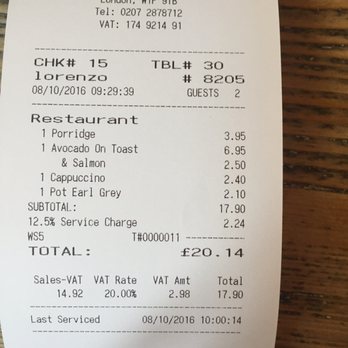

Very few people in the US are going to admire a principled stance you take against tipping. The moral of the opening breakfast scene in Reservoir Dogs was not that Steve Buscemi was a smart and principled dude. Harvey Keitel was the one you were expected to admire in that scene.
A very easy, relatively pleasant way to get through life in the US if you're well-off enough that you routinely buy coffee in expensive coffee shops: just always tip. Anywhere there's a tip line. You never have to figure anything out, and sometimes people really appreciate it.