Hunga Tonga-Hunga Ha'apai had already almost disappeared before the eruption.
A picture taken two hours before the widely publicized explosive detonation showed that the 2015 eruption products, which is really the north north west side of the much larger caldera that isn't even fully shown in this picture, had already disappeared. https://denvergazette.com/news/nation-world/a-planet-skysat-...
This youtube video posted yesterday does a good job of describing the geology of the area, and makes an accurate prediction that the volcano could be mostly gone.
Fascinating. Even after the last eruption it was quickly colonized by plants and birds. The mud found on it in the last expedition must have been from the volcano!
This[0] is one of my favorite pics. It's an ISS image of one of the Kuril islands, experiencing a volcanic eruption.
Good thing the islands are uninhabited (by humans), as those clouds at the feet of the main column are pyroclastic flows, and it is probably as close to Hell, down there, as you can get, without going on a tourist visa.
Volcanoes contribute to climate change (rather than being caused by them), but mostly have a cooling effect. When they erupt to an extent that they inject sulfates into the stratosphere, these sulfates seed cloud nuclei and increase cloud cover around the planet that reduces the IR energy from the sun.
Sometimes a single volcanic eruption can have a dramatic cooling effect on the planet, like Mount Tambora in 1816, which triggered an extremely cold summer in Europe and North America: https://en.wikipedia.org/wiki/Year_Without_a_Summer
Well, yes and no. It's not in any way caused by climate change, but previous large volcanic eruptions such as Krakatoa and Mount Tambora that eruptions of this scale can cause temporary climate change for a few months to a few years.
Do you have something, more specific than a long now foundation video link, with which you propose that a ~1-3°C temperature increase the atmosphere produces meaningful differences in volcanic eruptions, processes that are generally thought to result from processes driven in the mantle, athenosphere, and below? (Remember that the typical temperatures of these regions are around ~1000°C, and they are generally well-insulated by miles of crust.)
like heck I'd listen to "something something ice sheet rebound" except this is Tonga and it's quite some distance away from any ice sheets
don't make me watch the thing! this is your comment, you do the work and tell me what's meaningful in there and how it's connected
It's related without a doubt. We're talking here really about the magnitude of the effect. First, I do think there's a strong correlation between volcanic activity and atmosphere temperature variances. Historically, supervolcanoes did change earth atmosphere. That's a fact.
So, now you're mentioning that reducing the amount of polar ice, rising sea level do not present more pressure on the inner layers of Earth? I highly doubt it.
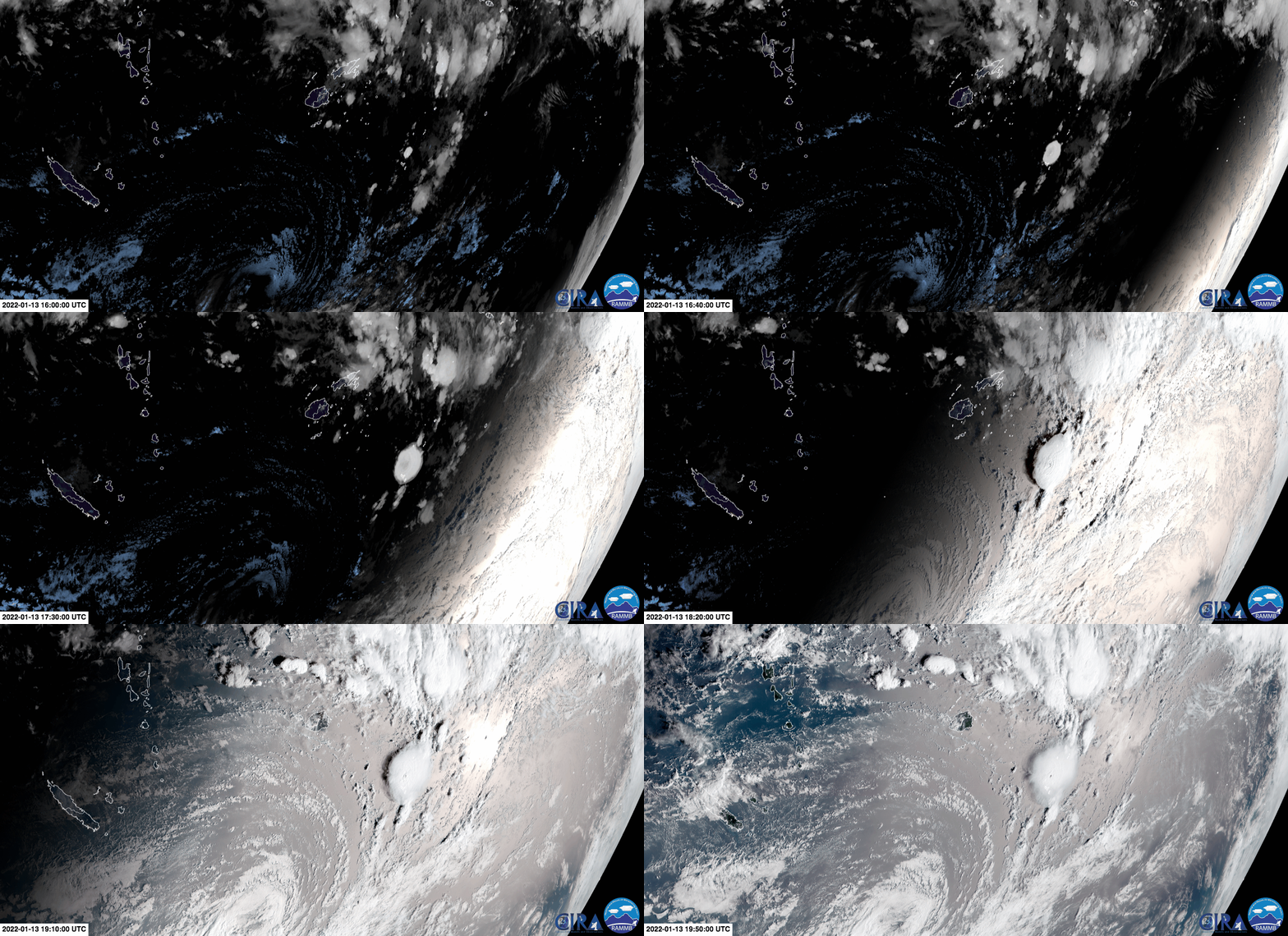
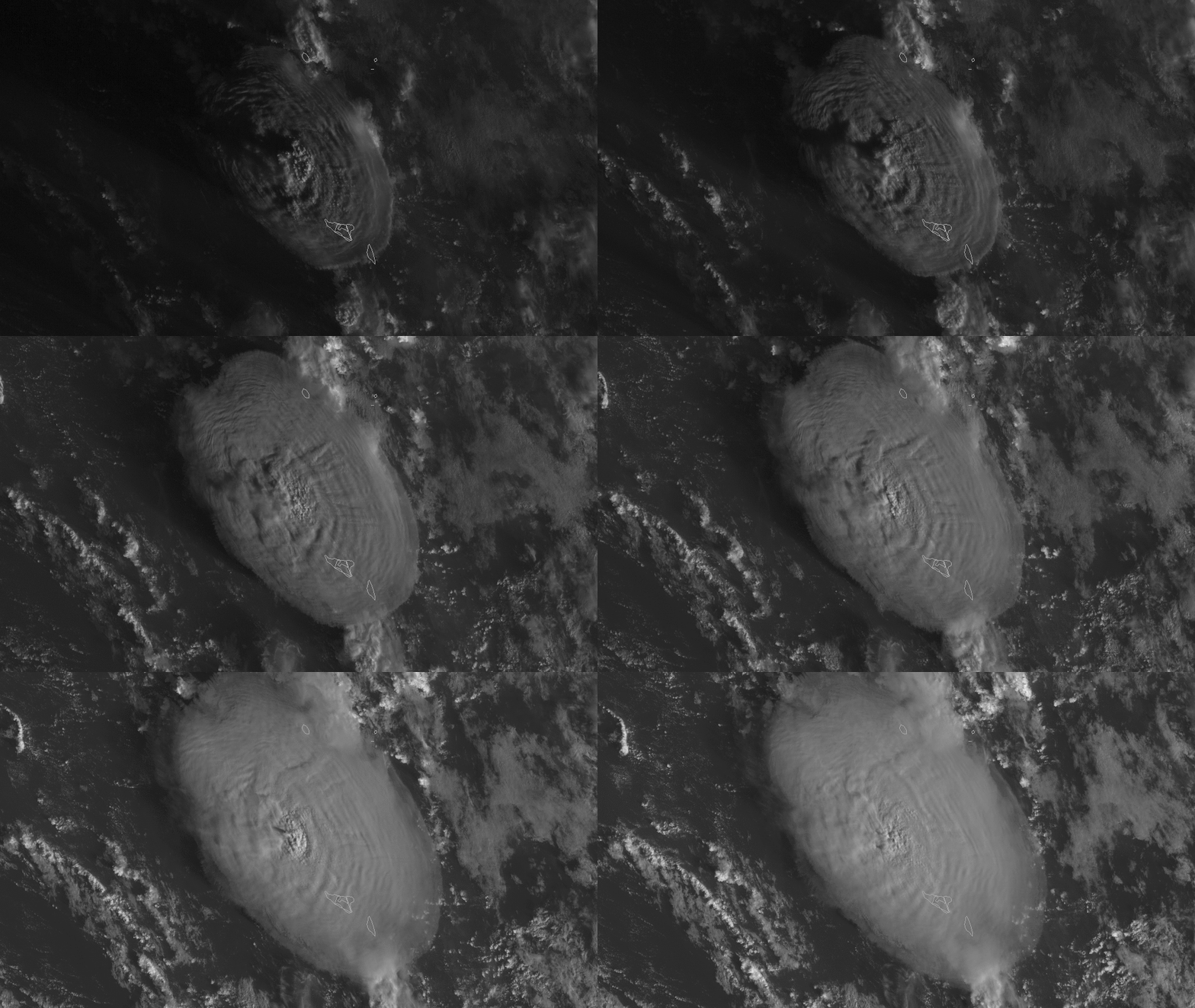
This isn’t really a “once in a lifetime” event; volcanoes erupt all the time and this one wasn’t particularly huge. In fact, there are 46 currently erupting with an average of 20 active on any given day [1].
A few times a year at least; this one was just more visivle than most because it happened just under the surface in an area of more or less open ocean, so there was nothing to deflect the shockwaves. It also started erupting in December so there were already satellites paying attention to it.
> Early data from Tonga's violent volcanic eruption suggests it is the biggest blast since Mount Pinatubo in the Philippines 30 years ago, volcanologist Shane Cronin says.
> It also started erupting in December so there were already satellites paying attention to it.
All images I've seen are from satellites and/or constellations that watch the whole Earth or a fixed part of the Earth, none have been tasked to specifically watch this area because of the eruption.
There seem to be people asserting that removing the weight of melting ice is destabilizing the crust and contributing to volcanic events and earthquakes.
Super interesting, and that's what I wonder: is this type of event happening because of something we haven't even thought of measuring (at least at scale)? No idea, obviously. Thanks for the link
No it's not related to climate change. Please don't get into the habit of labeling everything related to climate change. The news media does it way too much. For example, climate change causes gradual changes, not sudden increases in weather behavior.
In this case, this is geology which doesn't care at all what the climate is doing. It can affect the climate however.
> Is this whole thing at all related to climate change?
no, but in a couple years expect some guy to write a climate change article and show the before and after photos as proof...


A picture taken two hours before the widely publicized explosive detonation showed that the 2015 eruption products, which is really the north north west side of the much larger caldera that isn't even fully shown in this picture, had already disappeared. https://denvergazette.com/news/nation-world/a-planet-skysat-...