Those are related. Part of what makes engine-powered VTOL difficult is the engines. The V-22 Osprey has two propellors and two engines, but in order to handle an engine failure, there's a complicated driveshaft and gear arrangement across the middle of the aircraft to send power from the working engine to the other propellor. I don't know that anyone has seriously tried more than 2 engines for a VTOL system.
Electric power allows you to have lots of small fans, a few of which can fail without disaster.
Also, throttling turbines up and down fast enough to stabilize an aircraft doesn't seem to work well.
There are a number of VTOL aircraft that have used multiple engines. The Yak-38 used two lift engines and one lift-cruise engine, the VJ101 used four lift-cruise engines and two lift engines, and the Do 31 used two lift-cruise engines and eight(!) lift engines. Out of these, only the Yak-38 was remotely successful, and not nearly as much as the single-engined Hawker Siddeley Harrier (and its derivatives).
There are plenty of ways to stabilize an aircraft without relying on pure engine thrust, and turbofan aircraft have some advantages here.
The distributed electric propulsion systems do have awesome redundancy, but they have significant losses in efficiency compared to fewer, larger props, which really isn't what you want in an aircraft with severe energy density limitations. I'm curious to see what the production Lillium's payload, range, and power margin end up being.
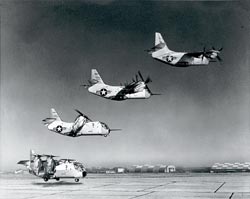
There have been a few flying VTOL prototype designs with more than two turbine engines. The extra engines were used for powered lift during takeoff and landing. But that approach turned out to be impractical due to safety, cost, and weight.


Electric power allows you to have lots of small fans, a few of which can fail without disaster.
Also, throttling turbines up and down fast enough to stabilize an aircraft doesn't seem to work well.