There was so much fear-making in Vienna when they pushed for a pedestrian-first shopping mile in the city center. It would destroy economy.. People wouldn't come anymore with there car to buy stuff.. And what happened? A lot more people came, people going just for walks etc. Business increased substantially and now the chamber of commerce (which was heavily lobbying against it) wants even more "Begegnungszonen" as they clearly improve business for the shops located there!
Reminds me of bars in NYC back when smoking bans were implemented. They all thought they would lose business. They gained it instead as new customers who had been avoiding bars because of the smell of smoke flocked there instead.
The opposite happened in my locale. I'm a musician, so I welcomed not having to come home from a performance covered in smoke. The bottom dropped out of the bar business.
Now this might be the difference -- my town is mid sized and a lot more sprawly. My hypothesis is that folks had for years settled into lifestyles that didn't involve going to bars, and moved into zones that had few or no bars. When the city banned smoking, folks didn't suddenly change their lifestyles.
It's been something like a decade, and things have kind of gotten back to normal (present circumstances aside, of course). But it took a long time.
Online dating also started to take off about the same time that smoking in bars was banned. Between online video games and online dating, the options for "socializing" after work have increased substantially in the last 20 years.
Moreover, Hoboken had to ban smoking too to regain its residents preferring smoke-free bars and restaurants in the city -- the opposite of naysayers' expectations.
It will happen with cars and plastic here (NYC) too. I hope the polluters don't resist as much.
I'm a member of a private club (not in ny) that allowed smoking well past the law disallowed smoking in the public places. Business started struggling several years back, finally, they realized that the problem was they allowed smoking so they voluntary banned it and now business is much better.
That analogy breaks down as smokers had no alternative. After bars banned smoking they lost few (if any) smoking customers while relishing in troves from the non-smoking demographic. Car-centric Viennese can still avoid Begegnungszonen.
Outside? It's weird, because I've been to a restaurant in Vienna and they had a three by two metre windowed and ventilated smoking compartment where smokers were enjoying their habit. In my country it's completeley banned in closed public spaces as it should be.
Are you talking about Mariahilferstraße? If yes it's really good now, can't believe there was resistance to make it pedestrian-first. Hard to imagine how much less livable was the area with regular car traffic.
One thing that puzzles me, living in Vienna as an expat, is how much the average Austrian cared about banning smoke in bars/restaurants/etc (which is fine, don't get me wrong) but how little they do about car smog.
Smoking was definitely the much bigger problem. The average Austrian, if he doesn't life in Vienna, is simply not confronted with smog. I guess what helps tremendously to cover up the smog problem is they constant wind we have. Honestly I only realized that it could be a lot better after my London visit. Until then I only have seen cities which were much worse then Vienna w.r.t smog.
American cities are not capable of running good public transit because they mostly use it as a combination of a jobs program and a poor-people access program. I was car-free for seven years in San Francisco (supposedly one of the relatively high performers) but my standard of living jumped significantly after I bought my car. Overall, I think I might even come out ahead.
I don't think I'm going to take public transit in San Francisco ever again. They are missing:
* Speed - BART is relatively fast, all Muni is very slow
* Frequency - BART is low frequency, Muni is also low frequency
* Coverage - BART coverage in SF is limited, Muni coverage is reasonably extensive
* Reliability - BART unannounced delays and breakdowns were a frequent occurrence. Unlike Tube delays (which were also frequent) I could not route alternatively because there is only one BART tube in SF. Muni does not have arrival times.
* Usability - You cannot tell before you pass the turnstiles at a BART station whether the lines are delayed or when they will arrive. One exception I know if is Montgomery St. Station but that's the only one.
In Amsterdam, before the corona crisis, the metros went every six minutes. If one gets delayed or you miss one, you just grab the next. Waiting 5 minutes can be awfully long if you're used to grabbing it though, and if it makes you miss your connection that sucks (train mostly, other metro is no problem). Also, parking in Amsterdam (center) is very expensive, AFAIK something like 7 EUR an hour last time I checked. I got family living there; you don't want to go to a birthday and spend 20 EUR on parking. Public transport is cheaper then. Do remember that removing cars still means trams, and pedestrians and cyclists need to be aware of these!
Does buying a car really make sense in a Zipcar/Getaround/Silvercar world? The numbers just don't work out IMO. Not once you factor in fuel, maintenance, damage, insurance, interest, car payments and/or depreciation, $300+/month in parking fees and the fact I still have to rent a bigger car if I need to pick stuff up or drop stuff off or shuttle more people. I gave my car to my parents a couple years after I moved to SF and have never looked back.
It's just so easy to get a car in SF whenever you need it for a few bucks -- sometimes in 15 minute increments.
What's availability like, though? I know that my car doesn't make any financial sense, but my primary use case is getting out of town to go hiking, skiing, etc. I've looked into Zipcar before, but it seemed like I'd have to reserve a car ahead of time to have any chance of getting one on a nice day. In Seattle, we used to have ReachNow, Car2Go and Lime in addition to Zip, but those others recently closed down so I'm also concerned that car share isn't really a sustainable business.
Personally, I've always had a car since school but I've been in on things like a ski house with people from NYC and I lead hikes in New England on the weekends. People can (and do) carpool, rent cars, etc. but it's quite a pain if you do it regularly. Most of the people I know who liven in Boston and are active in weekend outdoors activities own a car because of the hassle of renting.
1. Caltrain which connects downtown SF to San Jose and Gilroy, notably bypassing both SFO and SJC airport [1]. This is a low frequency, mid-long distance commuter rail link that runs almost exclusively outside SF.
2. BART which connects SF to the East Bay, notably serving both SFO and OAK [2]. This is a medium frequency, larger train - think a hybrid of commuter and light rail. It's fast, long trains that run medium distances.
3. Muni Metro which is the SF subway and light-rail service. In the downtown corridor, all the major stations (from Civic Center to the Embarcadero) overlap with BART, but the trains continue out west into the Sunset [3]. This is high-ish frequency, smaller trains that (outside the downtown corridor) run overland.
I live in Tokyo and I can assure you that living car-free is lovely.
I used to love driving, then moved here and stopped caring altogether when I realized that public transport here is significantly faster (and cheaper) than using your car to go from point A to point B.
Quite so. And, I forgot, you can use the time commuting for something that requires your complete attention - like reading, studying, or even just deep thinking - that you simply can't do when you're driving.
So not only it's faster, it actually frees up time for other things.
> I live in Tokyo and I can assure you that living car-free is lovely
So you really enjoy packed subways that make you feel like cattle pretty much every time of the day? Sorry but Tokyo is the best example of "best in class public transport" being completely over capacity for the amount of people they have to transport every day.
In my personal opinion, better that than trawling slowly through traffic jams. If their train system is over capacity, more people moving through cars would be even more of a nightmare.
The feeling of independence (or not feeling like “cattle“) is substantially reduced in big cities, where you are subjected to a lot of traffic rules, overcrowding of cars, jaywalkers, accidents, potholes, diversions, expensive parking space... I could go on.
> In my personal opinion, better that than trawling slowly through traffic jams.
I think the best way to describe it is that it sucks either way to commute in Tokyo no matter what means of transports you end up using, except if you can live very close to your office, which is not the experience of 99% of people.
As mentioned in my previous comment, it really does sound like you don't know what you're talking about.
Commuting in Tokyo is not without problem, but consistently better than commuting anywhere else I've been.
Also, you seem to completely ignore the point that the alternative "everyone commutes by car" (or you have other alternatives?) would result in a constant gridlock given Tokyo's scale - so it would be orders of magnitude worse.
I've always wondered why they don't do 'assigned seating' in a metro train. It is feasible to know everyone's destination station at the time of boarding. And it is feasible to know current occupancy of each car in the train. So potentially, people can be assigned to a specific car (need not be a specific seat), such that crowding in each car can be capped and more cars per train can be added without having to increase the platform length. Also, even when platform length isn't a constraint, I have seen metros running with less cars and preferring to keep it crowded. Why is that?
> It is feasible to know everyone's destination station at the time of boarding.
I challenge you to find a mechanism that works for this and is quick enough to keep up at rush hour in the average Tokyo train station.
Additionally, people move at different speeds through the station due to factors like age, familiarity with the network, disability, bladder capacity etc.
It’s a non-trivial problem to solve, and likely only marginally improves user experience.
Put an electronic sign up on each station platform indicating where the cars with most space will be on the next train. Some people will rush to those cars, some will just stay where they were. By varying the amount of notice given or the threshold where you consider a car "less full", you can distribute the travellers more evenly.
I suspect the reason this isn't valuable is that the feedback loop is already pretty good at high occupancy rates: when one car is at capacity, every other car is too.
You can indicate your destination at the entry turnstile to the platform and it will tell you two things: (a) the car you should board, and (b) the car you should exit from at the destination station. Most times, (a) and (b) are same. Some times, (a) and (b) can be different – say when you have more cars than then length of the platform supports, then some cars will hang off the platform length and hence their doors won't open. If you were assigned to board such a car, you have to make way to another nearby assigned car whose door can open, which is assigned to you so that everyone won't crowd the same last car aligned to the platform.
Have you never been in a metro train before? There's not actually that much seating, if you only had people sitting down that'd be like a tenth of the train's capacity.
Not to mention the trains stop every minute or two, and people don't, like, book that stuff ahead of time.
I guess you took my "assigned seating" literally. I obviously didn't mean _seating_ but more of an assigned spot in a train car. The point of an assigned spot is that there can be different designated areas for different people – elderly, women, kids, disabled, those with cycles, those with luggage, general etc. and now with Covid19, these assigned spot density could be appropriately adjusted.
I still don't see how that would help. What does adjusted mean? The problem is there isn't enough capacity, yeah they could just reduce how many people can take the train, that means people being late to work or otherwise with an impacted schedule.
And they already know which train routes at which times are crowded, if they could just add more capacity they'd have already done it.
- which cars are recommended for getting off at a certain station, based on proximity of the exits at that station to each car
Google Maps (as well as other apps) also show similar information when asking for transit directions (for the former it only gives you the average on the whole train, not by car)
Not sure how you can compare the comfort of sitting in a car with your own space versus standing for an hour or more stuck in between everyone's armpits with no space to move beyond an inch.
The alternative in Tokyo (and most other big cities), if everyone felt like cattle on public transport and decided to move to their own personal vehicle, would be an eternal gridlock of the city. You would have your own space, but you would also be stuck in your own space for hours on end barley moving forward.
Hmm, yeah, I can see what you mean about a car giving a little more independent space. I guess it's the fact that I could get off whenever I wanted? I could look on my phone or listen to something without having to worry about driving the car as well. Or, I guess managing a car has always felt more responsibility than privilege to me.
I guess also "an hour or more stuck in between everyone's armpits" is also like a worst-case scenario, and it happened to me infrequently enough that I didn't mind overall. Or, Tokyo rush hour might have been like commuting on the LA interstate? Neither are very fun, but driving along the Pacific Coast Highway is a more ideal kind of thing. I think I've had a lot of commuter rail situations like that too which have made up for it.
Living in Tokyo as well and yeah, the subway is a nightmare. It's GOOD, gets you everywhere pretty fast but for daily morning commuting - nah. Taking an overcrowded train every day squeezed into heaps of people that all don't want to be there gets very depressing with enough repetition cycles. A good reminder of how insignificant everything is.
I am glad I have flex time and can avoid peak-time trains.
But Tokyo is also very bicycle-friendly with not many aggressive drivers (ignoring taxis), so that's my pick to get around.
Even before this corona-virus, Tokyo Metro had been providing small incentives to get people to commute before or after the crush hours. I imagine such attempts will be magnified in future.
I use this system every day and for me, it's not just good, it's fantastic. The number of routes, frequency and reliability of service is unsurpassed in any city. Notorious crushing may stick in the mind, but moving around the entire city at any time of day...
That visceral image of over-crowding is real but not really representative. From now we'll all need to do more efficient sharding of work schedules and locations.
Tokyo is the opposite of what i would call bicycle friendly. People there are probably much more careful than in other cities, but i was amazed at the lack of infrastructure for bikes when i visited the city a few months ago.
Bikes are either merged with car traffic, or simply go on the sidewalk, but i haven’t seen a single bicycle lane..
It's more bike friendly than virtually every US city by virtue of being dense and (probably?) careful drivers. And that it's acceptable to bike on the sidewalk.
> you feel like cattle pretty much every time of the day
First of all this is not true, so I would start questioning whether you know what you're talking about at all, or whether you're not trying to have an informed conversation based on facts.
Outside of peak rush hours, roughly between 8-9 in the morning and 6-7 in the evening, and mostly on a few well-known lines, it is extremely unlikely for trains to be anywhere close to "packed". Let alone making you feel "like cattle". This kinda already undermines your point.
It is true though that during those peak times, on those lines, the system is over capacity. And this is where working for a company that has flexible working hours and that allows work from home helps tremendously. While this is still not widespread, there are active policy campaigns to push more businesses to enact the same measures - exactly to ease congestion in those peak times. So the problem is not structural, and there is a clear direction that can improve things.
Furthermore, even today with some planning and knowledge you can avoid the worst of the congestion (see my point about reach in my first comment).
Anyway, to answer your question: no, I don't enjoy packed subways, as I don't enjoy being stuck in traffic, or being robbed at gunpoint. But to me (your question asked whether "_I_ enjoy packed subways") it really does not matter, because both are things that I normally do not experience.
The alternative would be that almost everybody can't get to their jobs. A subway line running at full capacity can't be matched by cars in throughput. Tokyo as it exists today would be literally impossible without public transport.
Please note that European cities are moving away from traditional public transportation (buses, underground, etc.) in favour of personal transportation such as bikes and scooters.
I don’t see that happening enough to more than complement the traditional public transport. I do see a lot of people sick of battery powered scooters littering the sidewalks though.
I think some people are commenting from a perspective of a society/environment where a car is basically mandatory, where you cannot really go anywhere or do anything without a car, or where it is at least hopelessly cumbersome to use public transit and dangerous to ride a bicycle.
Not just in this discussion, but whenever the subject of transportation and public transit come up.
If you asked me ~10 years ago, I could not have imagined not having a car. I finally sold mine 3 years ago and started biking and taking public transit everywhere, and it works just fine. On the rare occasions where I have needed a car (moving apartments, a wedding in the middle of nowhere), rental cars covered my needs.
The amount of money I save by not having a car is not trivial.
When we go visit my girlfriend's family in southern Germany, renting a car is completely mandatory, it's more or less impossible to do anything without one. So I absolutely understand where people are coming from, you need an environment where public transit and walkability are prioritized for this to work.
I have done the opposite direction. I moved from a big city where I just would not even think about getting a car -- it would be just a huge expense that would sit there gathering dust and depreciating faster than I can sneeze. I would spent more time walking to whether I parked it (and finding a place to park it) than I would ever save by driving instead of walking.
Then I moved to a smaller city with a larger suburb area. Within 6 months I had bought the car. The last straw was having had to wait an hour for the bus, carrying grocery bags. At the same time, you find parking spots almost everywhere, and walking was not that easy, with longer distances and in many places not even sidewalks.
> I'd love to drive to a city centre and then have a walk without the traffic noise
There's a huge inherent contradiction here though: You are creating the very problem you want to escape from for everyone along your path of travel. land tends to be quite expensive in the city center, and parking is not a good use of it. Are you willing to spend $50 to park your car there to drive to the city center?
>Are you willing to spend $50 to park your car there to drive to the city center?
That's pretty common for people who drive into big cities for the day (or indeed to work for a day). Maybe they park on the outskirts and take transit in. But that takes time and, especially for a family, the savings may not really be worth it.
Yeah, that's why I chose that figure; it's roughly what it costs to park for a day here in Manhattan. And that's before the bridge and interstate tolls, if you're coming from the west.
To most people it isn't worth it to spend that much, especially because traffic on the bridges and tunnels is usually so bad that the trains are not only cheaper but faster, too.
Kinda agree but thats a model that works for many places that switched to car free centre. In many cases parking lots already exist in outskirts of the centre.
Completely car free city is a pipe dream. Diversity is good.
The mere presence of cars actively hurts walkability and increases the risk of accidents for pedestrians and cyclists.
Cars need special roadways with expensive construction methods, maintenance, signaling and provisions for parking their bulk.
This takes up huge amounts of space that could have been used for waking streets, bike paths and attentive urban spaces, instead of large expanses of boring black asphalt.
Ask a shop owner whether she would rather have thousands of people in cars driving by her store and not even look at it, or hundreds of pedestrians who stop and look at her display windows.
Ask a cafe owner whether he would prefer to have his outside seating right next to a major thoroughfare, or on a busy walking street.
Cars actively make environments hostile and uninviting to people.
I am talking about the general metro area, not just the city centre.
In a lot of cases (at least here) the shops were there first, and the thoroughfare grew in use next to them. This road cuts directly throuhh the middle of the entire city.
Specifically a stream that had decent walkable paths alongside was put underground and a big thoroughfare put on top of it. I'm part of an initiative to reopen the stream and put the traffic in a tunnel underneath, in order to create a park/urban space for people, rather than cars.
I want the entire city to be pedestrian first, bicycles second and cars dead last.
In my nearest city quite a lot of the problem is traffic travelling via the centre. If someone wants to go West to East they will travel through the centre rather than around the outside.
What you really need is a shift so the closer to the centre you get the more you are forced out of the car and onto public transport and ultimately cycling or walking. Cars should be for when you want to leave towards the highway.
The "car mandatory" suburb sprawls are a huge part of the problem.
Most of them are deliberately deprived of decent public transit, because a segment of people don't want buses and especially don't want trains in/near their neighborhood. The most common explanation I've heard is that public transit attracts the homeless, the poor and criminals.
A lot of suburbs are even designed to prevent walkability for the same reasons, leaving out logical shortcut footpaths and bike paths between streets and cul-de-sacs.
This obviously speaks to a whole host of societal problems and paranoia, to be honest.
With a good local train network with stops in every neighborhood, you could just leave the car at home and not have to worry about parking in the city.
I think some people are commenting from a perspective of a society/environment where a car is basically mandatory, where you cannot really go anywhere or do anything without a car, or where it is at least hopelessly cumbersome to use public transit and dangerous to ride a bicycle.
I suspect some of it is political, if you are right leaning then you may well view cycling and public transport as a step towards socialism. It probably doesn't have much to do with the practicalities.
I never even got a drivers license and have lived just fine so I'm also always shocked by the comments here in transport-related threads when people talk about not having a car as if this is somehow a fantasy utopian vision.
And this also I might add includes families with children. While I don't have any I know a lot of parents who don't rely on cars either.
One of the bigger issues is that being car-free simply is not an option in large swaths of the US and other places. I've lived in places with zero public transportation. One town had taxis: You could not schedule them to get to work on time. The company would not give reasonable call-ahead times: They would simply say it might take 5 minutes or 2 hours. This same city wasn't walkable.
One city had buses, which mostly served the college campus. The busses didn't run on Sunday, late enough at night for second shift workers to get home, nor run to the edges of town (where some factories were).
So many places aren't walkable (or can be easily cycled). One place I lived... the quickest route was on a state road, and didn't allow cycling/walking and wasn't safe for it either. The police would stop you, especially at night. The route that you were allowed to take was much longer.
I am now in a place where I don't need a car. (and I forgot to transfer my license while moving to another country, so I don't drive). Walking is safe. Cycling is safe. There are 'shortcuts' for walking/cycling. Public transport is pretty robust, though the overnight hours could be improved. I can even go to other cities - including some not-so-big-cities - using public transportation (trains or busses). It is wonderful and definitely feels like some utopia. It is so freaking wonderful to have such an option.
I was shocked by lack of public transport in Houston when I visited a friend there in 2008. He warned me to rent a car in the airport, but still it was unbelievable by European standards. And people in richer suburbs actively opposed any public transport claiming it just brings crime. And forget walking. In many cases one cannot legally reach some areas by feet.
I’ve raised three children in Manhattan without owning a car. None of my children (who are all college age) know how to drive, which is always an amusing point of interest among their new friends when they get to college.
So when they were younger, there are times when you simply do need a taxi. It’s infrequent — buses, subways, walking cover most of your needs — but there are times when you really need one.
I would say it's positive to not have to drive a car, but having a license and some driving experience is certainly a good thing, even if you don't rely on a car for daily transportation.
Sometimes a rental car/van/truck is the proper tool for a task.
I got a drivers licence as I was pushed by my parents to, but I hated it. The thought that a small mistake of mine would end up killing someone. Now I'm married with children, living car-free and I'm loving it. My children can't stand being in a car, and since they are not used to it they puke anytime they have to drive more than 5 min. I can't imagine how many children are forced to ride a car and get sick until they just "suck it up".
I have not heard of kids commonly getting sick until they're used to it, but I also haven't been around that many so if it's one in ten or less, odds are I've just never encountered someone who had this (as kid or with their kids) and mentioned it. But I'd feel confident saying this isn't normal, as in a majority doesn't have this.
I have zero trouble understanding that owning a personal car may not make economic sense in many cities. I have more trouble really grokking the no driver license. So many trips associated with both work and vacation experiences--or even weekend activities outside of a city--require renting a car. I guess you can consciously avoid those situations but it seems very limiting.
(Certainly I couldn't really have done jobs I've had without being able to drive a car and would have missed out on many, many travel experiences including just visiting family.)
Swiss here without a licence. I agree that a licence would be useful at times but in the 15 years I could have had one, the perceived value of it never outweighed the cost of acquisition.
When I was 18 and wanted a licences, I didn't had nor was willing to save up the about $3000 it costs, and later, when I had the money, I wasn't willing to put in the dozens of hours of my time. So getting one is on my "maybe later" list of life todos.
Thing is in Switzerland, as a software engineer (compared to jobs who definitely need licences), using a car is not just a matter whether it makes economical sense: Public transport is often just faster and in my opinion more convenient.
E.g. my last time commuting from one city to another was, door to door, 60 min by train and would have been 50 minutes to 1 hour 30 minutes by car depending on traffic. The big difference being that I spent the time in the train working, reading, sleeping, chatting with people etc. and after work I could spontaneously decide to go out with friends, without worries how to get home after some drinks.
Same for weekend activities. Public transport gets you there and especially in Switzerland, cities are so small that you can actually just walk out. You can start e.g. a bicycle tour from your city apartment, no need to get somewhere else first.
As a said in the beginning there are still situation where I wish I had a licence. On the other hand, I'd end up using it maybe 2-3 times a year and I'm not sure how comfortable and safe I would be driving with that little regular experience.
growing up i remember sorta envying the kids who got hardship licenses at 14, allowed for teens to drive to work and contribute income to their family, completely ignoring the familial/financial situation borne of that. in that small, mostly suburban city, everyone drove, and everyone got their license by 16 (unless you failed your test a bunch of times).
imagine my shock when i went to college with a bunch of kids from “the city” (nyc) who never got a license in the first place and many didn’t even see the point of it. truly mind-blowing.
now i live in LA and haven’t owned a car for years (but still have a license). it’s great! the weather makes this the perfect city for mass biking/scootering, if only we could convert even some of our abundance of street parking into bike lanes.
If I lived in Boston--as opposed to a fairly far out exurb--I could imagine not owning a car given that I mostly work remotely. Though I probably still would so I could get out to mountains, etc. for the weekend. In any case, I would certainly want to be able to drive so I could do various vacations and sometimes necessary work driving. Some of this is less common in Uber days but certainly not non-existent.
My point again isn't about owning or not owning a car but being able to drive a car when needed.
When do you need to? If your family never drives, you wouldn’t see a need to.
It’s almost like asking “well wouldn’t you want to be able to go camping?” Sure, if you grew up camping you might know you want that. But if you didn’t, why would you even think about going camping?
Similarly, if you’ve only lived in a city where you can hire a driver (cabs, moving vans, etc) as needed, why would you ever think you need to be able to drive? What is the situation you’ll be in where you need a license?
I've lived without a car for years but I still find a license invaluable for the few times I'm moving or helping someone move. It's much (much!) cheaper where I live to borrow a car from a friend or car share service than pay a moving service. I aim to never use a car except when moving or visiting family inaccessible to public transit.
Leaving aside that one office I do go into sometimes is in a suburban office park (but I suppose I can take commuter rail/Uber when I needed to go in). I have lots of friends scattered around the area. Most do not live in the city. It's very usual for me on weekends to go to the mountains/shore/skiing/etc. all of which need cars. (And the handful of people I know who live in e.g. SF without cars use Zipcar and rentals a lot to pickup things, etc.)
When I travel in the US, I go places like national parks which all need cars to get to.
I would absolutely not be fine with living in a city with no real way to get out of it.
I don't know where the OP lives, but in Europe it is pretty durable. I have a driving license, but I never owned or rented a car while living in the EU. I mostly cycled while living in Budapest and London. You can use the train or fly if you want to go everywhere else. Everything is cheap (compare to owning a car) and reasonably fast.
When I moved to New Zealand after ~2 weeks I bought a car because it wasn't feasible to move around without one.
It's definitely more feasible in much of Europe than in most of the US. You're still somewhat constrained to where there's decent rail or bus service--or where you can go with friends/partner; you're probably not going to travel around the Scottish highlands without a car.
But, if you live and work in a relatively major city and are fine with mostly traveling to and from where there's good public transit you can make it work.
It's much harder in the US if only because, outside of New York City, there's sort of an expectation you have a car and things tend to be organized with that expectation in mind. People can and do get help from friends with cars but this becomes harder as you get further out of school.
Seeing the off the beaten path countryside is the one thing I miss about not using cars. I have a license, but only really learned to drive comfortably in my home area.
But the bulk of work and vacations are fine. For work I’m usually in denser cities or can use Uber/taxis. For vacation, I also generally go to places with train infrastructure, or to a specific destination where a car isn’t needed.
Growing up we didn't have a lot of money and my family didn't have a car, (and a license in Germany is quite expensive, about 1k and it involves a ton of lessons) or vacations, so I basically just bolted to a university town when I was 18 and as a developer in an urban environment, I've never needed one since.
Nowadays as an adult, I think on vacations it might actually be a good thing because I've found just taking trains in foreign countries is actually one of the more fun aspects of travelling.
I've been to Eastern Europe several times over the last few years. In some countries public infrastructure is so-so but that's mostly a function of the countries still not being super wealthy. Overall I had a good experience.
East Europeans need to stop this self-colonizing attitude. The trains are reasonably OK, with great variations from place to place. Is there room for improvement? Sure.
I very much doubt that the average train speed in EE is 35 km/h, and I traveled extensively by train from the baltics through the balkans over several decades.
If you take the average EE train, it is worse than Western Europe or Japan, comparable or better than US, with more extensive coverage.
> Conversely, as I will show, data show that local infections were negatively correlated with subway use, even when controlling for demographic data. Although this correlation study does not establish causation, it more reliably characterizes the spread of the virus than the intuitions and visual inspections that Harris relies on.
> In multiple other countries, one cannot see the transit cities in the virus infection rates. In Germany the rates in the largest cities are collectively the same as in the rest of the country. In South Korea, the infection is centered on Daegu; Seoul’s density and high transit usage are compatible with an infection rate of about 700 in a city of 9.5 million, about 1.5 orders of magnitude less per capita than in most Western countries and 2.5 orders of magnitude less than in New York. In Taipei, the MRT remains crowded, with weekday ridership in February and March down by 15-16%. In Italy, car usage is high outside a handful of very large cities like Milan, and Milan’s infection rate isn’t high by the standards of the rest of Lombardy.
> However, rest-of-world evidence does not mean that the New York City Subway is safe. The Taipei MRT has mandatory mask usage and very frequent cleaning. German U- and S-Bahn networks are a lot dirtier than anything I’ve seen in Asia, but much cleaner than anything I’ve seen in New York, and also have much less peak crowding than New York. New York uniquely has turnstiles requiring pushing with one’s hands or bodies, and the only other city I know of with such fare barriers is Paris, whose infection rates are far below New York’s but still high by French standards.
> So the question is not whether rapid transit systems are inherently unsafe for riders, which they are not. It’s whether New York, with all of its repeated failings killing tens of workers from exposure to the virus, has an unsafe rapid transit system. Nonetheless, the answer appears to be negative: no evidence exists that the subway is leading to higher infection rates, and the paper does not introduce any.
Well, Taipei is the real secret. That's the one we need to see because if metros are a ticking time bomb for disease then they should be dying any second now.
I hope we remove cars from city centers in Europe and replace them with more bike lanes and public transport. Ie the small particle pollution from cars is making pedestrians and cyclist sick. I hope we put car parking centers outside the city center and offer good inbound public / private transport.
Somewhat surprisingly, studies ([1] in French, sorry) show that on average drivers breath worse air than cyclists actually. The main reason they bring up is that the relatively airtight cabin accumulates particles, whereas people traveling in open air can get short high peaks but lower pollution on average.
I assume city needing to be properly set up for it is a large part of the issue.
Might have become better since, but 10 years back Paris certainly was not, the public transport inside paris was pretty good (though cycling was bad, that I know is getting better at least), but if you came in driving from the suburbs there was no good way to transfer, no "transfer nodes" where you could easily leave your car and hop onto the metro or your bike.
For multi-modal to really work you need easy and cheap ways to transfer between modes, e.g. parking on the edges of the dense public transport network which is either free or included in the transit pass to encourage use, otherwise the incentive is to keep driving inside.
I don't want to trash your hopes, but the particles are pretty much independent from traffic nowadays (see how Stuttgart is doing these days). The drought around Berlin will probably kick way more fine particles into the city than all Diesel cars together. The only thing that could help would be more trees and less dense cities.
I think that the trouble with pollen (from the trees) is mostly allergies.
However, it seems to me that allergies are much more frequent nowadays than they were in the past, and mostly concentrated in the cities. There's a study [1] linking allergies and asthma with pollution.
> Strong epidemiological evidence supports a relationship between air pollution and the exacerbation of asthma and other respiratory diseases. Recent studies have suggested that air pollutants play a role in the development of asthma and allergies.
So maybe more trees IS the solution, even though it would seem they're the problem?
No, it’s temporary. They’re planning reduced capacity for the metro as part of phase 2 of Italy’s coronavirus response - a careful reopening of the economy with some significant restrictions remaining in place. Eventually it’ll be safe to stand in packed train carriages again, but not yet.
Hm the article didn't make that particularly clear, and on re-reading I'm still not seeing anything to indicate they plan to revert their capacity reductions in time, but I do hope you're right.
San Francisco and Oakland have implemented a 'slow streets' initiative, gradually closing off some streets to through traffic (residential/emergency vehicles only) to allow more room for exercise. Predictably people have begun to deploy street furniture of their own (flower planters and so on) to make it more permanent. Nobody wants all the traffic and associated pollution back. Hard to predict how this will pan out as the necessity for social distancing recedes.
That’s obnoxious. Cars and vehicles are necessary for many people and many purposes and cities should not use this crisis as a Trojan horse to force changes hastily. Deploying furniture to make it permanent sounds like the doing of a renegade cycle club and not everyday people, however.
That street runs both ways. Car culture is already amazingly pushy and obnoxious in the degree to which it makes life difficult for pedestrians, cyclists, etc.
First, there is a lot of development that falls under what I call "Fuck you pedestrian" development. It's not uncommon for intersections in big cities to require a pedestrian to cross all three ways to get to the other side or walk a block to cross at all. I've been to strip malls where fencing forced pedestrians to walk the long way around, following the same route and going through the same entrance as a car, instead of providing a small gap in the fence to save them many steps.
Second, streets that prioritize cars are generally wider and push development farther apart. This makes errands on foot longer than they have to be.
Third, I've lived without a car for more than a decade. Cars are faster on the open road over long distances. They aren't necessarily faster for running errands in town, assuming you can shop reasonably close to home. I have many times experienced this.
I leave on foot and someone else goes in their car and we get there about the same time because they have to stop at traffic lights, etc.
Fourth, Amsterdam isn't "cherry picked." It was intentionally designed to be bicycle friendly by people who chose to make that a priority, which is why it is. The US has chosen other design priorities. Unsurprisingly, we've gotten different results.
I'm not being disingenuous. I've lived without a car for more than a decade and I wanted to be an urban planner at one time, so I've read plenty of stuff pertinent to the subject.
People who love cars in the US saying that car culture is the norm and is proper and the right thing and other people need to quit their whining is not unlike white Americans acting like people of color are just whiny crybabies and racism isn't real.
The fact that you like cars and car culture works for you doesn't on the face of it prove that other people with other lifestyles don't find it amazingly inconvenient and obnoxiously so. It's just usually not worth saying because most people don't want to hear it and won't really listen. They will just double down on their existing prejudice, which is, itself, an obnoxious thing to deal with.
Amsterdam promoted cars and was very bike-unfriendly from the 1920s to the 1970s. It took a lot of concerted campaigning to get Dutch politicians and urban designers to start prioritising bikes again.
Nah. People have all the right to refuse car smog and the dangers and troubles derived by having car traffic. Our generation is the generation that will have to stop using cars, whatever the sacrifice it takes is.
Remote working, better public transportations financed by taxes on private transportation, there are plenty of ways to do this without disrupting anyone's life, but since governments aren't stepping up fast enough, citizens have to take the initiative.
You’re pretending as if cars don’t give you a lot of benefits but they do. Outside of ultra dense gridlocked cities like NYC, cars free you to get a lot more done on any given day than you could otherwise. They give you time, which you can’t acquire easily.
People who live there or are servicing residents (deliveries etc) still have access, it's only through traffic that's disallowed. This is unlikely to add more than a few blocks to your journey.
In my opinion those who thoughtlessly leave their unused motor vehicles blocking up the side of the road (or worse, the pavenemnts!) are the renegades.
This preprint from Italy claiming to have detected SARS-cov-2 on particulate matter offers the intriguing hypothesis that the outbreak in Lombardy may have been exacerbated by the region's higher levels of pollution.
https://www.medrxiv.org/content/10.1101/2020.04.15.20065995v...
My family (child, spouse) and I live car free in Oslo, Norway. It’s amazing.
We used to own two vehicles when we lived in the States. I did take public transportation during the week, but still had to drive almost everywhere else. When everything is designed around cars, it can be extremely difficult to try and go without.
Oslo was mostly built before cars, so roads are smaller and highways go below or around the city. Oslo is slowly making it harder for cars to be within the city, and actually changing streets to be car-free. Having a car here is not a need, but a want. I like that.
The highways today mostly go below the city. But that is a quite recent thing, the last parts of the Opera tunnel for example was opened only 10 years ago. Car traffic was a big problem in the 1970-2000. Making modern Oslo nocar-friendly and Oslo center pedestrian/bicyclist friendly is the result of massive investments in infrastructure over several decades.
Thanks for sharing. It is impressive to me that a city of Oslo's size was able to achieve that. I know of one similar sized city in the States that has similar high-level plans to re-route major roads and highways, but they never make much progress beyond committee meetings.
I think you missed my point. If more than half of Oslo was built after 1950 it kinda invalidates that the city was built before cars. Oslo, like most cities, expanded heavily in an era where cars existed. So it has less to do with when cities were built and more to do with what urban planning policies different cities had. Different cities went with different paths despite all of them expanding at the same time.
But the answer your question: Vienna. Vienna has smaller population today than it did in 1910.
> I think you missed my point. If more than half of Oslo was built after 1950 it kinda invalidates that the city was built before cars.
You're missing the more germane point that the relevant metric for "built" in this context are roads, not living accommodations. More people live in Oslo than in the 50s, but the roads and city blocks within ring 3 are what they are from prewar times, i.e. tons of small 1-way streets and the like.
Case in point : many, if not most, of the apartment buildings in "Gamle Oslo" (literally "Old Oslo" - the downtown area to the east of the railway station) were built in the 1980s or later, but the roads around those new constructions are still narrow 1-way prewar streets.
To my mind the parents point was pretty clear - Oslo is an older city, particularly from an American perspective, and you have to travel pretty far out from the city center to find an urban infrastructure that accommodates cars in the way the younger and generally more modern cities in the US (outside the northeast) do. This is 100% related to the city center being built before the dawn of ubiquitous private vehicles, and not to choosing some arbitrarily different urban planning "path".
Another comment mentioned the underground highways that have in fact done wonders to move traffic away from the over-congested city streets, which only reenforces the idea that the city proper was not designed to accommodate even a modest volume of car traffic.
> But the answer your question: Vienna. Vienna has smaller population today than it did in 1910.
That's interesting, but it's noteworthy that it has a higher population today than it did in 1950, so yours is an incomplete answer. The geopolitical reasons for Vienna's population in 1910 are unique, what with being the capital of a sprawling trans-national empire that ceased to exist.
Anecdotally, where I live in Seattle, the people who are still driving are driving like maniacs...speeding, ignoring stop signs, lights, etc. There may be more room for cyclists, but it doesn't really feel safer.
> Anecdotally, where I live in Seattle, the people who are still driving are driving like maniacs...speeding, ignoring stop signs, lights, etc
This is likely similar everywhere. Traffic controls idiots speeding. For another anecdote, check out these statistics from Toronto [1], approx 460% year-over-year increase in stunting charges ("stunting" being the charge when someone is going more than 50km/hr over the speed limit.) One person recently was going 270km/hr in a 100km/hr zone (cops caught them because a tire blew).
[1] "Between March 16 and April 22, police have issued 6,978 speeding tickets and 224 stunt driving charges. In the same period last year, police issued 5,504 speeding tickets and 40 stunt driving charges." https://www.toronto.com/news-story/9960534-toronto-police-ch...
Toronto has a huge road violence problem, on top of an enforcement problem. Traffic laws are almost never enforced, the police is complacent, and road violence goes unpunished. It is absurd and hard to believe, you have I see it to believe it. Drivers know that and have no problem intimidating pedestrians and cyclists because they know absolutely nothing at all will happen. Either the police won’t even bother to take the complaint seriously, they’ll turn a blind eye (can’t count the number of times I’ve seen someone break the law in their car right next to a patrol car and the cops just carried on), or they’ll get caught but not see a judge because the system is overloaded and so the charges automatically dropped. I’m not even mentioning drivers using bike lanes as a stopping lane. Toronto is pure madness and is has terrible quality of life as a result.
They do however have once a year, for about 8h, car free streets (only 4/5 but still). It’s such a delight on these days. Everyone is out and about, cops are at every intersections to turn cars away, and you can even hear the birds sing!!! But yeah that for a grand total of maybe 10 km of main streets, 16h a year.
It's not just because of less traffic. Police are over-stretched right now, as is the entire justice system due to Covid-19. A lot of people are taking advantage of this and many types of crime are way up. (I'm also Toronto area)
I'm in Atlanta and noticed the exact same thing today. Biking here is usually hairy, but I was almost hit twice by people making a rushed left turn in the course of a 20 mile ride. I wonder if it's because people are driving less, and their skills have fallen off, or if people are living some kind of zombie apocalypse fantasy.
I drive about once a week now, as opposed to my previous daily routine, and noticed yesterday it was difficult for me to remain focused on the road, to your point about skills having fallen off.
A bunch of climate change protesters shut down a major city interchange during the last half term. Three main routes were closed for a whole week.
It was wonderful — who knows if there’s any unbiased truth to it but it certainly felt like there was a huge reduction in stress cycling around. Even where it’s perfectly safe to interact with cars — bike and pedestrian route in the park quickly crossing a road into another park on the other side — it was just such a relief not to have to eye roll at the traffic jumping the lights as they turn red or be glared at by angry van drivers who had to stop for the hippy on his push bike!
It feels a bit like that now. Even more so really with the grater number of cyclists I see at all different times of the day (I’m out on the bike more than most, doing PPE deliveries.)
The framing of this city planning problem in my mind is like this:
The appeal of a big city is potential to connect with lots of people from different backgrounds, skills and culture. This enables richer commerce and social interactions.
This doesn't happen without huge amount of commute and lots of social gathering places like offices, schools, restaurants, malls, bars, sports, gaming, park etc.
A city fundamentally has to make it possible for a lot more number of N x k connections – where N is city population and k is number of people any one person can potentially meet – for much larger N and much larger k.
THis is the fundamental difference between a big city vs a cluster of small towns/villages which are fairly disconnected from each other. Basically, towns and villages scale down both N and k.
Okay, so the question is how do we make it possible for such a large number of N x k commutes to happen? To support large N and large k the commute has to be faster and over longer distance. It has to solve for flexibility of hours of the day and also be accessible for young/old, men/women, kids, disabled etc. There are cost affordability considerations too.
In some countries, like US, they have social culture where young and old don't live together, those with kids have different lifestyle than those without etc. Then in others like India, young and old do live together along with kids.
Solving for high N x k for mixed demographics in a large urban sprawl is fundamentally more challenging.
You'd think that people avoiding public transport would result in increased car traffic. But in a scenario where the roads were already at or near capacity, that's impossible. Not only would a number equivalent to those switching from public transport have to use bikes. Because bikes also need (some, but less) space on the roads, car traffic actually needs to decrease.
I'm having a lot of trouble trying to conceptualize how "car/bike traffic" could be a giffen good. "A product that people consume more of as the price rises". Raising/creating tolls for cars decreases usage. Raising bus prices also discourages use. Could you help clarify what you meant?
As for road space usage, generally bike lanes are added by adjusting street parking, narrowing lanes, etc. Eg I worked on a recent project where two 4m lanes were turned into a 3m middle lane and 3.5m curb lane and a 0.5m buffer and a 1.0m bike lane. I can't think of many situations where bike lanes were added by removing capacity from roads that had usage approaching capacity.
London’s Embankment from Westminster to Blackfriars (and the rest of CS3 on other roads) added a bike lane by removing car capacity despite it being full every rush hour. The road as a whole has higher throughput now.
Oh, I recently rode through there the other day for the first time as I went from East London to Hyde Park! It was really nice to have a dedicated cycle way like that.
> If the system looks like it will exceed the passenger numbers that makes this level of distancing possible, station entrances will be temporarily closed until congestion eases.
Now you still have close crowding: it's just outside the gate and not getting anywhere. I guess it's more about metro companies being able to say "didn't happen on our trains".
Cycling skyrocketed after social distancing started. People realized cycling is not that bad if you don't have to be afraid to be hit by a car. Currently, there is less car on the roads because people working from home.
The current city doesn't work anyway. A lot of our development patterns were born of seeds planted in the 1950s during an era when the nuclear family -- with a male breadwinner, female homemaker and 2.5 kids -- was the assumed standard basic "economic unit" and one male breadwinner provided adequate money, healthcare benefits, etc for multiple other people.
Suburbs grew out of the idea of a separation of the public and private spheres. Please note the assumption there is that it separates them for the male breadwinner.
The female homemaker de facto worked at home. Most women's work -- cooking, cleaning, raising kids -- is done at home and is generally not assumed to be anything like paid work that needs to be regulated as a profession. Yet it is essential work, critical to the health, welfare and productivity of the world.
With people living longer, marrying later, having fewer children, living many years after the kids grow up and move out, etc. this model breaks down. As the world has generally moved more towards two-earner couples, a house in the suburbs has gradually turned into a nightmare we don't know how to escape because, at least in the US, it's our default assumption for a good home looks like and most of our financing and tax benefits etc are aimed at that type of home, so it is a large share of our good housing stock. Attempts to find alternatives, such the Tiny House movement, have largely not worked all that well.
We need to re-envision our social fabric. This baked-in, unstated assumption that most people are part of a nuclear family with multiple children and one partner doesn't need a full-time paid job is very much out of date. It's mostly no longer true and, unsurprisingly, the built environment we created to accommodate that lifestyle works rather poorly for all too many people today.
So that's where we need to start. And it is very much bound up with car ownership and car use because the single family detached house in the suburbs assumes you have a car and assumes a family of five only needs one car.
When mom and dad both work and the neighborhood has a dearth of children for your only child to play with, the social fabric that lived when I was a child in a neighborhood full of kids cease to exist and the road are congested and people are both time stressed and financially stressed.
This is the crux of a lot of the problems with the world today. We built a world for the parents of the Baby Boomers, in essence, and we haven't updated it. Demographics have changed, yet we continue to try to force-fit this shoe and wonder why it pinches so very badly, to the point of being crippling for many people.
> Suburbs grew out of the idea of a separation of the public and private spheres. Please note the assumption there is that it separates them for the male breadwinner.
This is US-centric though. The notion of downtown vs. suburbia is the complete opposite in Europe for example, and in many other parts of the world as well. I remember as a kid learning English and learning about the US that it was amazing to me that "downtown" was considered low status and "suburbs" were affluent. Visiting, I was almost amazed to see downtown Minneapolis almost completely deserted on a Friday evening. It made me think of "28 Days Later". In Europe you'll mostly see downtown being the historical, beautiful and expensive part of town while some suburbs are post-war, concrete blocks of public housing.
> So that's where we need to start. And it is very much bound up with car ownership and car use because the single family detached house in the suburbs assumes you have a car and assumes a family of five only needs one car.
It seems to me that the odd thing, or perhaps not so odd when you consider the era they were built in mostly, is that these suburbs completely lack any city planning in terms of public transporation. As you say, it's a requirement to have a car to even get in and out of the place. The implications of this are many, and often quite weird seen with my eyes -- for example, teenagers are essentially "contained" until they get their own car, or know someone who does. You can't go out drinking without a car because there's no commercial area in the immediate vicinity. But anyway, since these suburbs are already built, couldn't this be resolved relatively easily by building public transport to the biggest suburbs? You wouldn't have to change the suburbs so much as the transport network around them, and perhaps add some local commercial areas to make them slightly more self sustaining.
That movement existed elsewhere too, but never caught on as much as it did in the US. Stockholm has a bit of sprawling suburbia which was mostly built in the 1950s. The difference is that in the 60s that went out of fashion in urban planning while the US kept building those suburbs.
As noted elsewhere, I'm pretty short of sleep, so I no doubt could have said some things better.
Yes, some of what I'm describing is very US-centric. But not all of it.
When I was growing up, most of the world lived and worked on farms. Within my lifetime -- in fact, within the lifetime of my children -- that changed and we now have more people living in cities worldwide than on farms.
The world has changed, but we still cleave to certain mental models that no longer serve us well. That's the super short version.
But anyway, since these suburbs are already built, couldn't this be resolved relatively easily by building public transport to the biggest suburbs?
Mostly, no. The suburbs actually built in the 1950s aren't so bad. A larger problem is the policies that era fostered in the US and the direction things have gone since then.
Average new homes in the 1950s were about 1200 square feet and held about 3.5 people. Today, the average new home is more than 2400 square feet and holds about 2.5 people.
There have been a lot of other changes as well in what is typical for a new home, but those details right there are enough to let you know that our homes have grown larger on average while our families have grown smaller. Meanwhile, we have a growing homeless problem (which people on the internet routinely want to claim is unrelated to housing supply issues and the high cost of rent, but the data doesn't support that conclusion).
Our family size has shrunk. Our homes need to also shrink and we need to return to patterns of development compatible with fostering walkable neighborhoods and transit-oriented design. Adding public transit to existing suburbs won't really achieve that.
The general assumption in the US is that young people should rent a place designed for a nuclear family and get a bunch of roommates to fill the extra rooms and split the rent. Then we make horror movies, like Single White Female, about basically what a nightmare this is. The internet is filled with horror stories of the roommate from hell and questions about "How on earth can I survive this or get out of this???"
We have eliminated about a million SROs. People object to SROs a "slum" housing. They are literally more comfortable with having people out in the street than with building housing that isn't upper middle class as our baseline expectation without providing jobs and incomes to support that as our baseline expectation.
While eliminating small homes that people could potentially live in as a single adult or childless couple, our millionaires are actively planning to eliminate jobs and create permanent unemployment. After eliminating jobs that paid on average $20k to $50k annually, our rich people here would like to institute UBI paying between $10k and $18k annually with an expectation that we will have 80 percent permanent unemployment.
Given that we have eliminated most housing across the US that costs less than $500/month to rent, there are a lot of places where $10k won't even pay your rent for the year, much less feed you. Without resolving our housing issues, there is no hope that some ridiculous scheme like UBI will do anything but shaft most Americans.
I mostly can't get people to really listen to me. They are too busy listening to multimillionaires and failing to see that those people are actively and intentionally planning to create a permanent underclass that will have no hope of accessing wealth ever again.
I was homeless for nearly six years while active on Hacker News. Simply being allowed to run my damn mouth in the same space as all kinds of millionaire businessmen absolutely didn't fix my life and lift me out of poverty and so forth. So I'm quite convinced that the entire point of wanting to create UBI is so that asshole rich people can wash their hands of poor people.
It's quite horrifying and I don't know how to stop it.
On the upside, the pandemic seems to have fostered some of the changes the world has been talking about for years and not accomplishing, such as reducing our carbon footprint and reducing pollution. So maybe we will find solutions anyway, in spite of bulling our way intentionally and on purpose towards a dystopian vision of intentionally shafting most Americans and telling them to fuck the hell off and forget about ever having any kind of a life.
This comment is a little more on the ranty side than I really like. I'm just really short of sleep and tired of trying to be polite to people who literally don't care if their callous BS results in my death. So it's probably time for me just stop talking and attempt to go get some sleep.
I spend a lot of time on Hacker News where, for a time at least, articles regularly appeared here about the desire of Sam Altman and Elon Musk to institute a UBI. A quick search would readily turn them up.
Sam Altman has grown quieter about it, but his desire to make it real persists. He put $5 million of his own money into a UBI experiment when he was president of YC and, more recently, he backed some presidential candidate who was proposing UBI as part of his political platform. I think the candidate's name was Andrew Yang.
My proposals:
We fix the housing supply issues we have and institute universal health coverage in the US. Those two things would go a long ways towards improving things for the lower classes.
I don't necessarily think it's impossible to have a UBI alongside "other nice things." I just know that what I've read so far doesn't at all bode well for UBI being a positive.
Should I start hearing different things, I would be amenable to changing my mind. Given some of what happened during the pandemic, I'm cautiously hopeful that someday things will be different.
Don't know why you are downvoted, your ideas are very good and insightful.
Thanks for bringing up the idea of the separation of public and private spheres, it was something I couldn't articulate for a long time as to why somehow the suburbs always felt better and healthier for me. I still don't understand my peers obsession with living in downtowns (you can always drive downtown if you want to go there).
I do find issue with your need to re-envision our social fabric. This stream of thought is very old, beginning with Plato, the gnostics of early Christianity, the enlightenment and going through some pretty unsavory moments of the past two centuries. Underlying the tension this kind of ideas always have is the nature vs nurture debate; and certain disatisfaction/disapproval of human nature. The way society evolves is much more a consequence of how human nature is realized and expressed in modernity. I would say as I grow older that I've come to realize that accepting our humanity rather than trying to change it (speaking of certain artificious ways in which we try to "correct" our nature), would save the world a lot of pain.
When you mention the example of both parents working, though it is as much a consequence of both parents in many families working (leading to higher income, which means families where only one works get squeezed), as it is of women seeking to work and be more independent than they previously were. Even then, many women I've met, still have this natural longing for living in this nuclear family.
I do see that further increases in population density will only aggravate this situation. As the economy becomes increasingly centralized in cities, people need to work there to get a good income ---> however rents and prices just keep rising benefiting the people who already have significant assets in the city. If families were willing to forgo some degree of comfort/convenience/modernity, maybe a return to rural living could restore some of this fabric. However such a reversal in urbanification, seems unlikely given the current materialistic obsession practically everyone lives in. For a long time now, possibly earlier than the industrial revolution, the main focus of individuals is not who they are, but what do they have. To this last bit in some perspective, what would people think of Socrates if his death happened today, someone willing to die for his convictions? To a very big percent of people (and I myself recognize the bias to think this way. Something of how I was raised in this world?) it would seem meaningless, why couldn't he just compromise and keep on living? What was important for him was in some sense his soul/beliefs, for us it seems to have a comfortable life. C'est la vie moderne
I do find issue with your need to re-envision our social fabric.
My feeling is that there is a failure to communicate somewhere here. At the risk of just digging my grave deeper, if only because I'm horrendously short of sleep, let me try a second time to explain what I mean.
Our demographics have simply changed a great deal. It's not unlike saying "We can't weave what you want us to weave. We don't have the right material for it. That's why attempts to recreate the fabric you love have big holes in it."
When I was growing up, there were lots of kids out and about to play with in my neighborhood because most families had more than one child. You mostly don't see that anymore. The suburbs are ghost towns, with no children playing in the streets. Now, one child is quite common and parents have no choice but to join clubs or similar to intentionally create social connections for their child when that would have happened organically a few decades ago.
I was a homemaker for many years. I'm not against the nuclear family. It's just reality that our demographics have diversified, yet our architecture hasn't kept up and it's creating problems.
What I'm saying is the single family detached house was designed for a certain type of lifestyle and it's a lifestyle that relatively few people can arrange anymore. It's a cog in a machine and it no longer works for current demographic realities and we aren't changing it out for something that does work.
I'm sorry that I don't know how to say that more clearly. These are not really points I see made very often, so I'm not aware of well-developed language and standard protocols or mental models for conveying what I'm trying to say.
Got a bit busy, but came upon an essay today and reminded me of this thread. It is super interesting for me and I think you will enjoy it as it talks a lot about the context of the creation of suburbs and how society changed.
https://www.reddit.com/r/thelastpsychiatrist/comments/93jztv...
I am just thinking of the metro here in Barcelona. Rush hour is fairly packed. No chance for social distancing. (I cycle the majority of places, as its faster provided you are willing to bend the rules).
The only city in America that is even remotely capable of going car free is NYC. And really it’s just Manhattan because in the other boroughs the train service starts to get spotty.
Bus service in NYC would suffice if they killed off most of the other vehicle traffic. It is sometimes faster to walk than take the bus.
Honestly, the amount of vehicle traffic in NYC right now is perfect. They should just cap it at current levels.
"Accordingly, says Milan Mayor Beppe Sala, the city plans to maintain its metro system’s capacity at less than two-thirds of its pre-pandemic activity. Instead of the 1.4 million average trips it saw daily before the pandemic, it will accommodate a maximum daily ridership of 400,000."
Instead, they're focusing on supporting walking and cycling.
"As a result, Milan is going big on cycling and walking. Over the summer, the city core will be partly remodeled to give over 22 miles (35 kilometers) of road space previously used by cars to bikes and pedestrians. Those cars that are allowed into the center must adhere to a new reduced 30 kilometers per hour speed limit. The aim is to make traffic more fluid and give pedestrians more space to spread out safely."
> the city plans to maintain its metro system’s capacity at less than two-thirds of its pre-pandemic activity.
As a resident of Milan, I find this rather displeasing. I don't own a car (and have no plans to own one), and I exclusively depend on the metro + trains to get to work, which is too far away for serious walking or even cycling. FTR: it's actually far easier to go there (at least from where I live) with public transport than walking , cycling, and even with a car.
Even at full capacity trains are already packed, and I'm afraid that this will make matters worse than before (example: at some point last month metro lines cut rides to < 50%, and were hastily pushed above that again because trains were too crowded even for the decreased ridership, people who could not work from home and had to go to work instead).
I'm from Copenhagen. Almost two thirds of us use our bikes to get around. The weather is incredibly shifty on this island and during autumn and winter it rains pretty much every day. Not always all day, but there's a high chance it will rain during your daily commute.
So what do all the people here do? To cope with the weather we have developed advanced technology that negates the effects of rain. It's called: the raincoat.
Not all of Europe is Copengahen when it comes to climate, quite the contrary (even though that is very hard to understand even for some of the people I talk to here in Bucharest). Not sure about how rain manifests itself in Milan but summer rains here in Bucharest can be quite the thing, one minute you're minding your own business and two minutes later you can soaking wet if you had dared stay in said summer rain for too long. Something like this [1] or this [2]
I was born in the states - Indiana. NO one walked when it rained unless you were poor. When you did walk, you probably had an umbrella. Being female meant that sometimes, people would offer me rides randomly.
I moved to Trondheim, Norway. There is a saying here - "There is no bad weather, only bad clothes". Which, you know, is only half correct. I do not drive here. I walk. I take public transport. I do this regardless of whether in general. I do tend to avoid walking if it is really heavy rain, but not so much in normal rain. People bike with snow and ice on the ground (I'm not that brave). And yes, clothes make a big difference (though they do not turn weather 'good). You simply get used to it and get over it.
Some back of envelope estimates: 75 minutes of walking to get to the workplace. Approximately 50 minutes if I go via bicycle (directions are not straightforward for many reasons). This is regardless of weather and/or traffic if on the road. 30-40 minutes if I go via metro + train (the actual trips take 10ish minutes each).
Unless forced to do differently, the most efficient choice is evident. I'm also lucky enough to live inside the city. Commuters that can't work from home have it even rougher, since they live outside and they take up to an hour or more with public transport.
Sure, that's out of reasonable walking distance: Depending on your day, the occasional bicycle isn't out of question. Even in rain. (To be fair, I'll walk daily anywhere that is 30-45minutes most days).
But honestly, the bicycle is cultural as it would be better to prioritize bikes so it is faster. Same for public transportation. Car-first infrastructure and lack of pedestrian/bicycle/mass transit are political decisions.
In fact, people are actually using bike sharing a lot already here since they were first put into practice several years ago (there are stations where you can hop on close to many spots with high traffic).
They've been expanding the bike share things here. I nearly used them last year, but they are even more so now. I suspect I'll bike this summer.
They've had some for years, mind you - but they were really more in the tourist spots. Now they are putting them in next to a fair amount of regular bus stops.
This is misleading - the city controls supply, not demand.
By cutting service in specific routes, they're probably just going to increase density on them.
The issue is less about 'net capacity / ridership' as much as literally density on each ride.
Paradoxically, reducing density comes with increasing capacity.
Cities/central planners do this kind of thing all the time, they change some thing over here and think that people's behaviour will change. Sometimes it does - but people still need to get to work, pick up their kids, etc. and if the choice is not public transport, it's often 'car'.
Again, creating 'more supply' of biking routes may move the needle but it doesn't change the fact you live 12km from the office and biking is not practical for many people in those circumstances.
Shitty quote. Induced demand is a lazy intellectual concept that fails to realize that congestion follows a standard supply and demand curve and the price is just being hidden because the monetary cost is usually free for everyone so it’s all based on time cost.
So you add supply, you capture more of the demand that has been there at a lower cost. You didn’t induce shit. You will eventually add enough supply that everyone will be satisfied (see every road not suffering from congestion issues).
”Trying to cure a toilet paper shortage by producing more toilet paper is like trying to cure obesity by loosening your belt.”
Because we don’t charge for roads, users “pay” in congestion delays, so as we widen roads more drivers can use the road at the same “price” measured in minutes of delay. In some cases You might say that increased capacity induced hesitant drivers to drive.
That is the point. There are people who want to go somewhere but congestion is making them not go. Eventually you get a head of it and things are free flowing while everyone gets where they want to go. In middle of nowhere rural area everything is this way. In big dense cities you would need 30+ levels of bridges (at much great expense per user than rural gravel roads).
I will fully agree that cities should build something other than bridges and parking garages. However induced demand is not a factor because cities that are not ahead of so called induced demand are leaving behind (part of) the great advantage of a cities over rural areas: the vast amount of different places you can get to in a short time.
One way of looking at it is to consider the area of road required per citizen during transportation. If a car consumes 10 square meters of road and a bike only consumes 2 square meters of road, converting a car lane into two bike lanes should immediately reduce traffic congestion. If and only if, of course, enough people are able and willing to do so.
Cars can go a lot faster than a bicycle (assuming safety is a concern, there is a reason I don't have a motorcycle - which isn't to say cars are safe) thus per unit time you can get more distance in a car. Which is back to my point: you are throwing away the point of the city with that argument. I realize parking takes more space, but it will be ages before the city rebuilds to the new reality and until then it isn't functioning like it should.
Yes, decreasing the cost to capture more of the demand curve doesn’t need a special term. That’s why “induced demand” is so dumb. The demand was always there, the busy road was just too high a cost.
But they can add more roads via tunnels, bridges, etc. People just don’t want to pay the cost but instead of just saying that they handwave with stupid crap like “induced demand” to pretend it’s an intractable problem.
Also, tons of people give no fucks about going to the city. It’s not some grand final destination. Some of the worst congestion points in the Bay Area aren’t anywhere near dense city.
There is nothing in the article to suggest they're reducing service. There's also nothing in your comment to suggest you read the article, so I don't think you're aware of what's planned.
> the floors of metro cars and buses will be marked out with circles showing passengers the right level of distance to maintain. If the system looks like it will exceed the passenger numbers that makes this level of distancing possible, station entrances will be temporarily closed until congestion eases.
"There is nothing in the article to suggest they're reducing service"
"Accordingly, says Milan Mayor Beppe Sala, the city plans to maintain its metro system’s capacity at less than two-thirds of its pre-pandemic activity. Instead of the 1.4 million average trips it saw daily before the pandemic, it will accommodate a maximum daily ridership of 400,000.""
Is literally from the article and the comment I was responding to.
Please read the article before complaining to others that they may not have read the article.
It is perhaps clearer in the original announcement from the head of the Milanese transport authority:
"Our metro carried around 1,400,000 people every day. To maintain a distance of one meter, while keeping the maximum service, as in the height of the winter season, this number will have to drop to 25-30%."
From the article it's clear that the intention is to replace car use with biking and walking, not use of public transport.
e.g. (from the article):
As a result, Milan is going big on cycling and walking. Over the summer, the city core will be partly remodeled to give over 22 miles (35 kilometers) of road space previously used by cars to bikes and pedestrians. Those cars that are allowed into the center must adhere to a new reduced 30 kilometers per hour speed limit. The aim is to make traffic more fluid and give pedestrians more space to spread out safely.
These are two different use cases though. If you could bike or walk you'd generally do it; usually the car is for things where it's too much time to try.
Not really. It depends a lot on the habit. Plenty of people in Italy take the car to drive less than a km to go a shop, and then come back, especially in mid-to-small cities
So basically, the idea is to substantially shrink people's worlds in real, day to day terms, reducing the distance it's practical to travel to work, socialize and shop? Why even live in a big city anymore at that point, if you're only going to be able to interact with a small corner of it?
That's how I understood it as well. This idea seems to be gaining popularity in a lot of places. I wonder how much this is going to cost their local economy in the long-term.
Based on existing experience in Europe, it will significantly bolster local economies, as walkers and bikers often go into shops, often unplanned as they just saw an interesting shop during their journey. Net result was a big increase in purchases from brick and mortar stores.
Better in what way? I've in Paris for decades, people are jammed together all the time. Horrible conditions during a pandemic. Let's face it, cars are better in this case. Biking in Paris where it rains all the time and gets really cold, good luck with that (I'm a biker myself and use it all the time, just not feeling good about this knowing Parisians).
It at least exists in a form that is usable. In the US, most people do not even live within a bus line that comes < 15 min frequency during the rush hour, let alone all day, or next to a rail line or something more substantial.
If the local bus only comes four times a day I'm much less likely to use it, since missing one means I am screwed for quite a while or then have to cough up money I wasn't planning on spending on a taxi.
> Biking in Paris where it rains all the time and gets really cold, good luck with that (I'm a biker myself and use it all the time, just not feeling good about this knowing Parisians).
Is it really worse than other big cities? Does it have a proven impact on bike usage? As some anecdata, it rains twice more in New York than in Paris 1,200mm vs. 600mm/year) and on more days (121 vs. 111/yr). Amsterdam, the well known bikes-everywhere city is colder and has more rain (900mm) than Paris. Berlin is well know for both frequent rains and a large bike usage.
Parisians using scooters (gas powered) seem not to be bothered by rain or cold that much. Otherwise scooter usage wouldn't be so high. Not as high as Naples though.
Paris is a lot flatter than Aarhus, which has much higher bicycle usage. And if you need to go to Montmartre, any Decathlon in Paris sells perfectly decent e-bikes for a few hundred Euros. It's infrastructure, not culture or hills or weather.
Yup, it is infrastructure. All those quaint cubic rock paved hilly streets in Montmartre with obstacles tobprevwnt cars parking and and cars parked on the side are a cycling hazard, especially when it rains.
It’s completely wrong discussion. Remote work should be prioritized, so the people don’t need to move to overcrowded cities. Less people in the cities, less problems with their cars and crappy public transport.
Urbanization has been going strong as a trend for more than 100 years and I think it's reasonable to assume it won't stop anytime soon. If that's correct, density in cities will only increase, and most remote workers will not be outside of the city anyway. People enjoy having an entertainment-dense area to be in during the weekends and evenings, and they enjoy being able to go there without taking their car for an hour. So even with remote work, I don't think it does much to alleviate the problems associated with urban density.
Remote work is a great idea for many reasons, if nothing else it lessens unnecessary load on infrastructure systems, but having grown up in Europe with the "public transport mindset" I can't help but feel that a society centered around highways, car ownership and isolated suburbia feels almost a bit dystopian.
I believe the future is in cities, and for cities to work people need to be able to get around efficiently without having to each own a separate car that mostly just stands around taking up space and costing money.
I could have worked fully remotely in the past 3 years, but I choose to live in a big city and only work from half the time. There are way more things to do in the city than just work. Cinemas, restaurants, museums, stores. Everything in cycling distance. It's easier to network, find people with mutual interests. All these things won't work without the economy of scale.
What it can bring is lower average house prices cities and gentrification of neighborhoods farther away from the city center. People could move farther from the city center because they don't have to commute to work every day. (This is EU specific)
I wish, there would be a way to make this urbanization less extreme. For example, real estate prices in Munich are absolutely insane. Kindergarten and other state owned employers can’t find personell. People just can’t afford living in the city.
This seems really short-sited given the reality of pandemics. Walking or biking or high utilization of public transport implies high density. In a pandemic, the more people you encounter, the higher the chance of contracting the disease. Cars decrease density by increasing the effective area where people can work/shop/live. The area accessible grows as the square of the distance you can travel. In addition, in a car, increased travel time does not increase exposure. With walking or public transport, your exposure increases the longer you travel.
> This seems really short-sited given the reality of pandemics.
Your comment is literally short-sighted because in the long view, the pandemic will end, but health and economic benefits of greater density and less car-dependent life will still be a thing. Why should we optimize for an exceptional circumstance (a pandemic) and miss out on the benefits of density in more normal times?
I don’t think density matters as much as you think it does. The evidence seems to be that people are mostly contracting the virus in indoor spaces like offices, restaurants, theaters and churches, and people in low density areas go to offices, restaurants, theaters and churches that are just as crowded as the ones in cities. In high density areas people live in smaller apartments that are stacked on top of one another, but it’s not like the virus is percolating through the walls and ceilings of your dwellings. The only real difference in exposure to the virus is public transit.
I have some control over selecting grocery stores, churches, and even employers who have better social distancing/health policies. Public transit, by its very nature, is a monopoly. I have no choice, in particular if you take the individual car fall-back option.
Walking or biking does not always imply high density! On the other hand, public transportation can easily get crowded. That is one reason why European cities are moving away from public transportation in favour of bikes, scooters and so on. Finally, I agree that it would be better to encourage car usage during a pandemic. One reasonable reason not to do so is that parking spots are limited.
Bikes and scooters cannot replace public transportation though.
I live at the very edge of a large city. Fortunately, I don't work in the city, but if I were, it would be a 30 minute train ride. Sure, I could also do that by bike, but it would take me ~90 minutes. That's not a realistic alternative. Scooters are fine if they are to replace buses that you'd take for two or three stops, e.g. a kilometer or two.
And we still occasionally get bad weather. I predict that scooter and bike usage will drop extremely fast once it rains for a week or two, or, god forbid, we get a real winter once again, with snow and sub-zero temperatures. People want comfort, and riding a bike in bad weather, even if it's an ebike, isn't comfortable.
> And we still occasionally get bad weather. I predict that scooter and bike usage will drop extremely fast once it rains for a week or two, or, god forbid, we get a real winter once again, with snow and sub-zero temperatures
Live in the Netherlands for a week and you'd be amazed at the resilience of Dutch bikers in bad weather.
Maybe living with the knowledge that the sea lurks to drown you gives them fortitude ;)
I live in northern Germany, we've got plenty of bad weather and always have, and you can see lots of cycling when spring blesses us with a sunny and warm day, but it drops when it rains.
Maybe it's intention ("I want to ride my bike to work because reasons") vs opportunity ("I can take the bike, it's so nice outside") that helps create all-season bikers.
It's also an infrastructure thing. Is it faster if I cycle? Do I have a place with a roof where I can store my bike? Can I change and store my wet clothes at work?
Expect from a few, people will choose the most convenient way of transportation.
> Walking or biking does not always imply high density!
Right, and yet it will get parroted each time the subject surfaces here (i.e. twice a week).
I never had a car. At the moment, I live in a municipality of less than 750 inhabitants. I've lived in small towns of less than 4000 inhabitants, in areas below 1 inhab. / km². I've never had a problem, everything has always been 1 or 2 minutes away with a bike, or less than 10 minutes by foot. In such places, the farthest possible shop would be a mile away, at worst. By definition, we might say! since the urban area doesn't spread farther.
Density is not needed and it often doesn't makes things better.
In dense areas, things are sometimes closer (which improves walkability, but has little effect or bikability), sometimes not. But everything is slower. Not only cars, but also cycling and walking. Cycling: because of all the cross-roads every 100 yards, with traffic lights or without, because of the need of taking care of the erratic behaviour of pedestrians, of parked cars, of cars going in and out of parking slots, because of traffic jams or traffic density causing irregular pacing, etc. Walking, the same: traffic lights again, erratic movements on the pavement, being limited to pavement and a very limited number of crossings, which lengthen the route. I can ride over 10 km and visit 3 villages in the countryside, in the same time I needed to ride 5 km in a city (not even in the centre of the centre).
Hell, American suburbs should be perfect for cyclability, if not for walkability. Either the hard grid type with its huge number of streets/lanes/alleys every 100 yards with very very low car traffic; or the smooth shaped housing estate suburbia with its super-wide and empty streets; even on inter-blocks streets, the car traffic is much less dense than in Europe because those streets/roads are 3 or 4 times as wide as European streets/roads with similar role! Yes, there isn't a small shop at every street corner of American suburbia, but even if a supermarket/mall world, almost of the suburban area is with 1 mile or 2 of distance of one of those supermarket or mall, which is perfect biking distance; in most cases you'll have something half-a-mile away from home. Yes, there are also places where people chose to build a fancy house in a fancy estate on a hill-side, which make everything harder, but the bulk of suburban area is not like that.
I am not advocating for urban sprawl, I just say that arguing that walking and especially cycling would be only possible in dense areas is plain wrong: both suburbs and countryside small towns and villages can be plenty bikable.


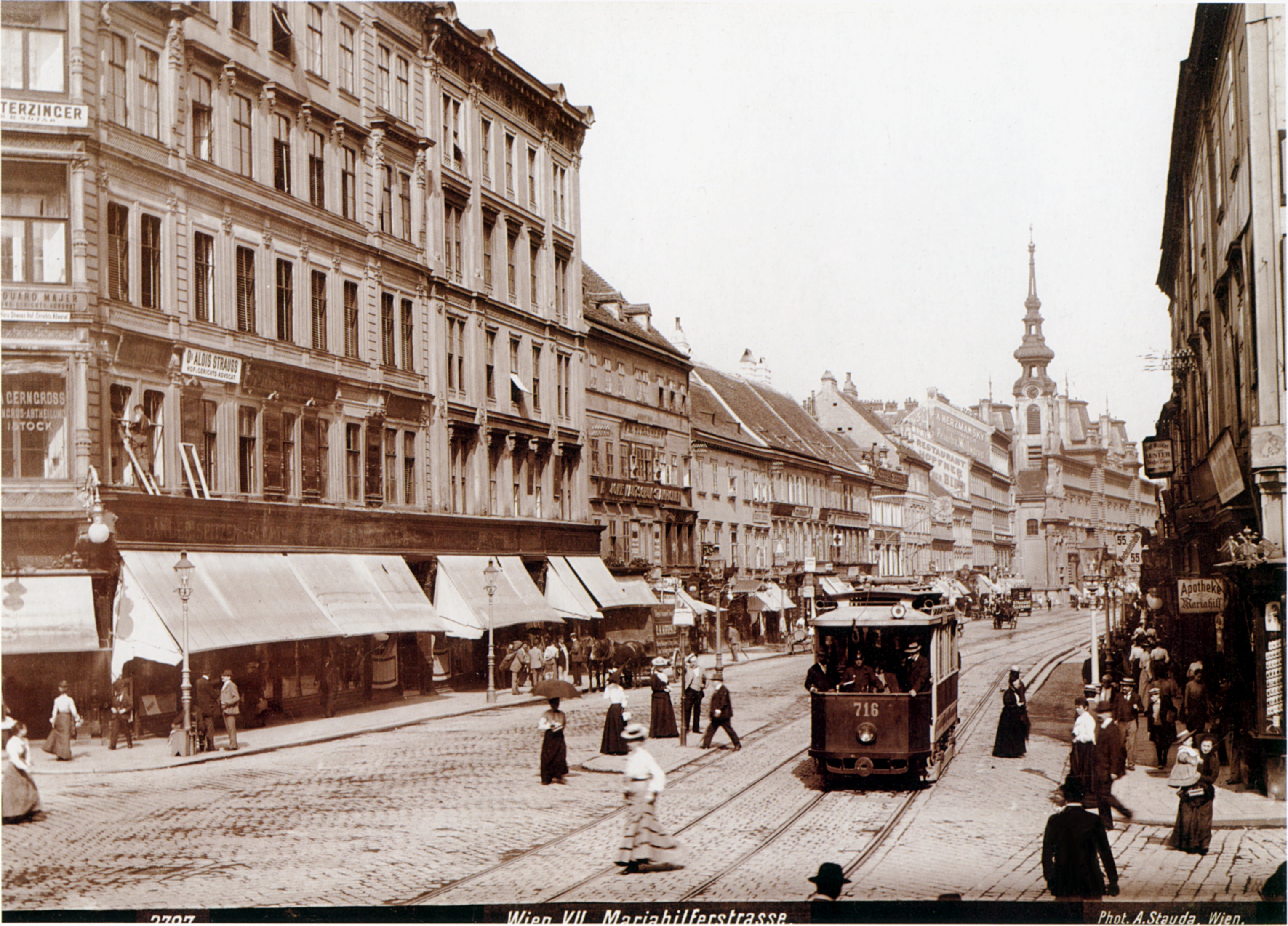
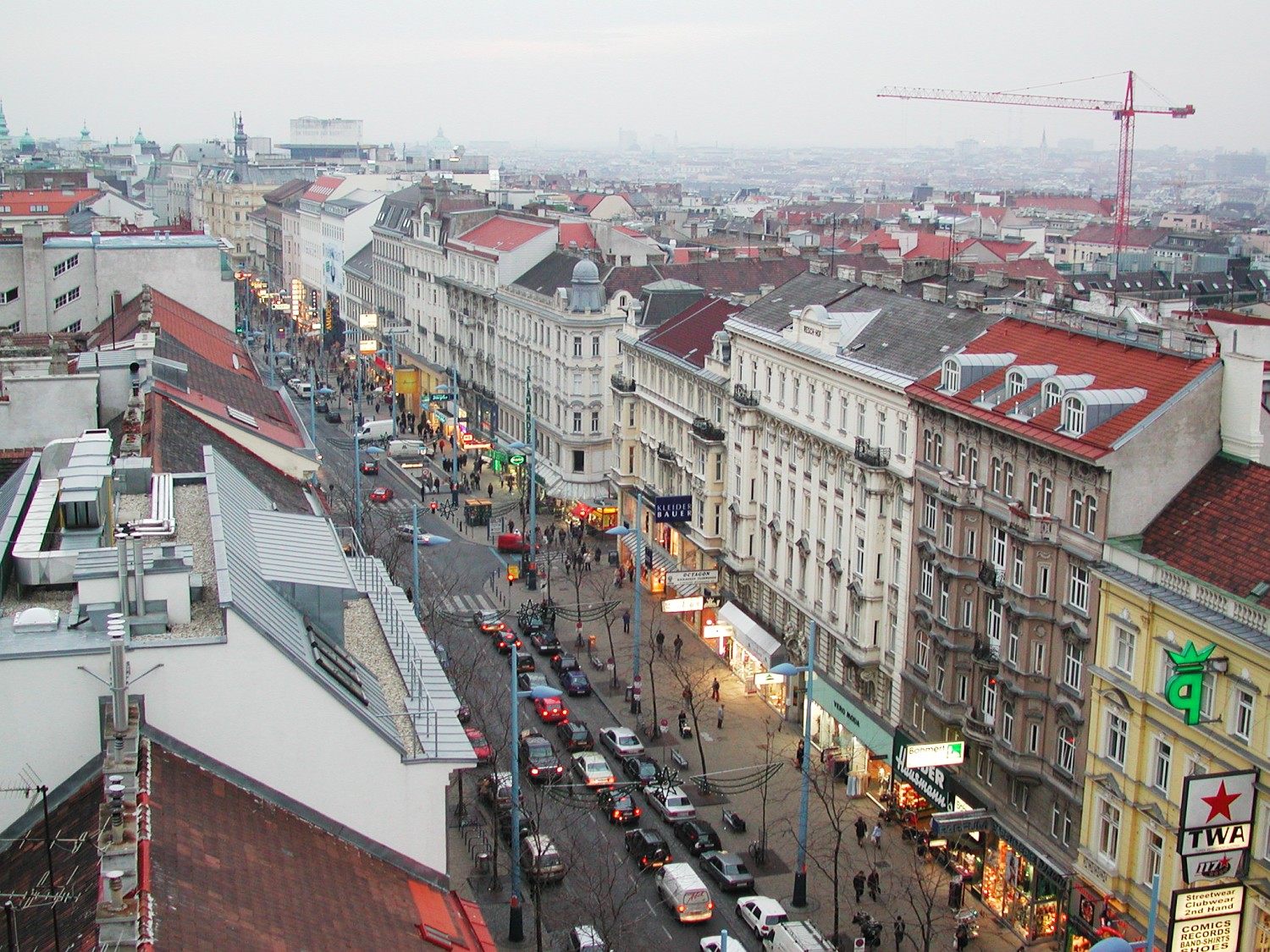

Some cities have seen greater business increases on pedestrian and bike converted through-ways because people in cars weren't just passing by.
Bikers and pedestrians stopped and shopped in the areas they were traveling through.
I, for one, look forward to making a choice to move to a place where I can live car-free and hope more cities accelerate plans like this.